Hungary
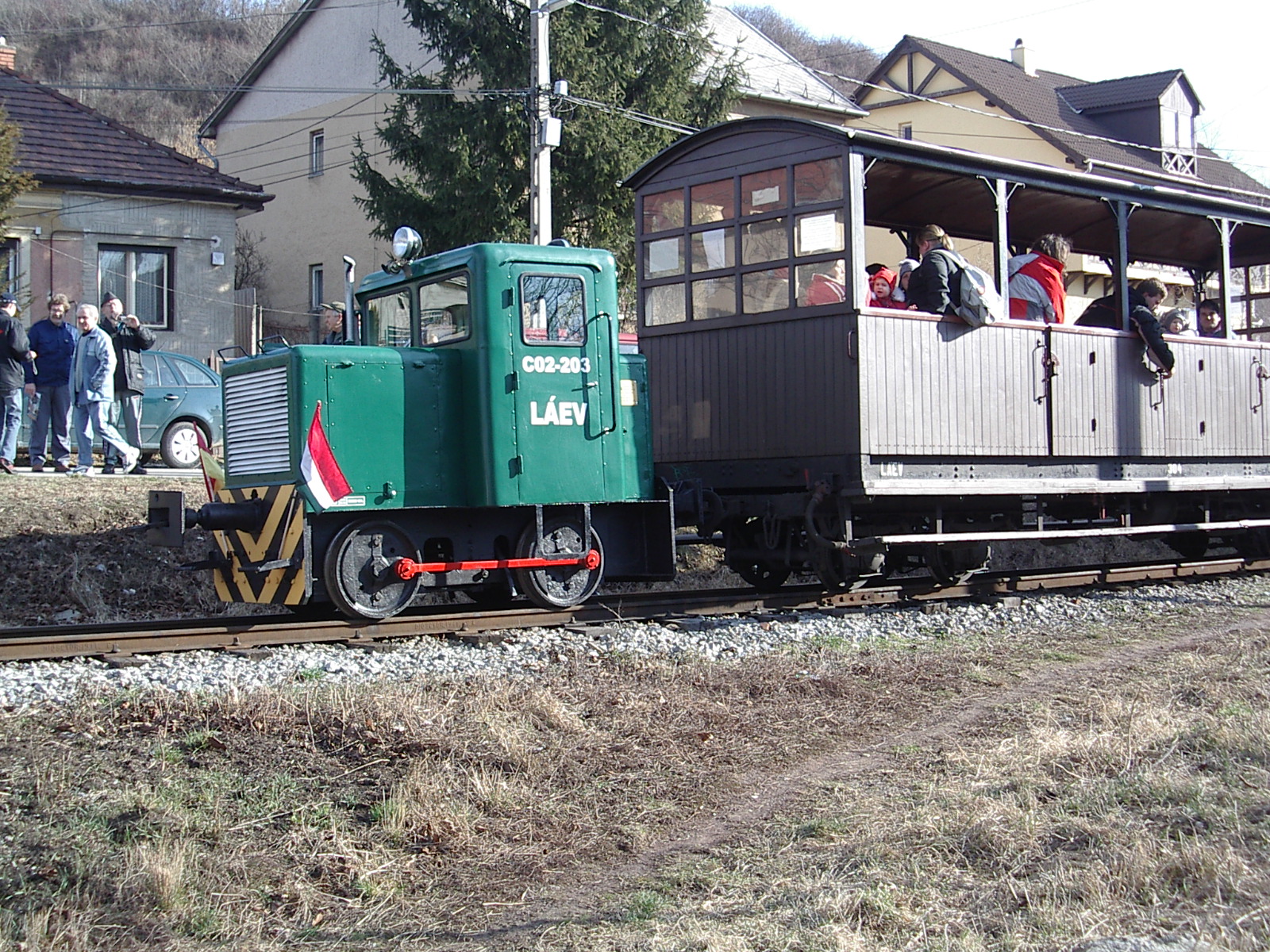
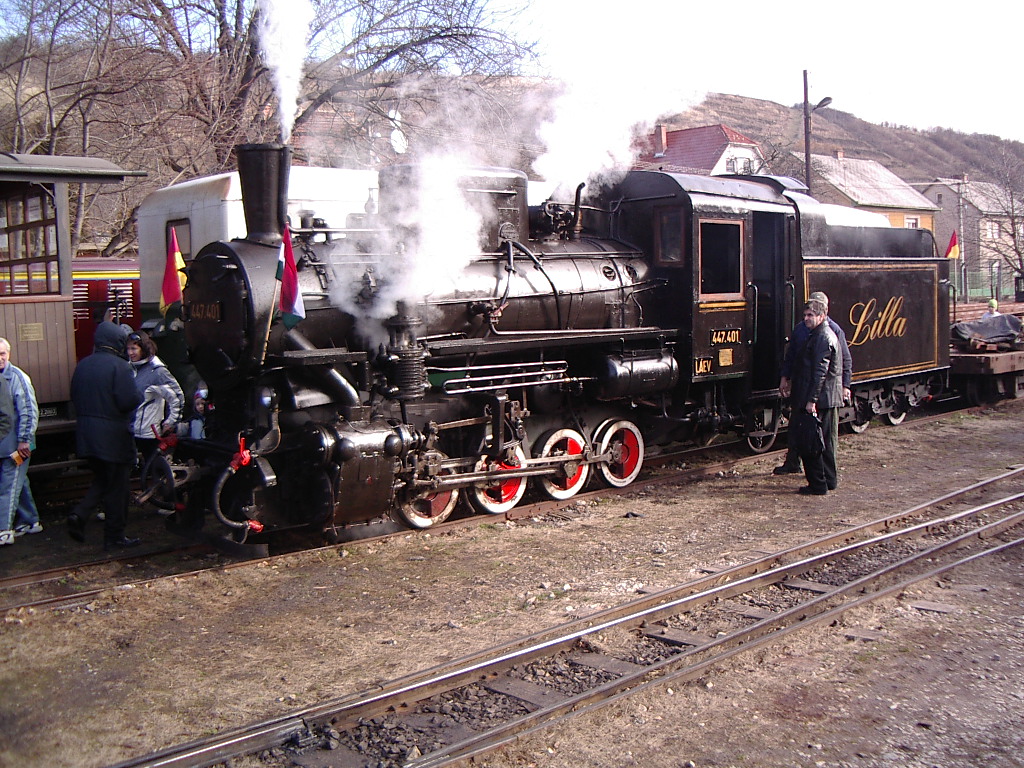
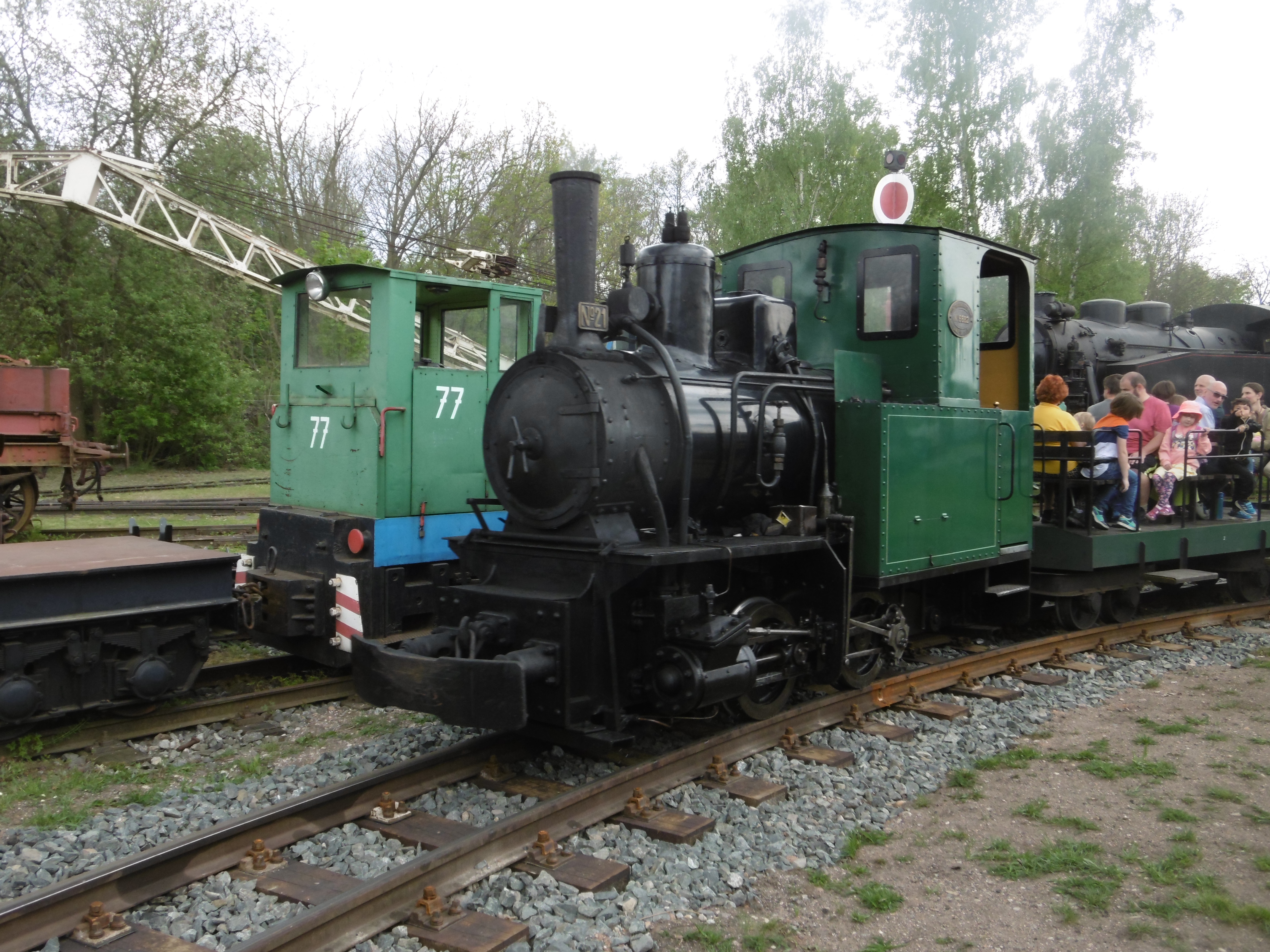
The Forestry Railway of Lillafüred (LÁEV) owns a tiny B-26 type locomotive from 1954. It used to work in a sugar factory and it is the only preserved one of this series. Sometimes it runs in special trains.
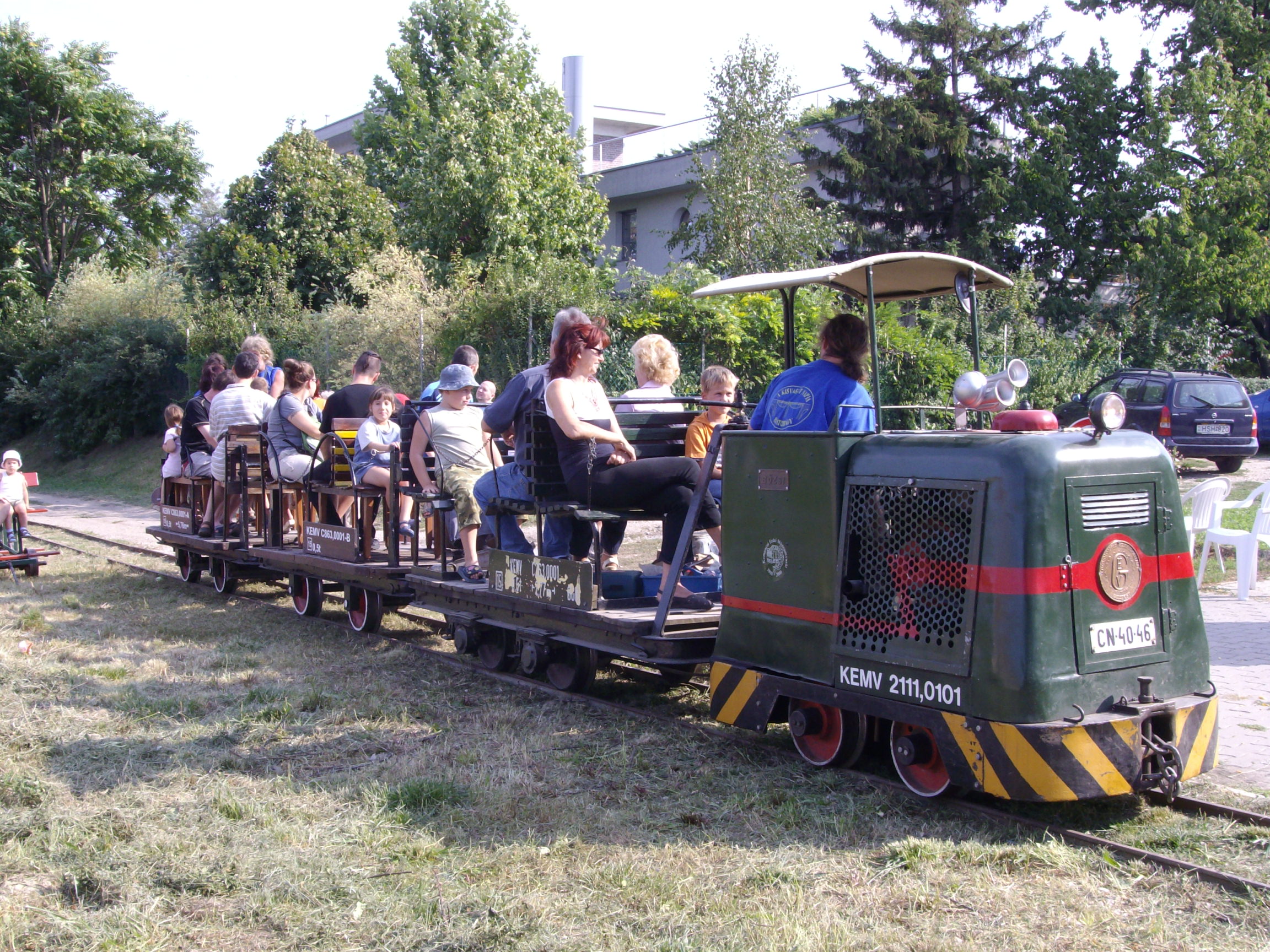
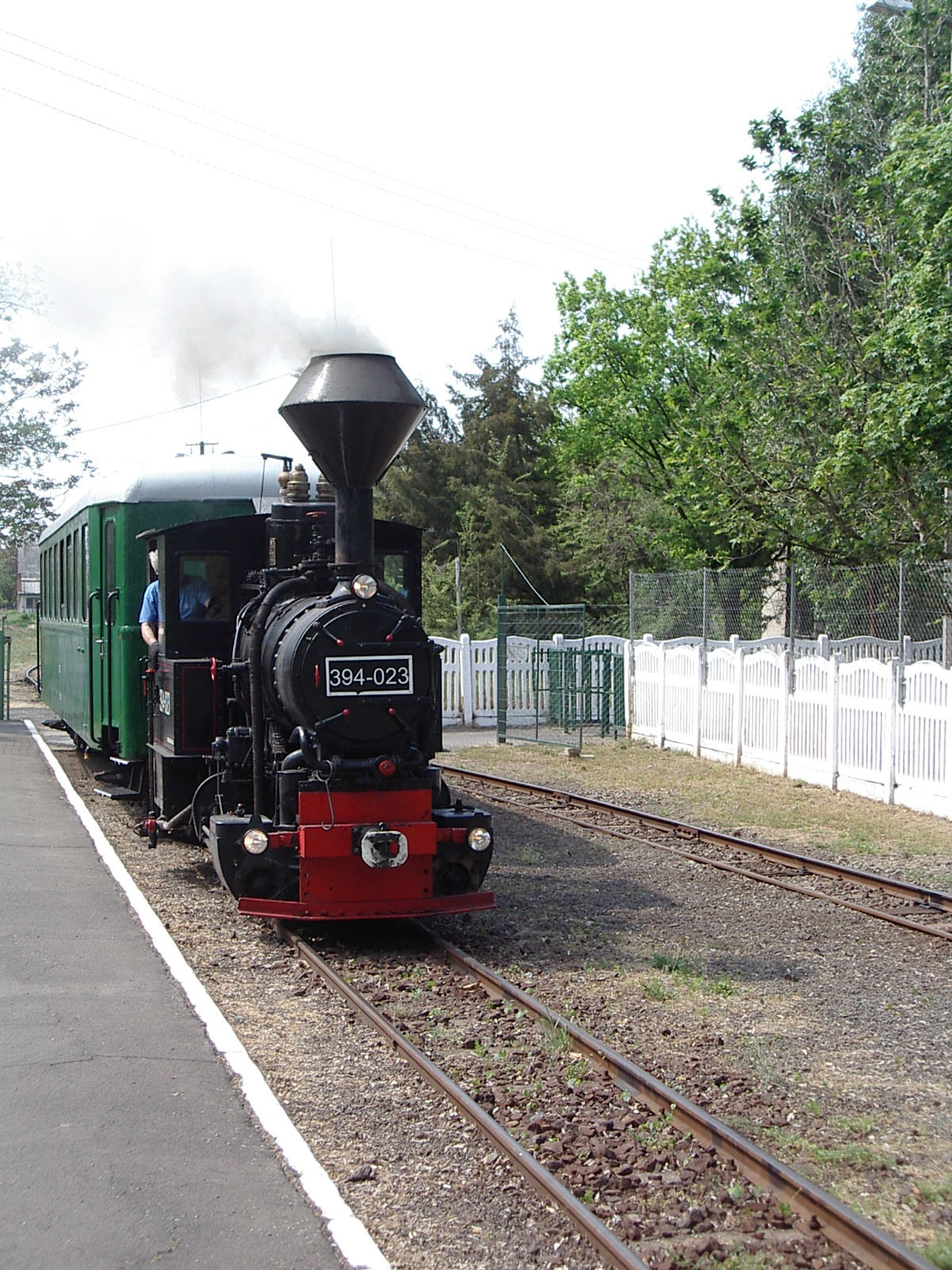
There are special locomotives on the Forestry Museum Railway of Kemence. This series's nickname is "Kuli", they used to work mostly in brickyards. In the picture it is running on a temporary track.
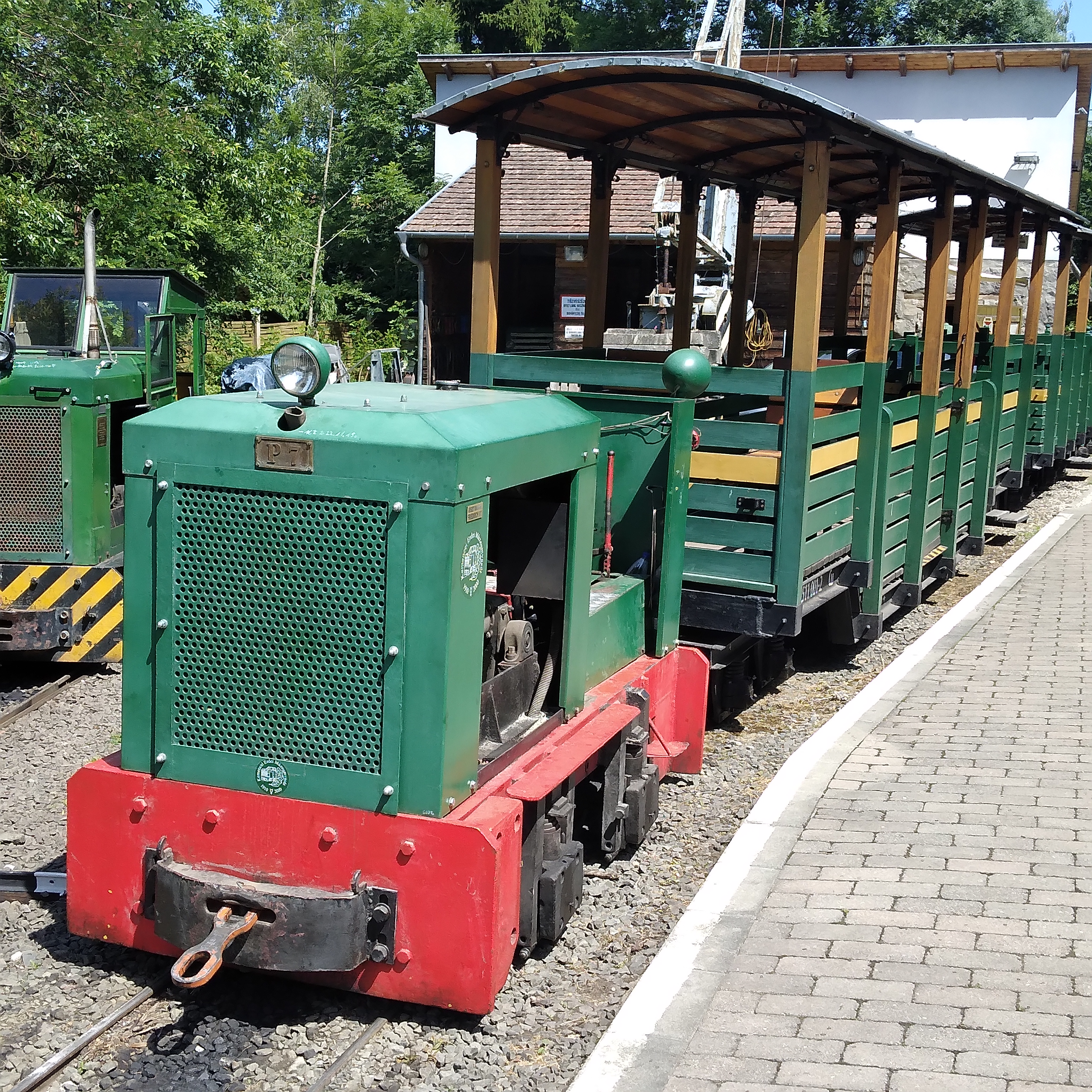
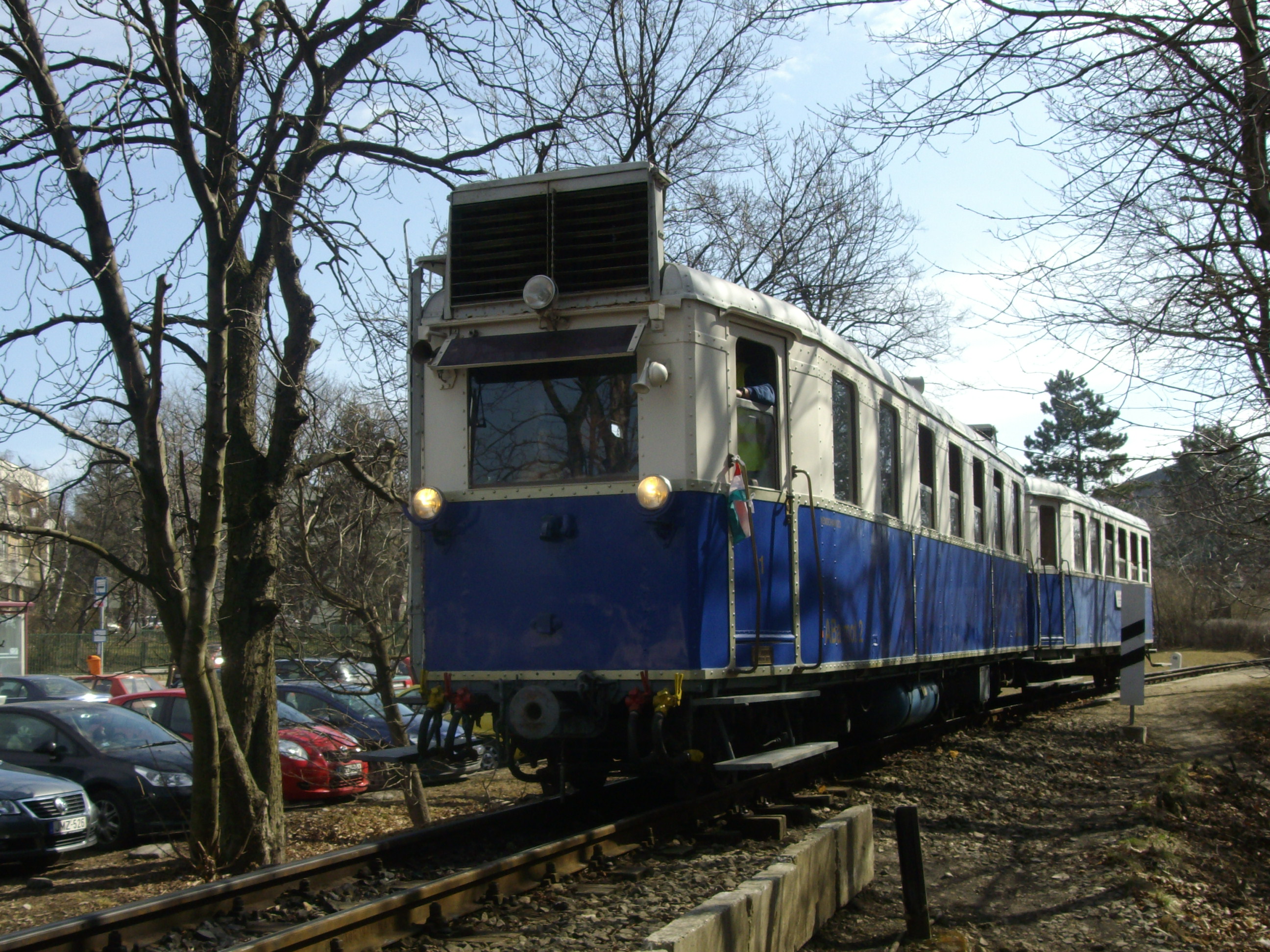
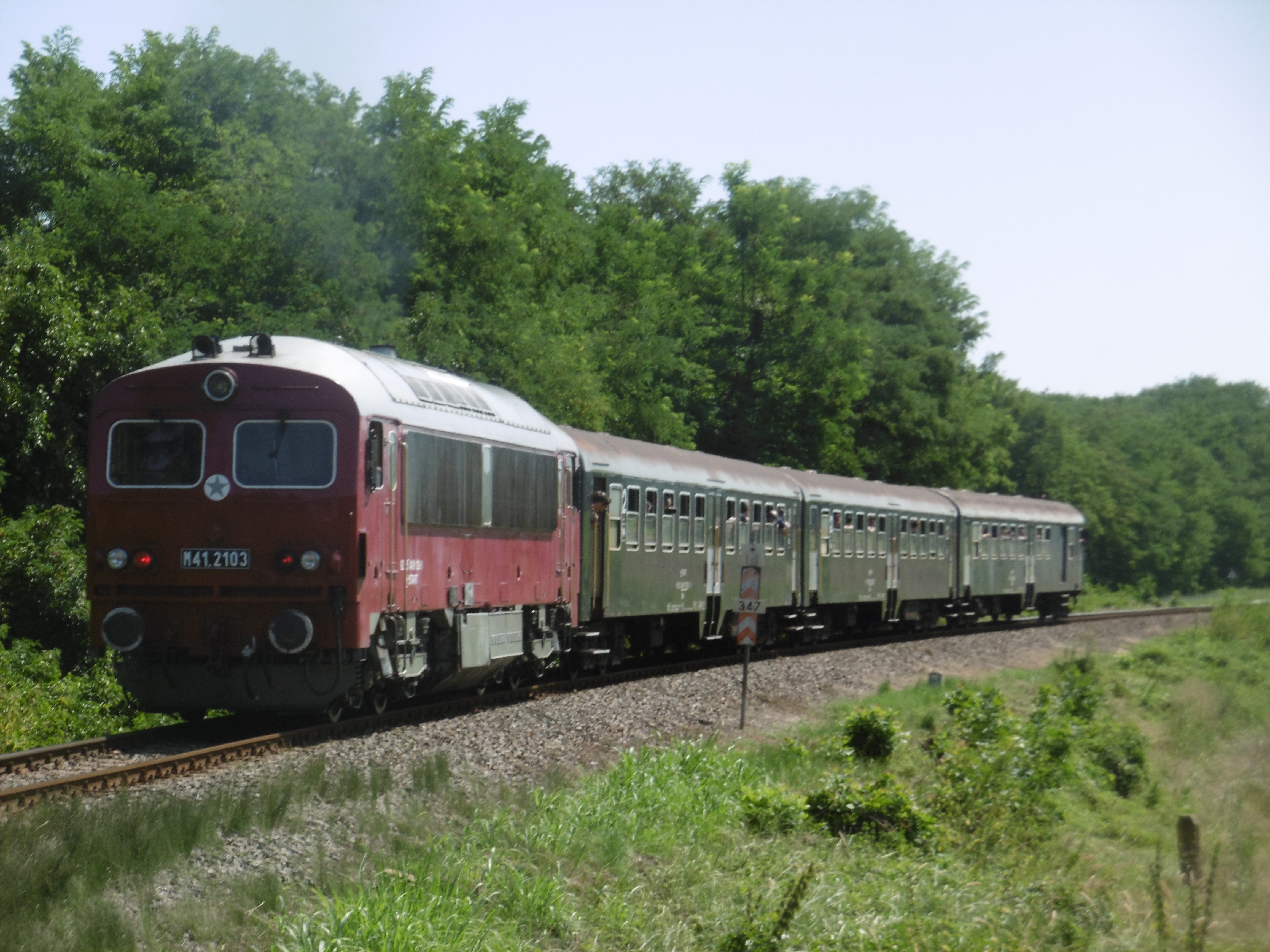
The passenger trains on the museum railway are usually pulled by MD40 locomotives. This locomotive came from a narrow gauge railway operated by a fish farm near Szeged.
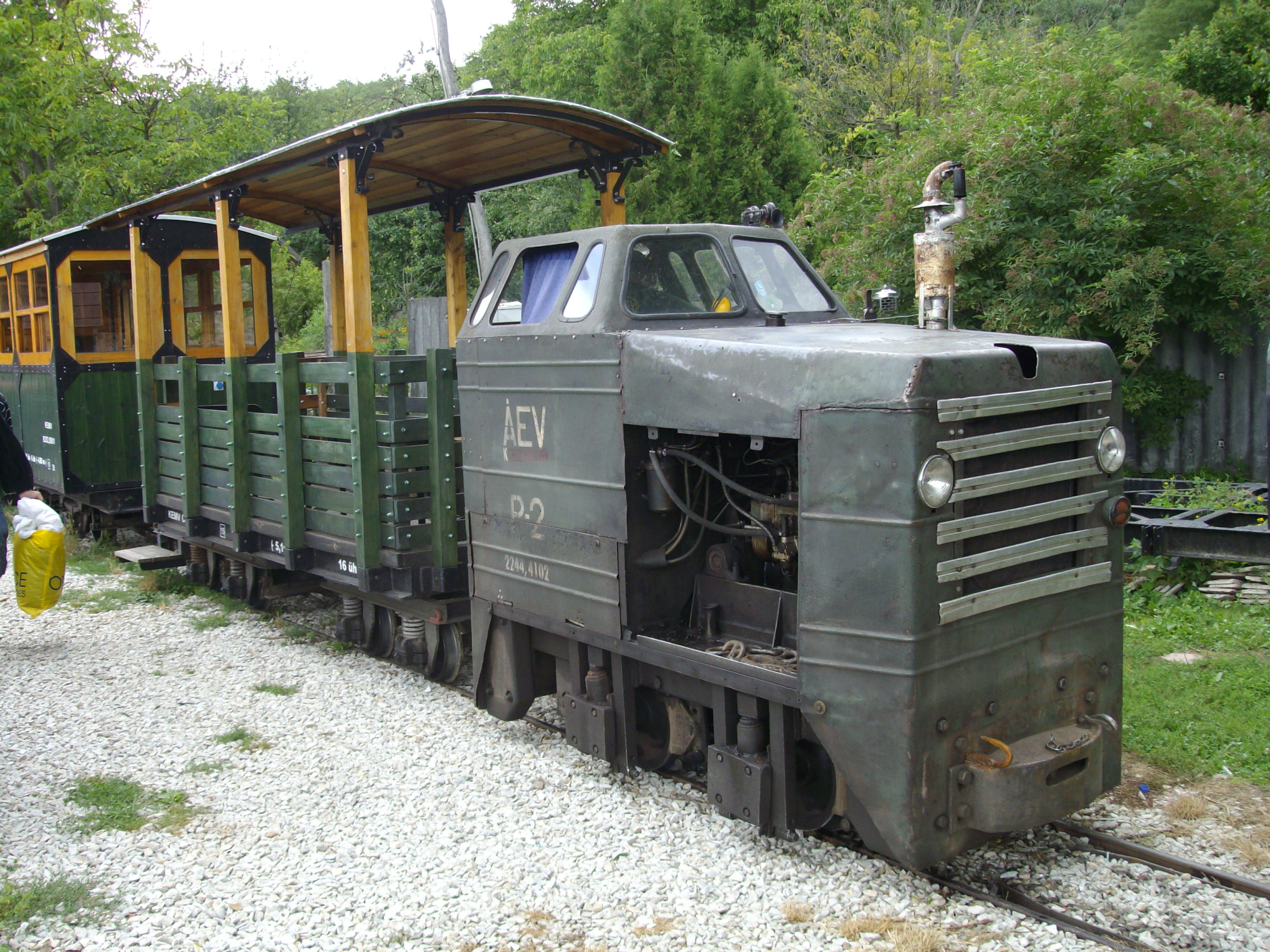
Locomotive number P2 is the symbol of the museum railway. It is the only surviving MD40 series locomotive with such a driver's cab. Some other railways also have MD40 locos but they don't use them in passenger service.
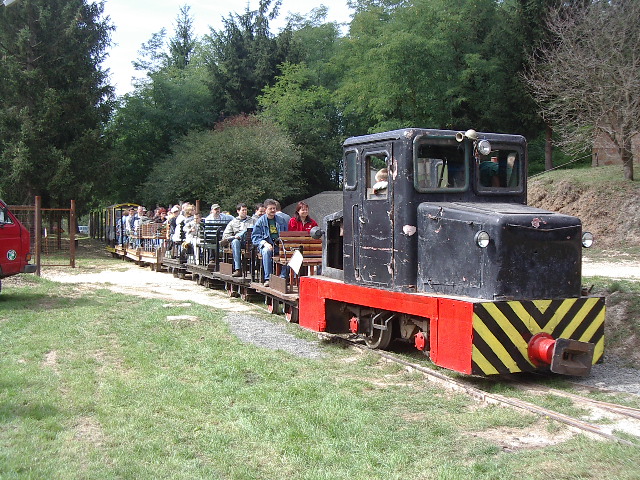
Series C50 locos were produced in the 1950s with truck engines. They have pedals and a gearbox in the driver's cabin like in a truck. 600 mm gauge version has a little bit different engine hood. The picture was taken on a removed mine railway. 600 mm gauge C50 locos currently run only in Almamellék.
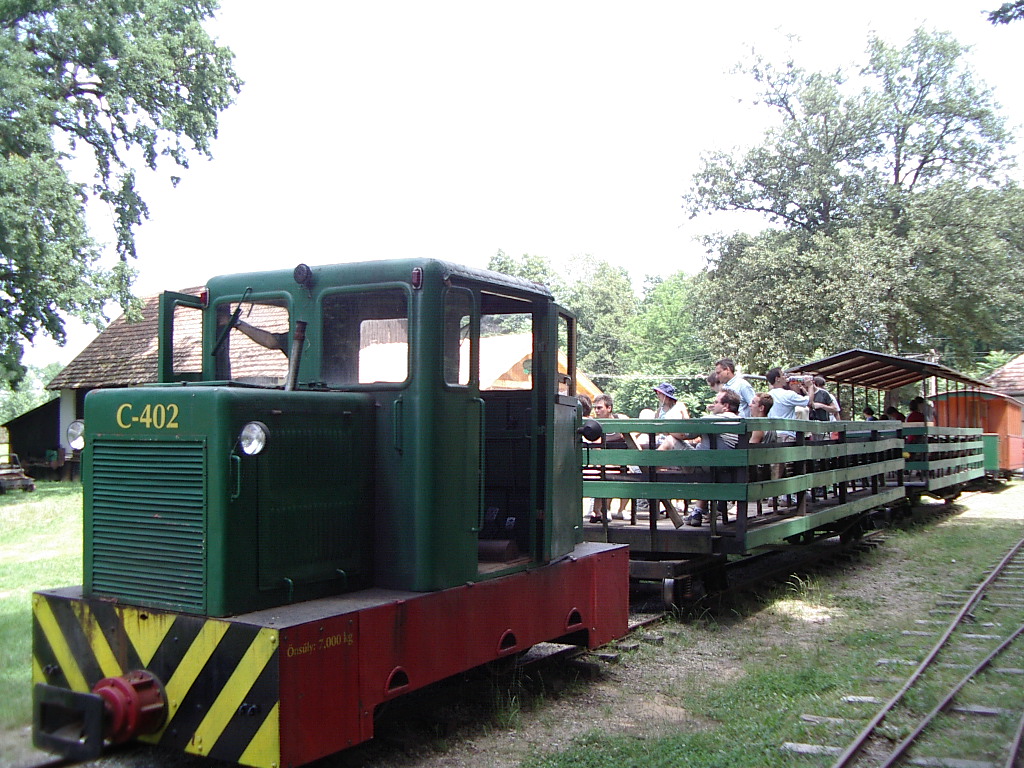
C50 locomotives were common on forestry and agricultural narrow gauge railways. I took this photo in Kaszó, at the endstation of a short forestry railway. They work regularly on the forestry railways of Gemenc, Csömödér, Nagybörzsöny, Felsőtárkány and Pálháza, as well as on leisure railways in Pécs, Debrecen and Tiszakécske.
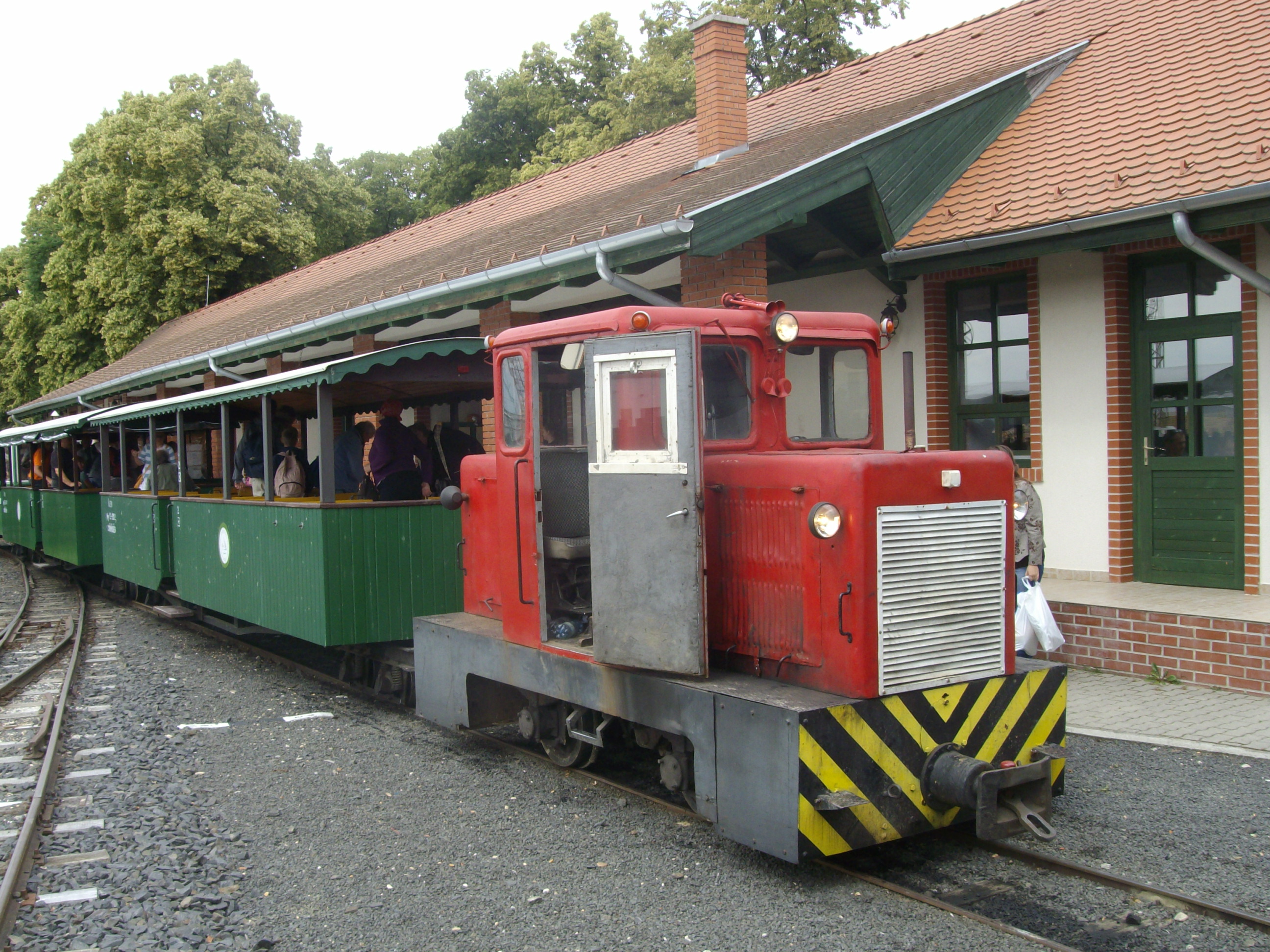
The Lenti Forest Railway was connected to the Csömödér network in 2000, and is currently the longest narrow gauge railway in Hungary. The picture shows a red C50 locomotive, which is rare, only found in Csömödér and Felsőtárkány. Occasionally, C50 locomotives also run in Nagycenk, Budapest, Balatonfenyves and Lillafüred.
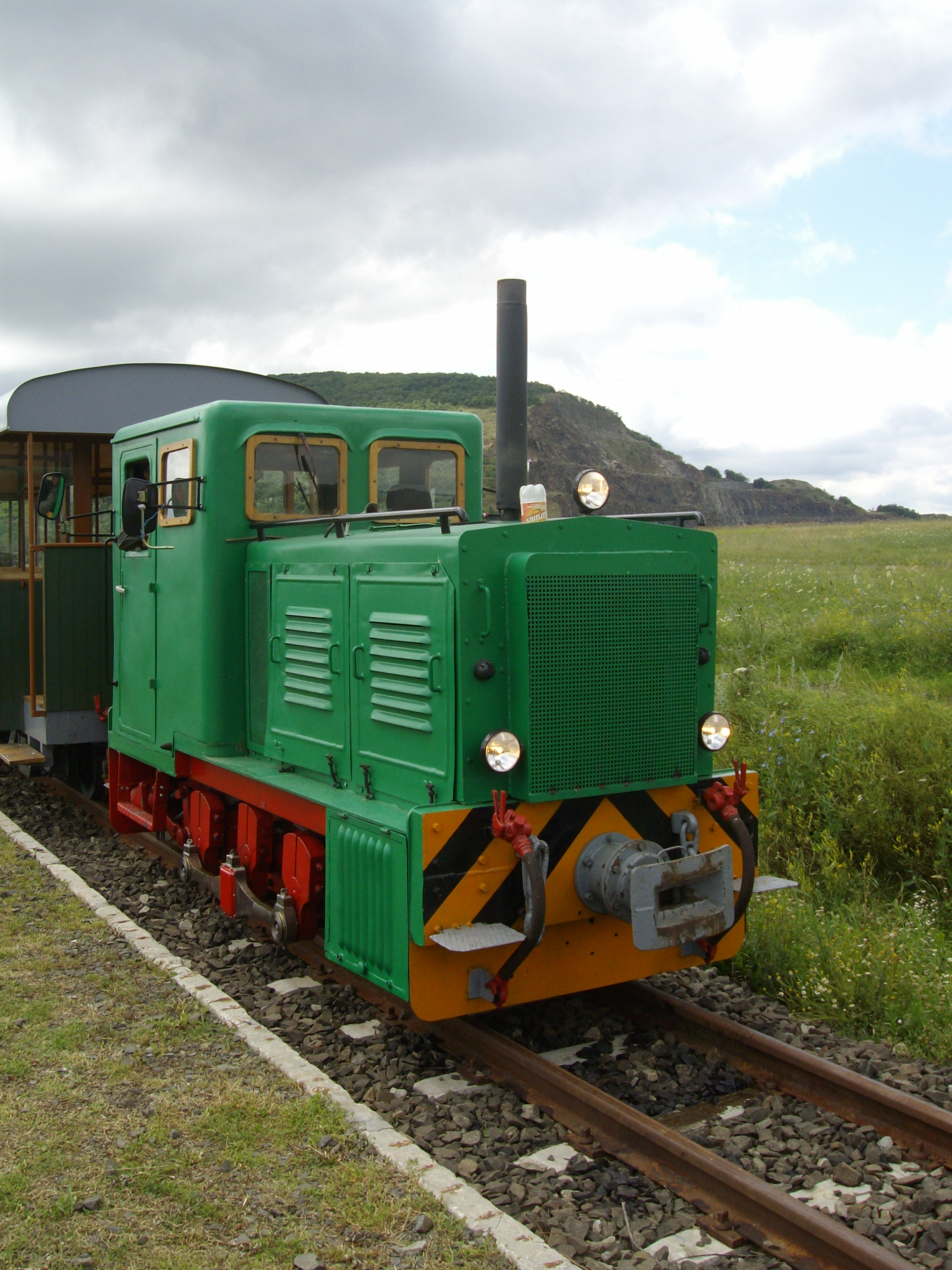
Type L-60 locomotives were built in East-Germany in the 1950s. One of them operates regularly near to the Danube Bend, between Szob and Nagyirtás. The Forestry Railway of Szilvásvárad also have one loco of this type.
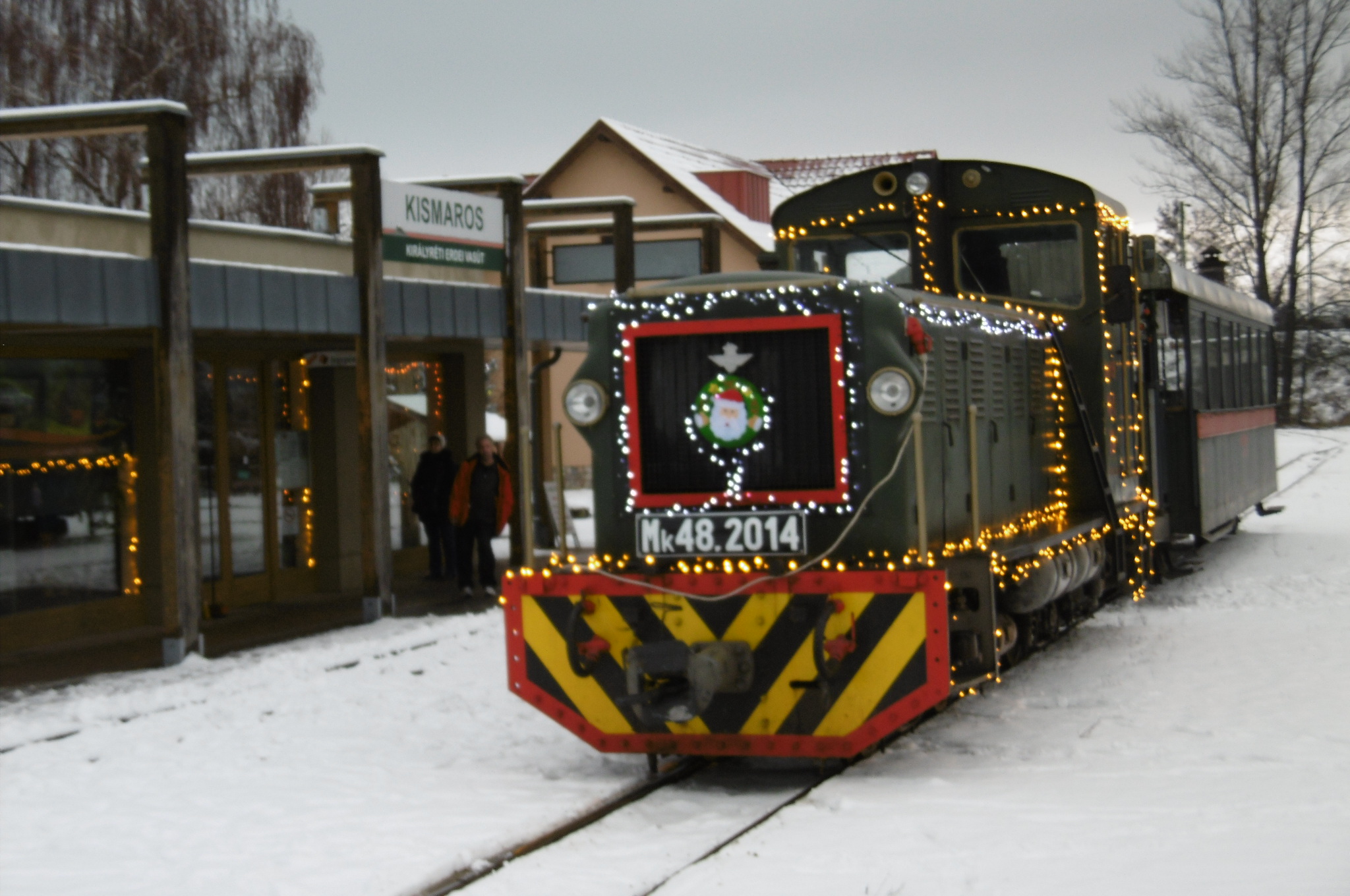
The Mk48 series was an other widely use type of narrow gauge locomotives in Hungary. They were produced in Rába Factory in Győr between 1960 ans 1961. This picture represents the Forestry Railway of Királyrét near Budapest with Christmas decoration.
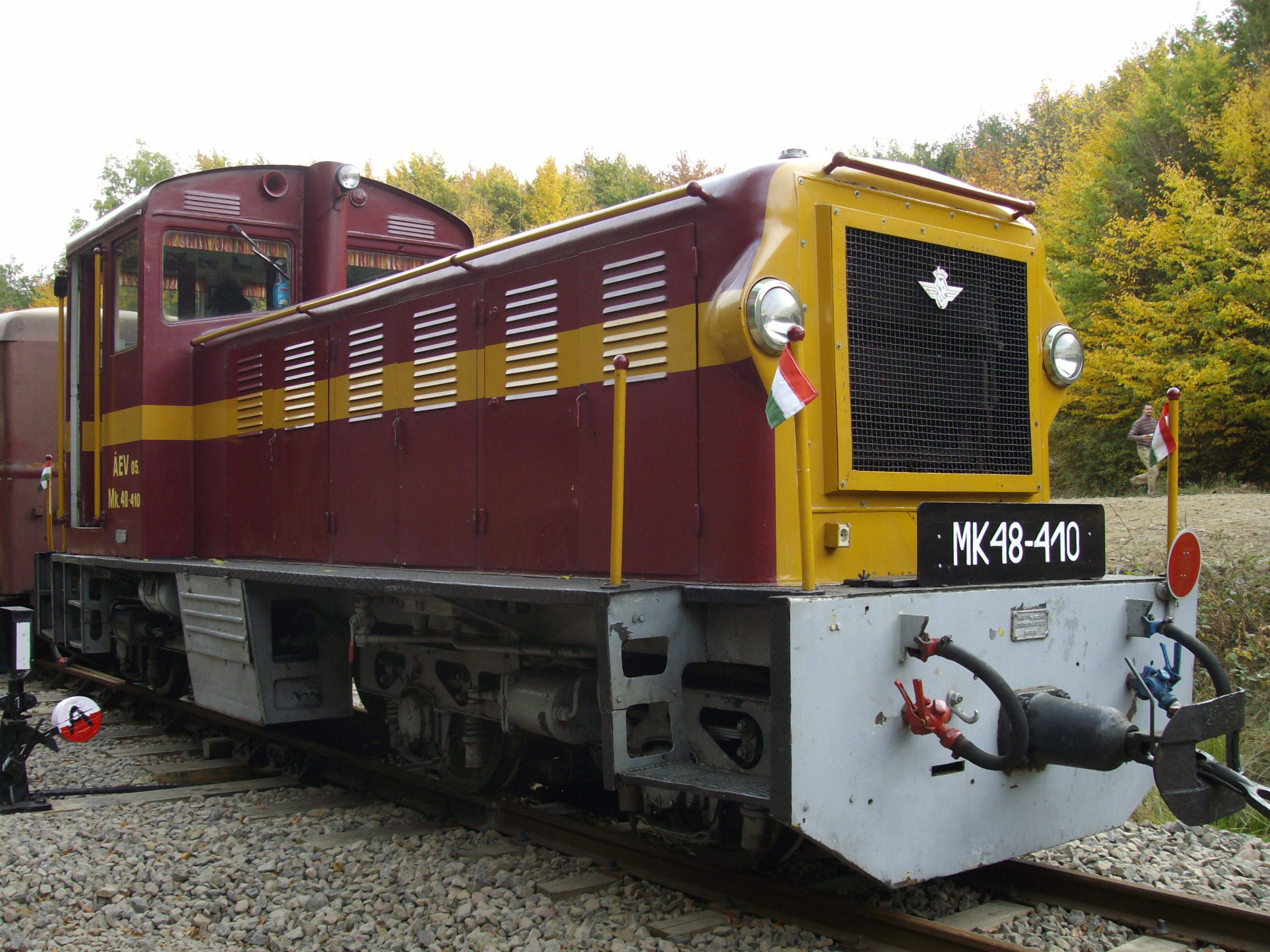
"Mátravasút" in Gyöngyös has diesel locomotives only from Mk48 series. They have typical colours here. Type Mk48 is the usual locomotive on the forestry railways of Szilvásvárad and Lillafüred. These 2 other railways have even few modernised, hybrid ones of them, as well as the Children's Railway in Budapest.
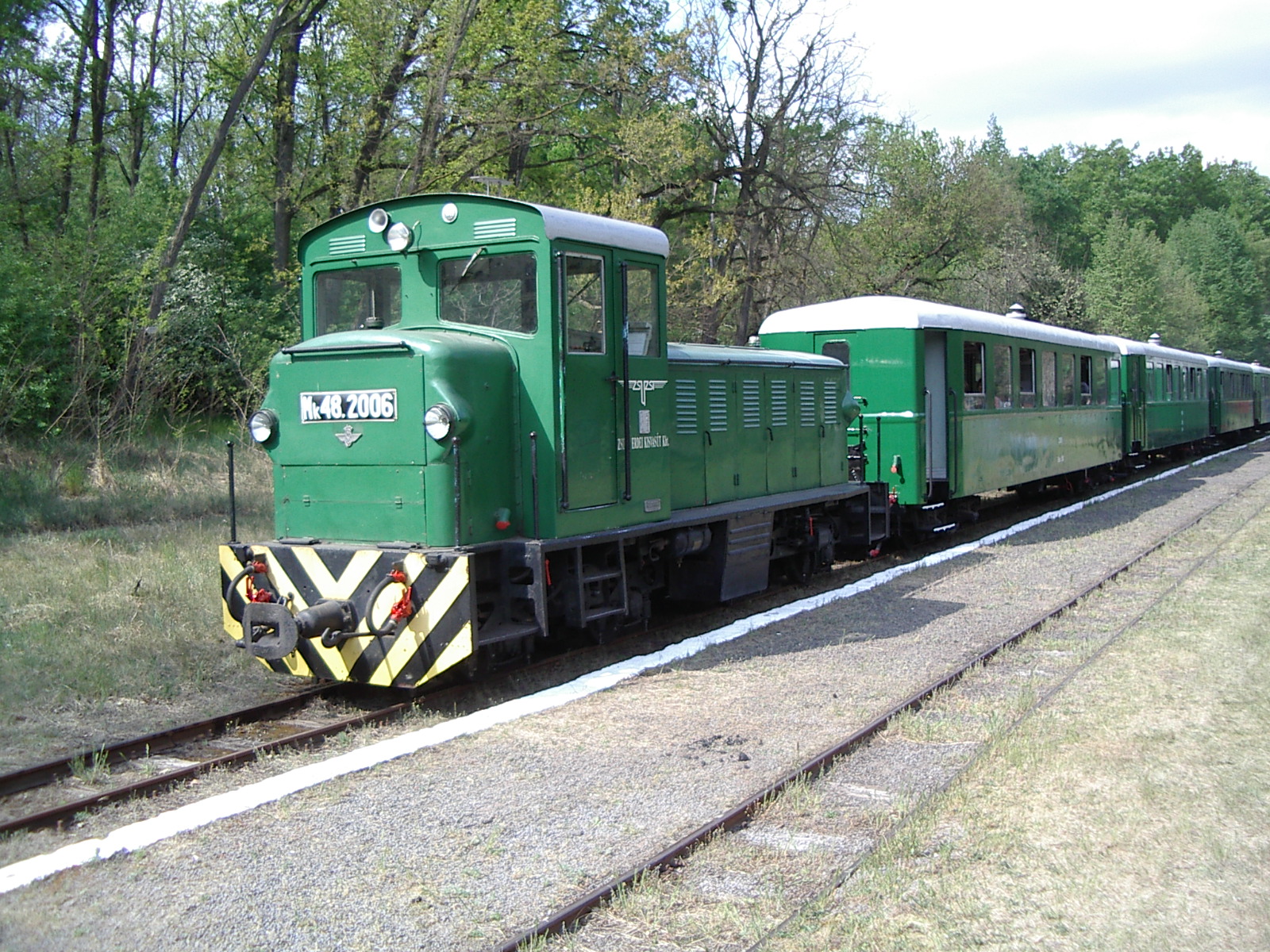
The Zsuzsi Forest Railway is the oldest narrow gauge railway in Hungary, still in operation today. Passenger trains are pulled by Mk48 locomotives. The Csömödéri Forest Railway also has two green colour Mk48 locomotives, but these are rarely used. We can also find this type of locomotive in Slovakia and Austria.
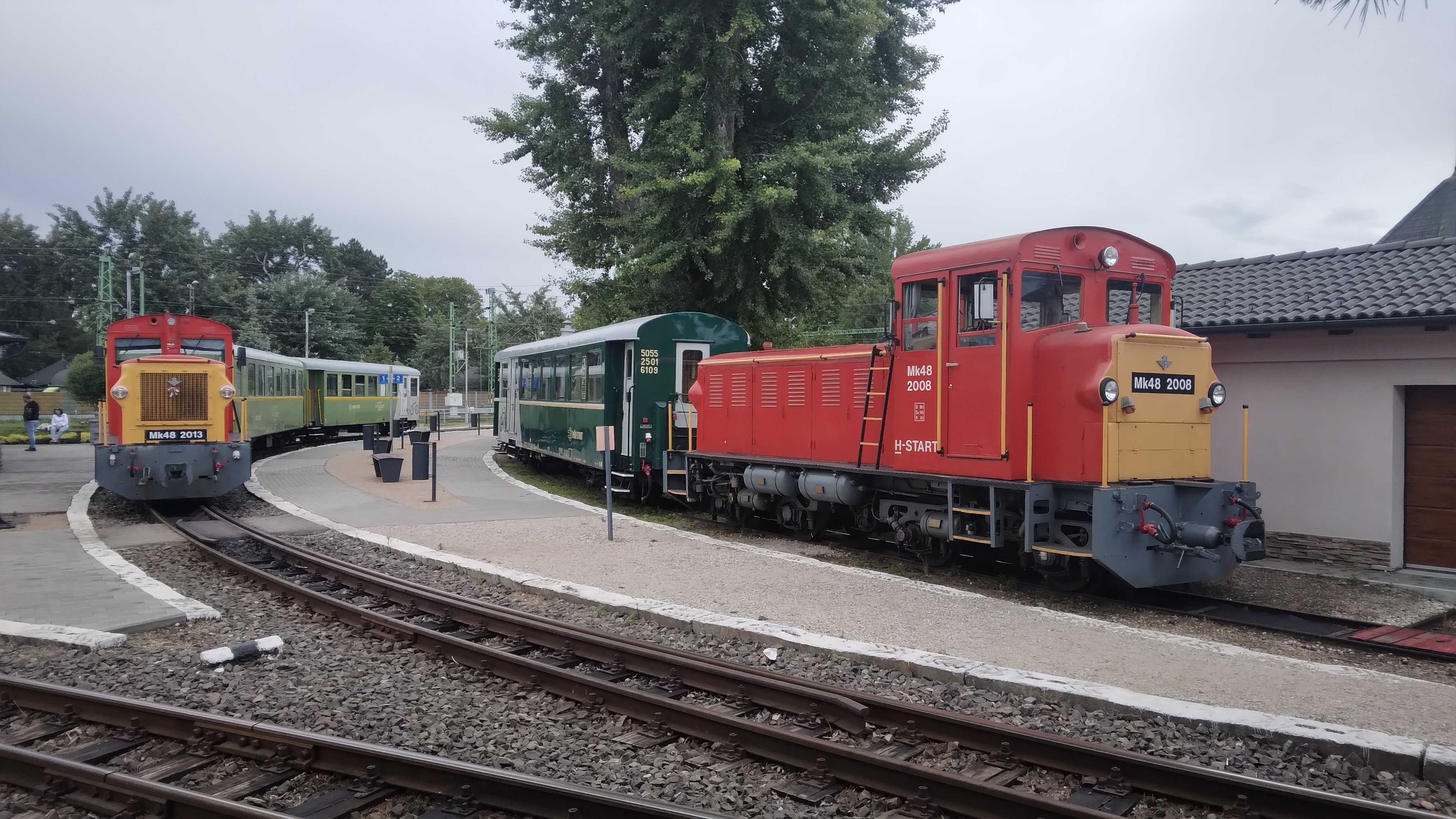
The Balatonfenyves Agricultural Railway is Hungary's last narrow gauge railway line with little commuter passenger traffic, operated by MÁV. These Mk48 locomotives arrived from Kecskemét, a closed railway line. MÁV's Mk48 locomotives can also be found in Viktor Orbán's hometown, in Felcsút.
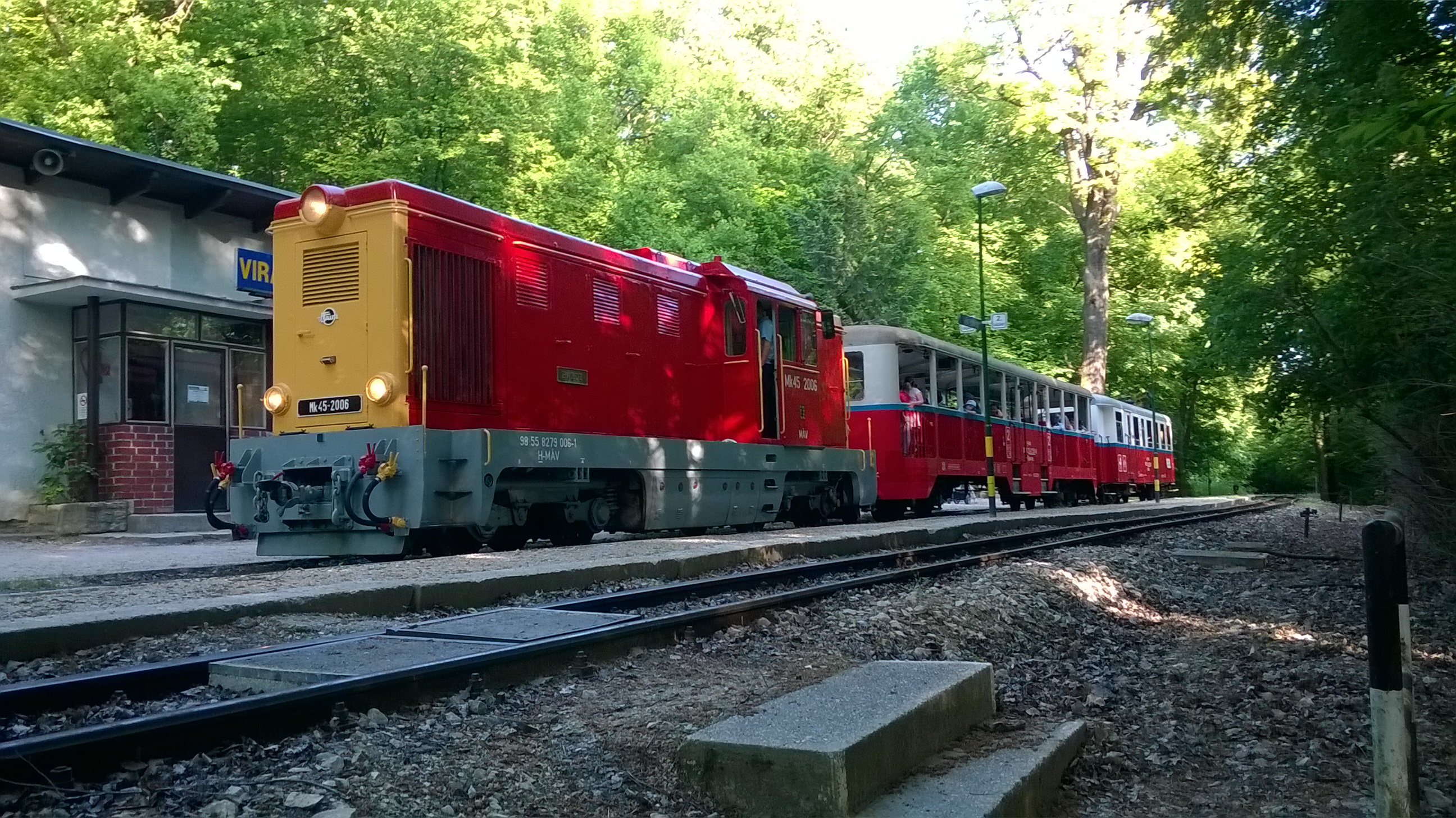
The MK48 type (LDH45) is very close to my heart because I used to work for the Children's Railway of Széchenyi-hegy for several years. This strong series was produced in Bucuresti and became a common type in several countries. In Hungary they operate only in Budapest.
Germany
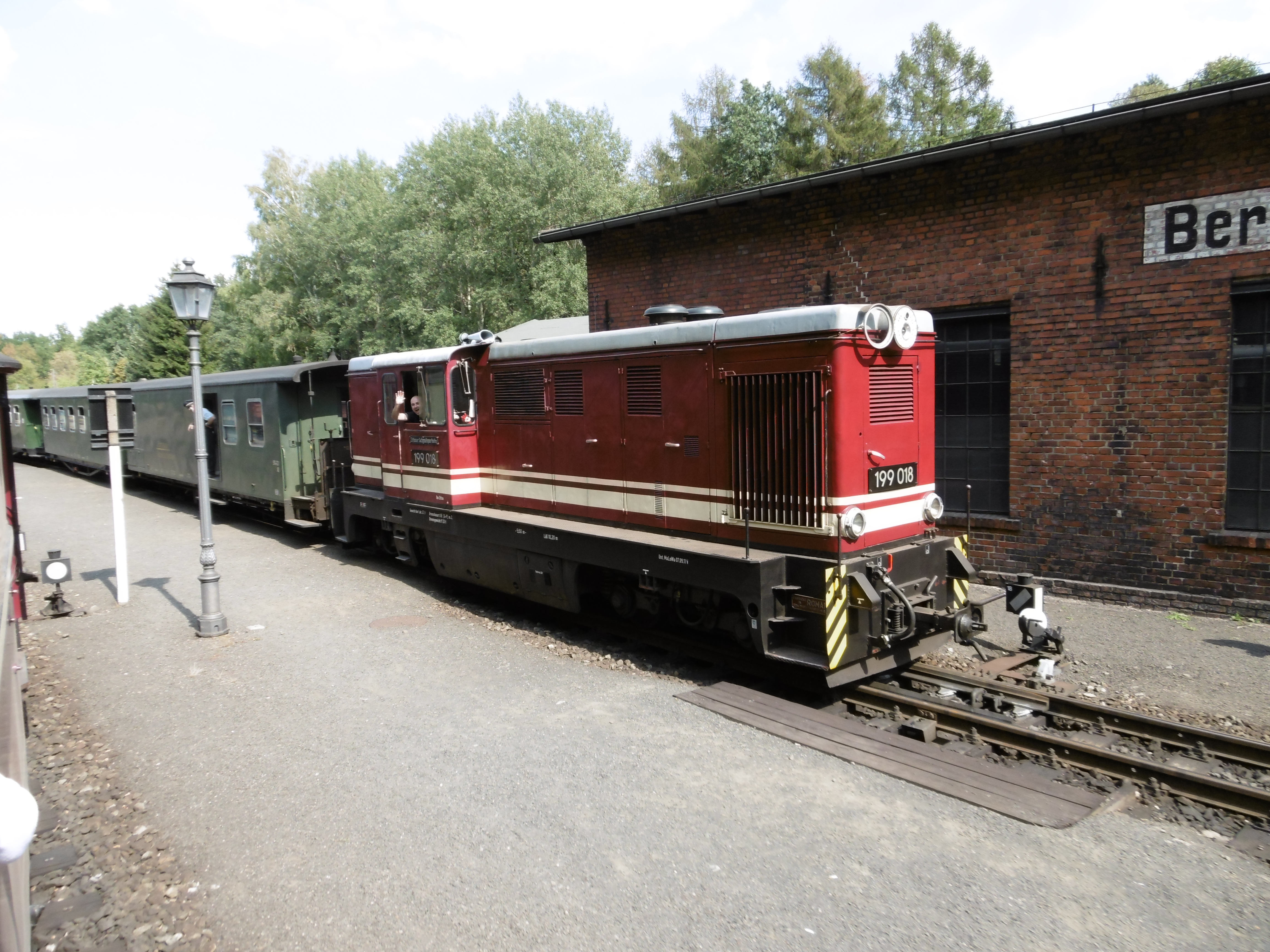
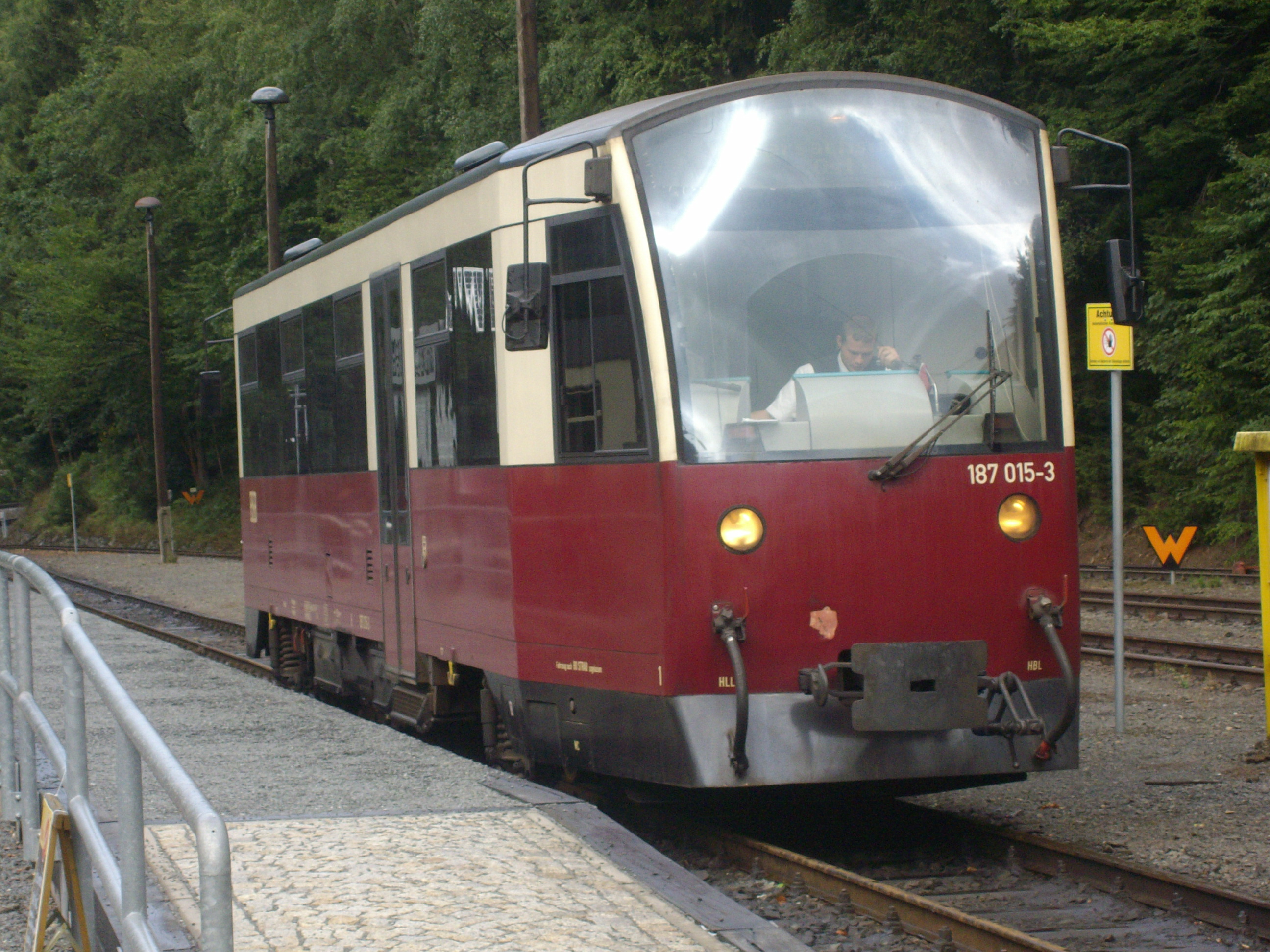
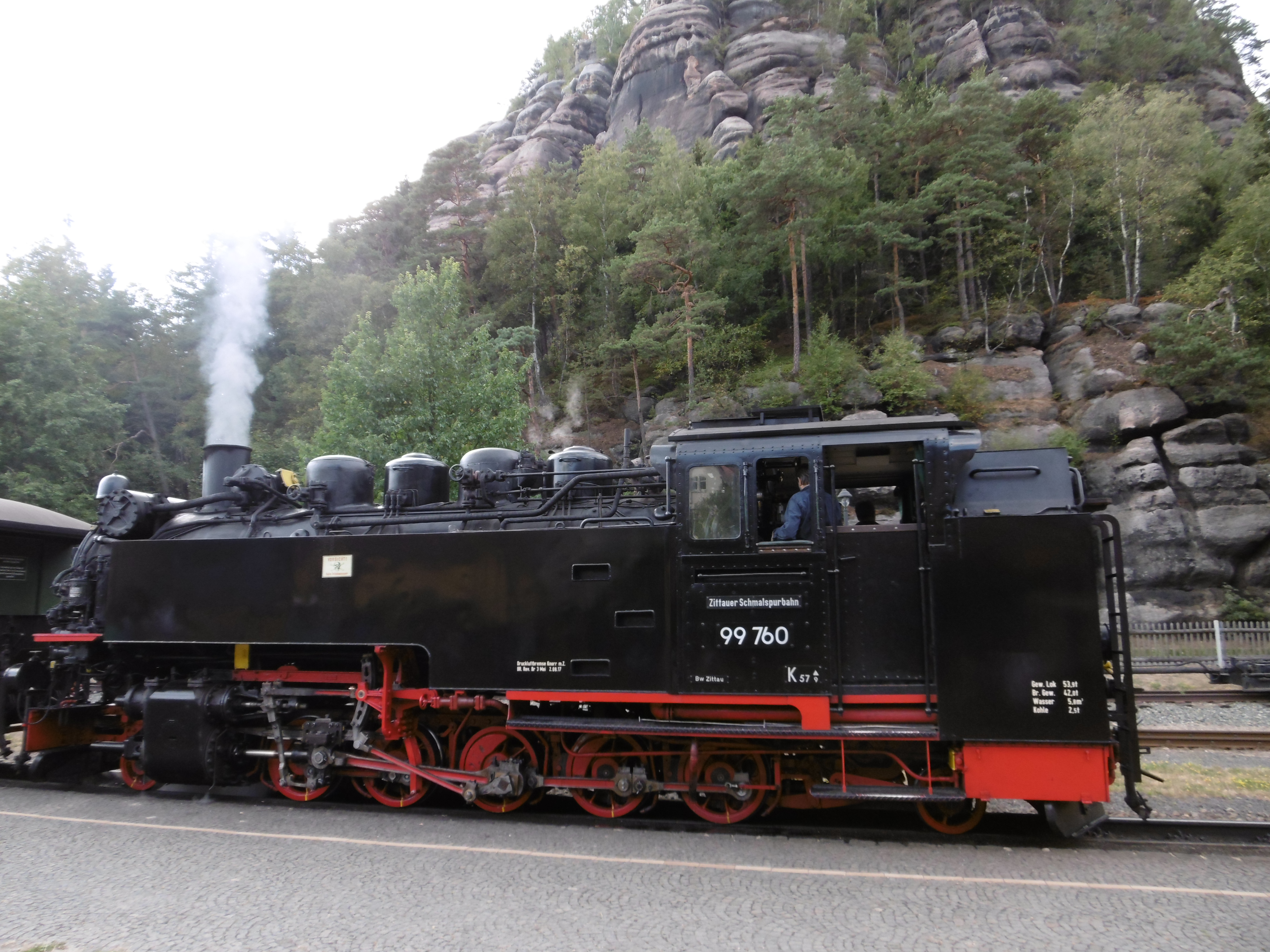
Although the LDH45 is a widely used series, I have only encountered it outside of Hungary on the Zittauer Schmalspurbahn.
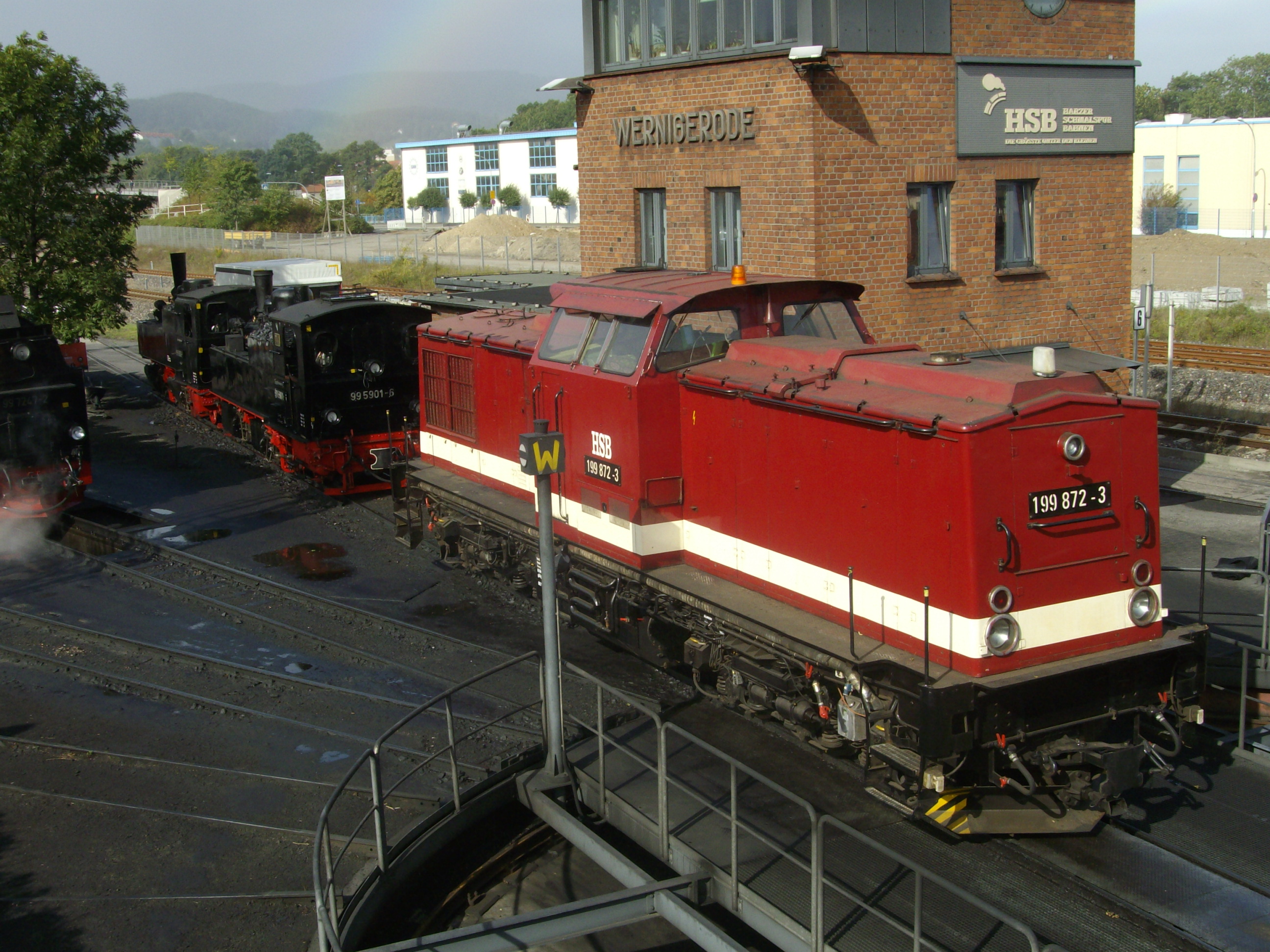
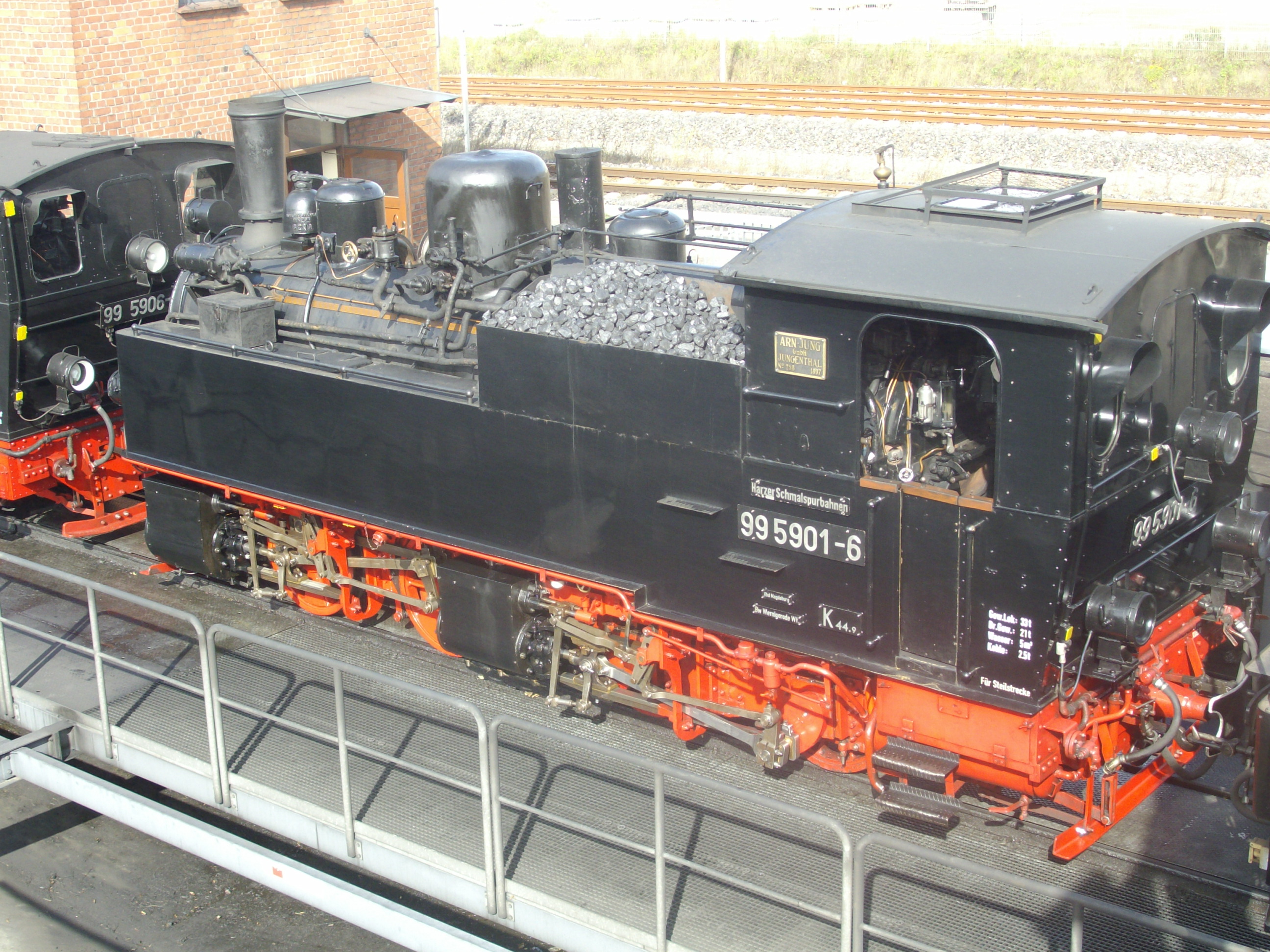
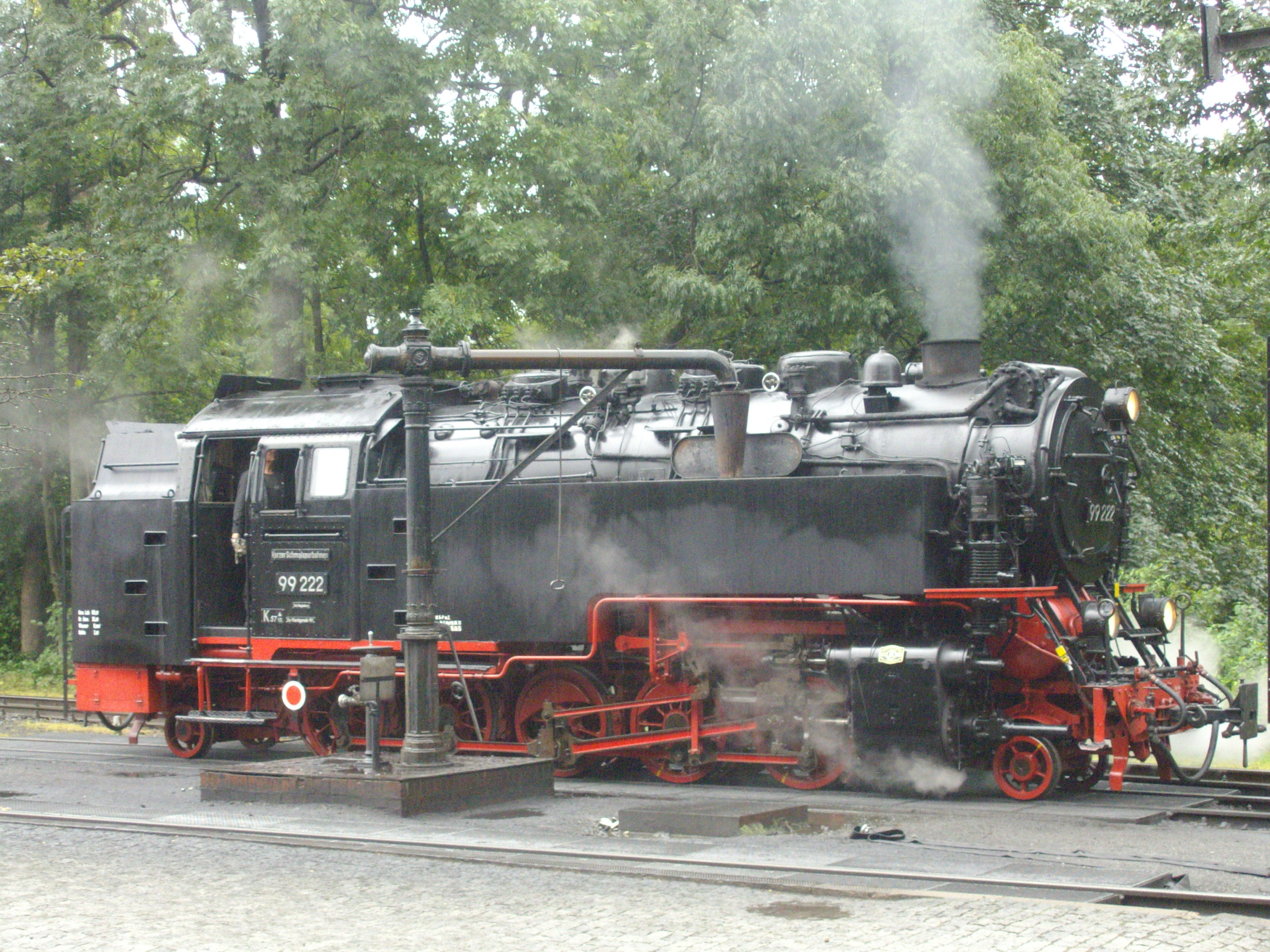
The 199.8 series were truly special, originally standard gauge type 112 locomotives, later their gauge was modified to 1000 mm. However, steam traction was eventually retained on the Harzer Schmalspurbahnen, so these special locomotives are rarely used. Two of them (including this one) were equipped with standard gauge folding buffers.
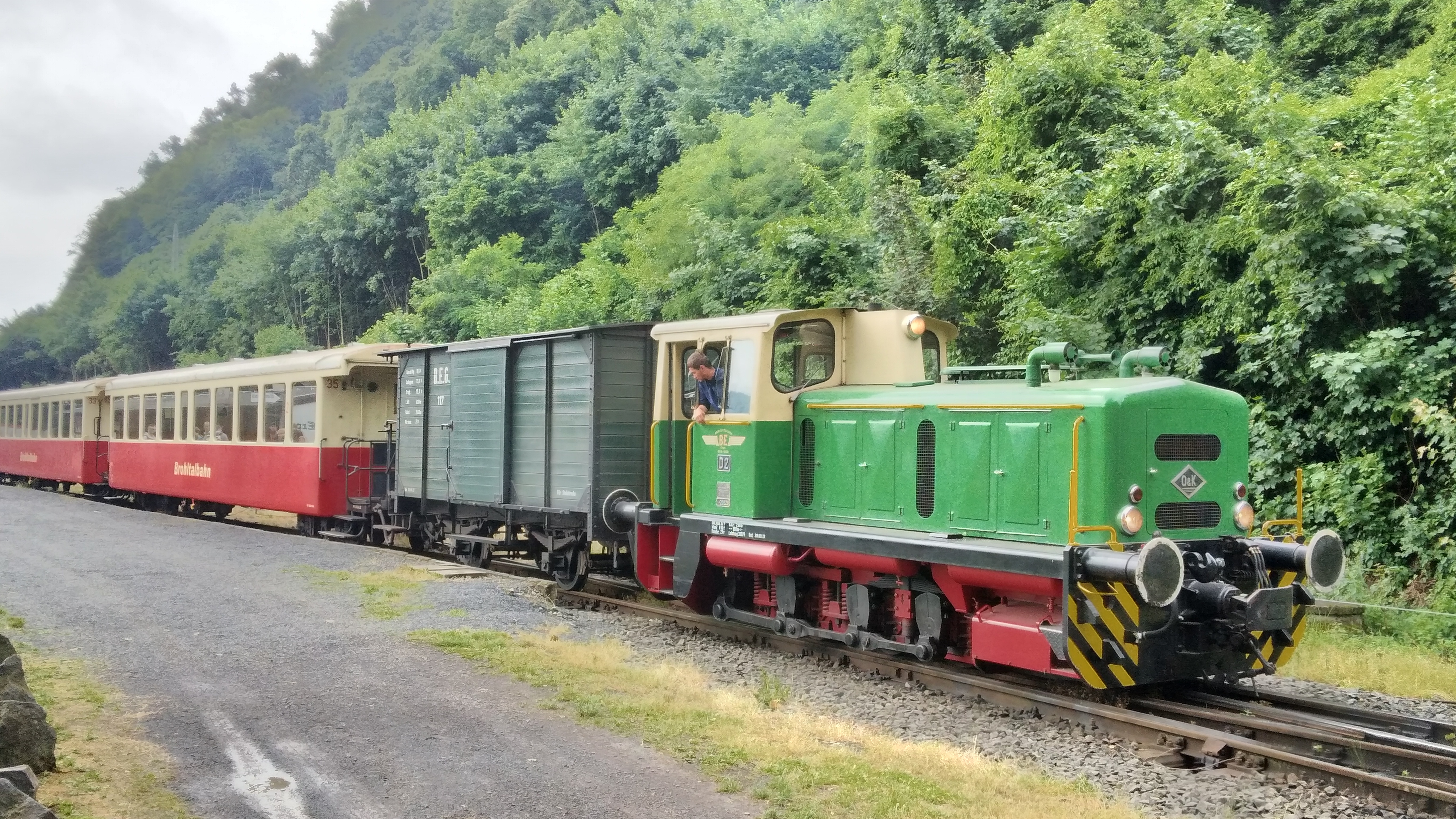
Orenstein-Koppel built three three-axle diesel locomotives for the Brohltalbahn in the 1960s. This railway also has a four-axle Henschel diesel locomotive, but unfortunately I did not see it.
Bulgaria
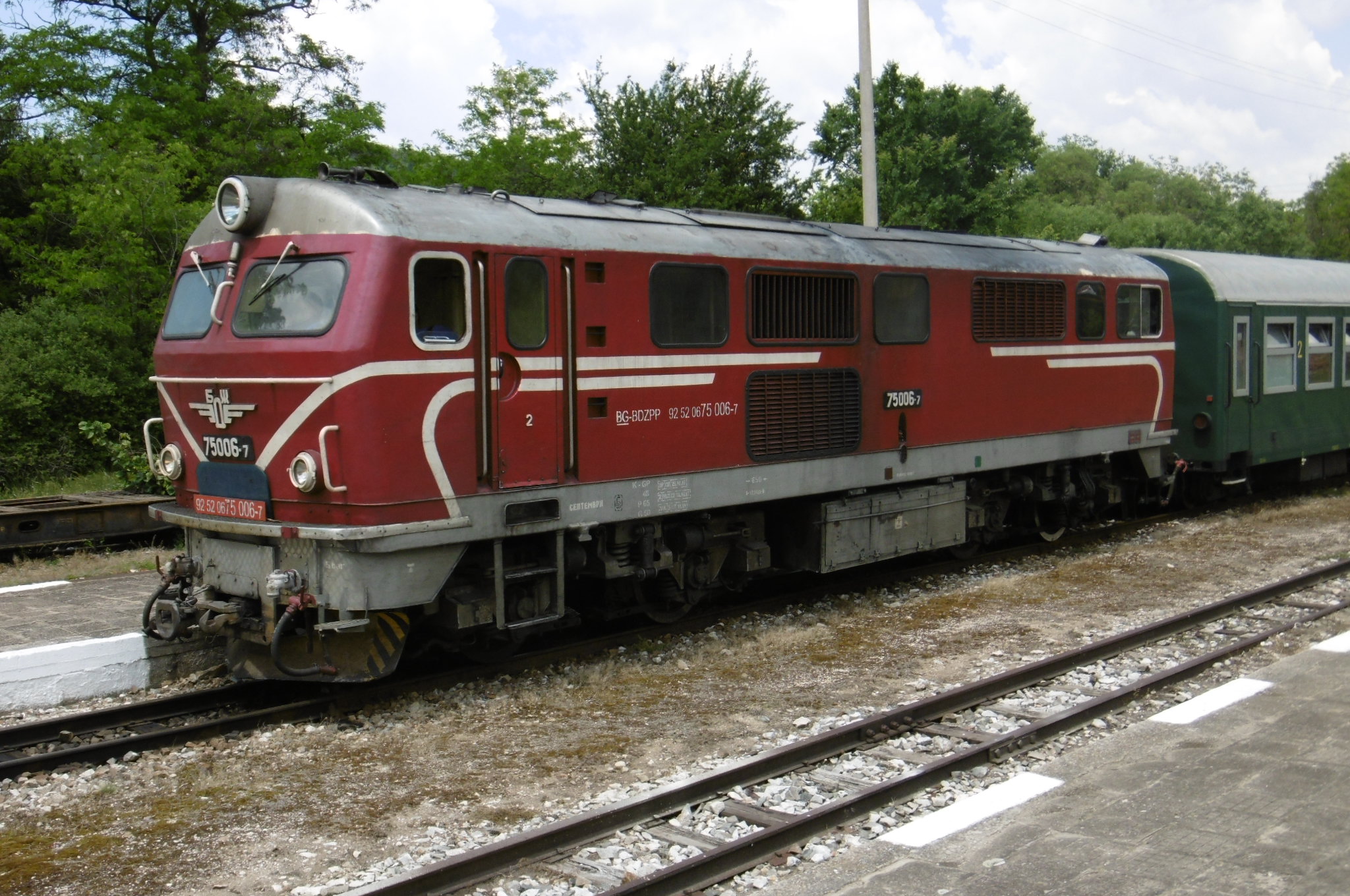
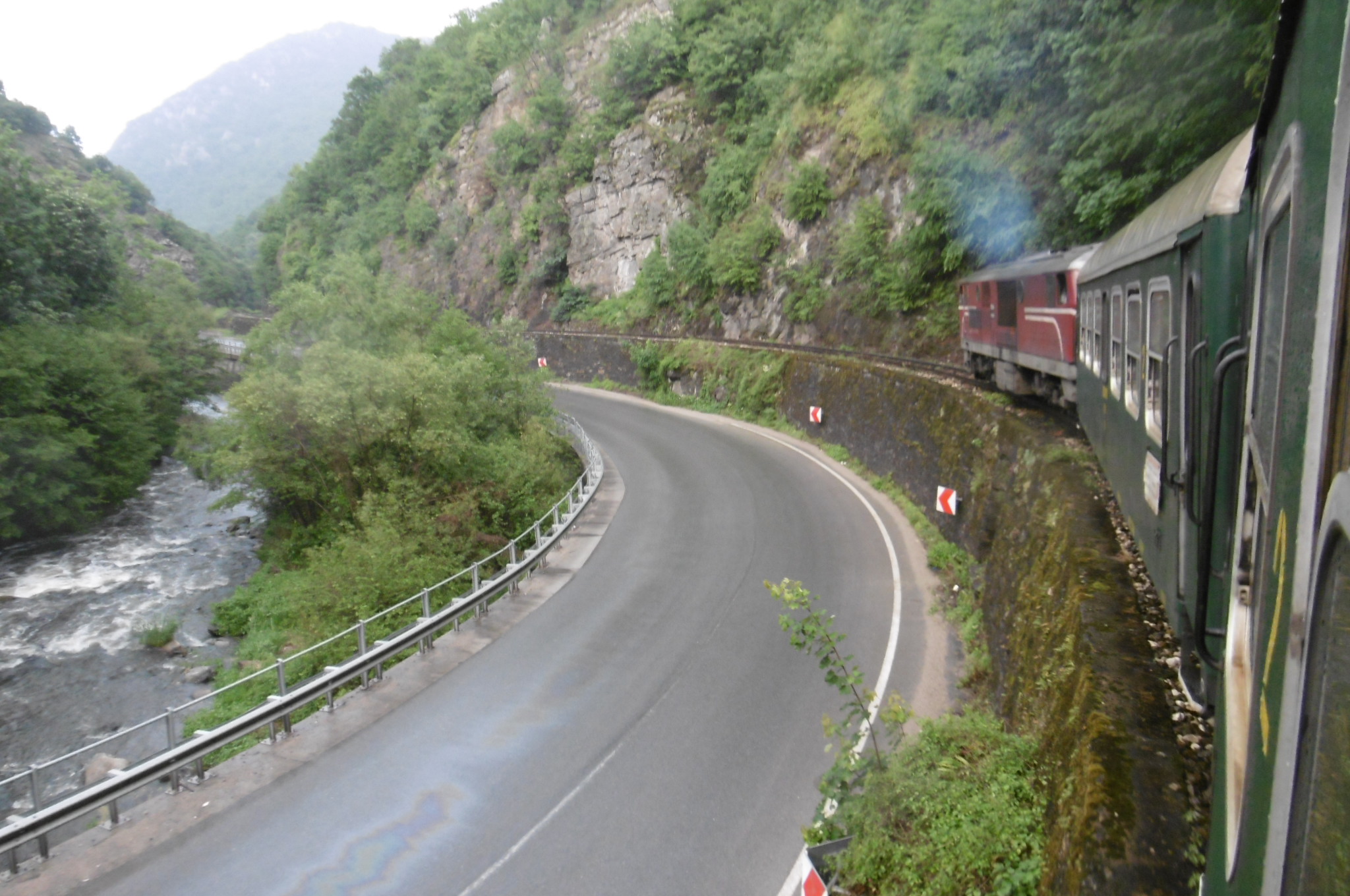
On the Rhodope Narrow Gauge Railway I managed to travel by a 4-axles Henschel diesel locomotive from 1965. At the end of the 1980s, the FAUR Factory in Bucuresti copied this type, but the original one was a better construction.
Poland
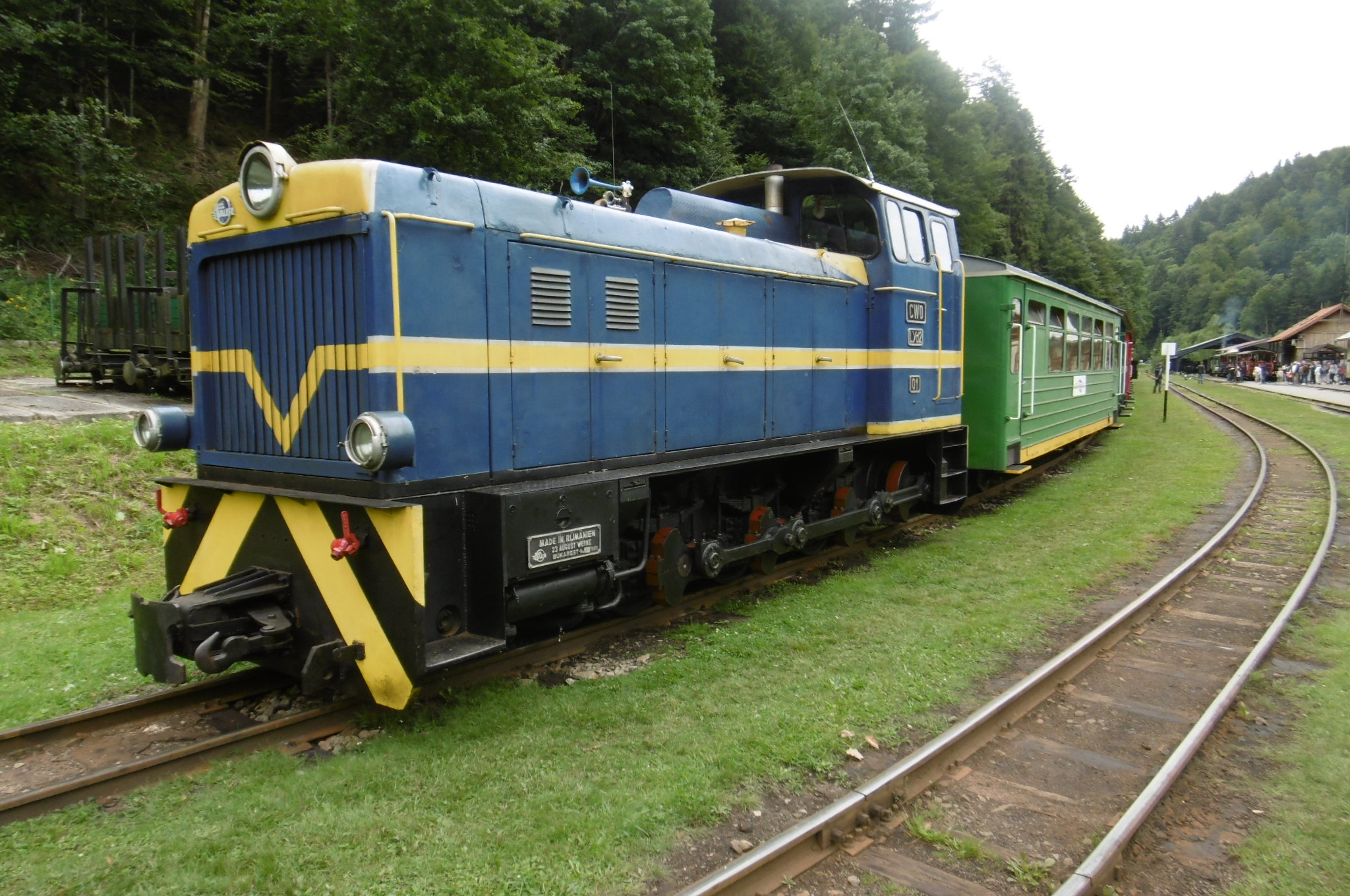
The L30H series (Polish: Lyd2) were widely used on Polish narrow gauge railways, including industrial railways. These three-axle types were manufactured by FAUR in Bucharest between 1973 and 1983. They are regularly used on passenger trains by Bieszczadzka Kolejka Leśna in south-eastern Poland.
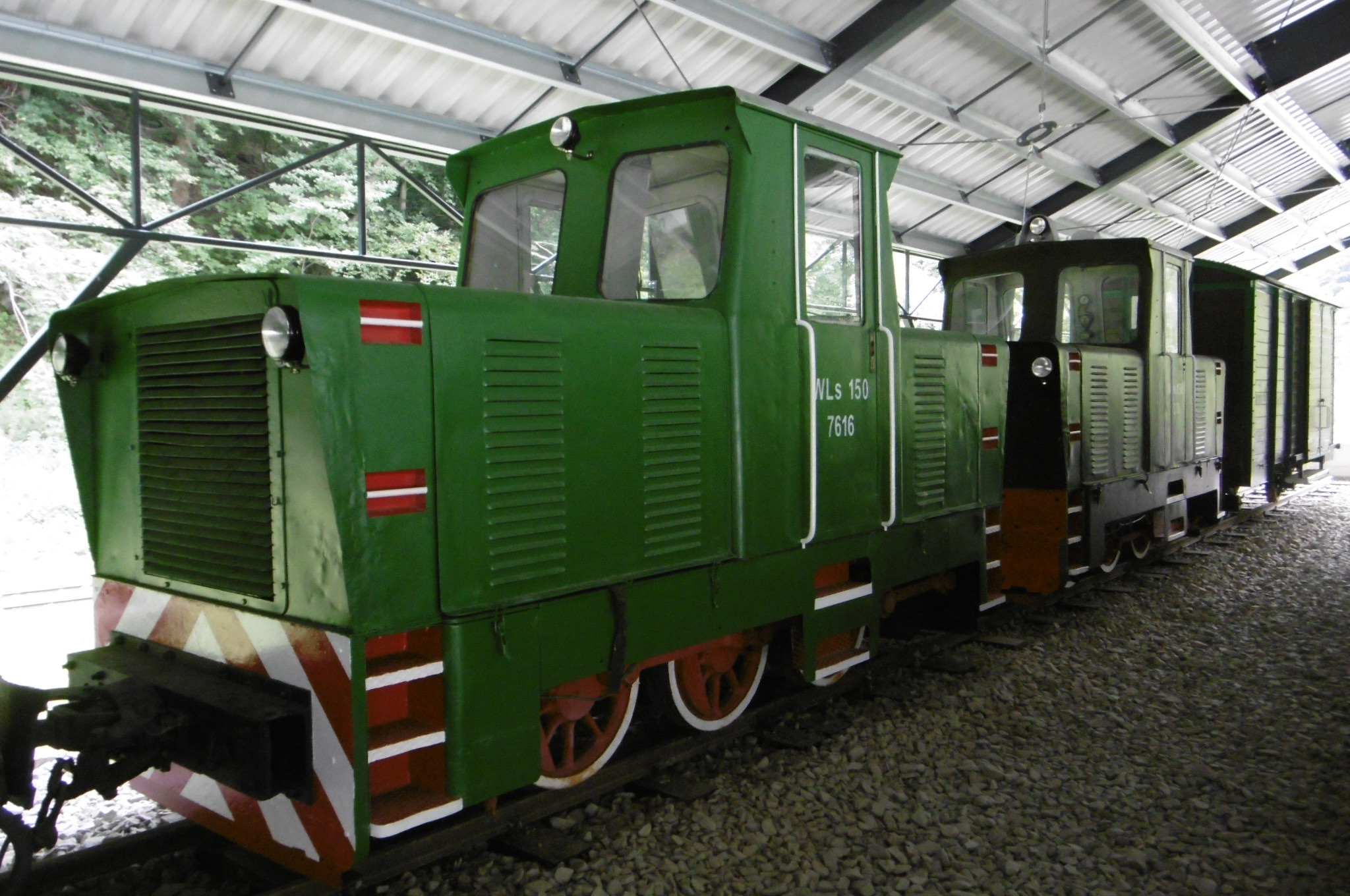
The Wls 150 series (Lyd1) locomotives are not in service on this forestry railway, but I saw a working locomotive in Środa Wielkopolska in 2023. This type was mainly used on industrial railways.
Slovakia
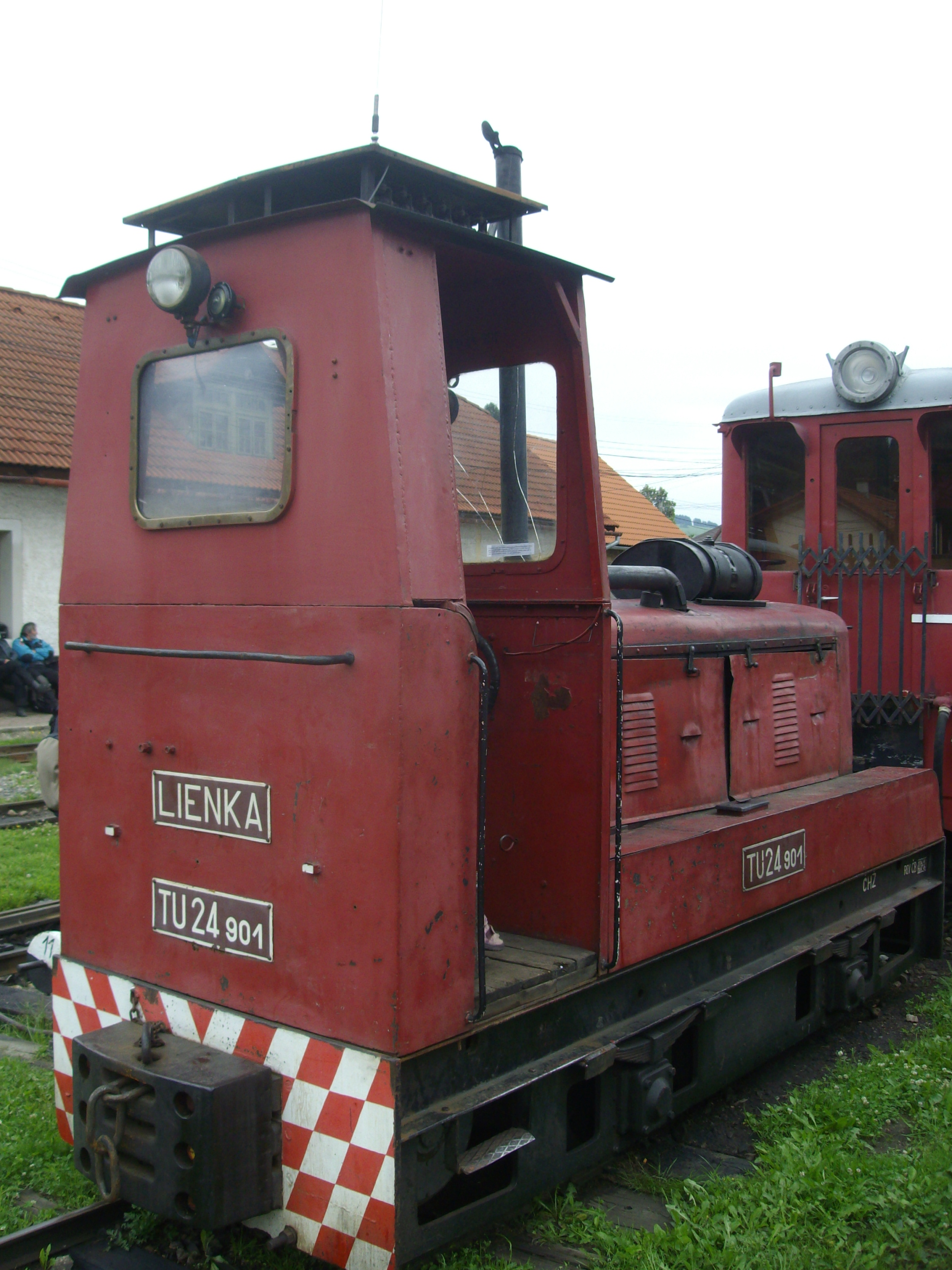
The BNE-50 series locomotives were built in the 1950s with Škoda engine. On the Čiernohronská železnica they use it mostly in work trains. The narrow gauge railway of Szob has also one of this type.
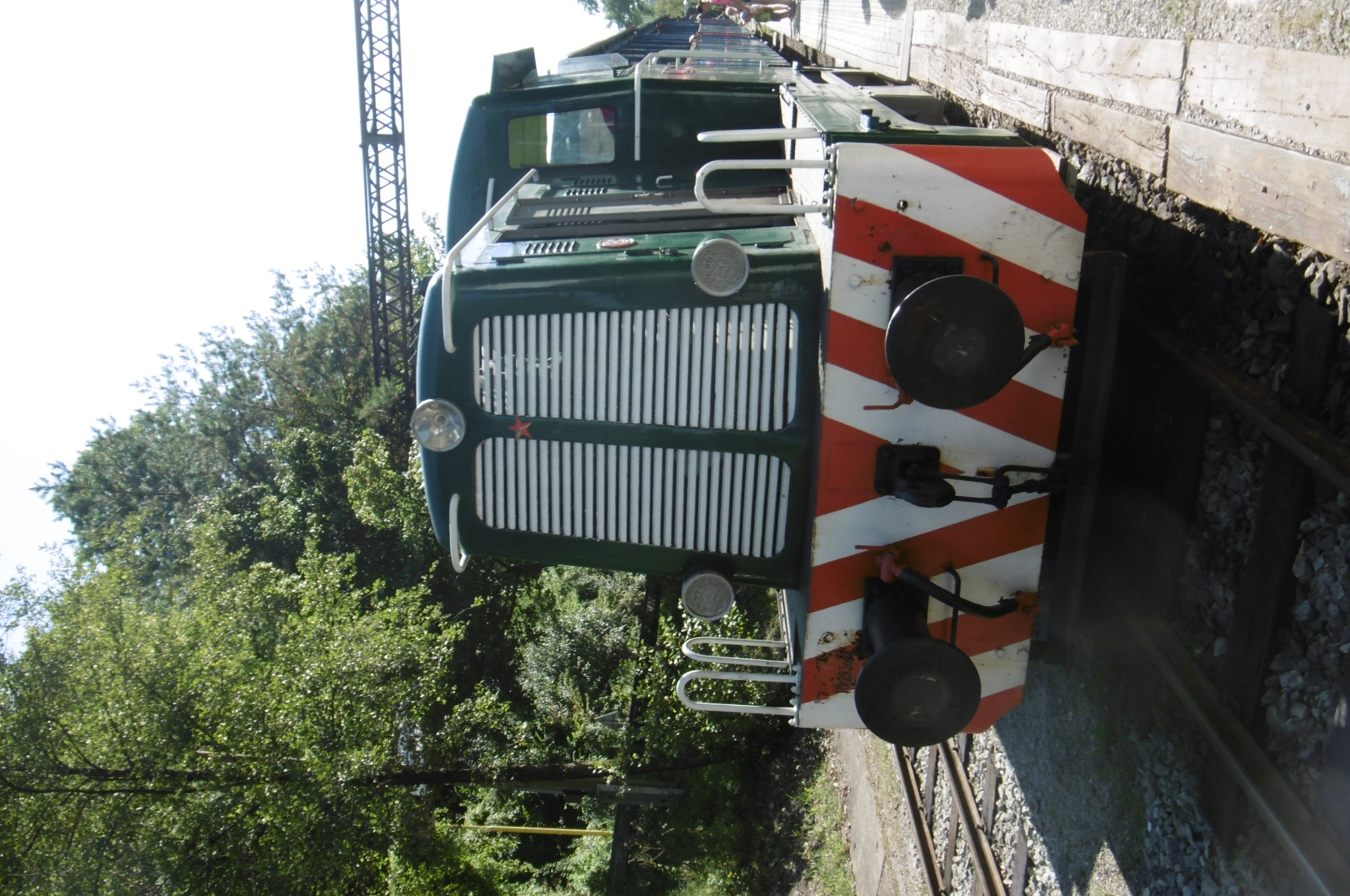
TU29.2 series was a modified narrow gauge version of type T211 shunting locomotives. This locomotive originally was built on standard gauge by ČKD factory. It has been working on the Children's Railway of Košice since 2018.
Czech Republic
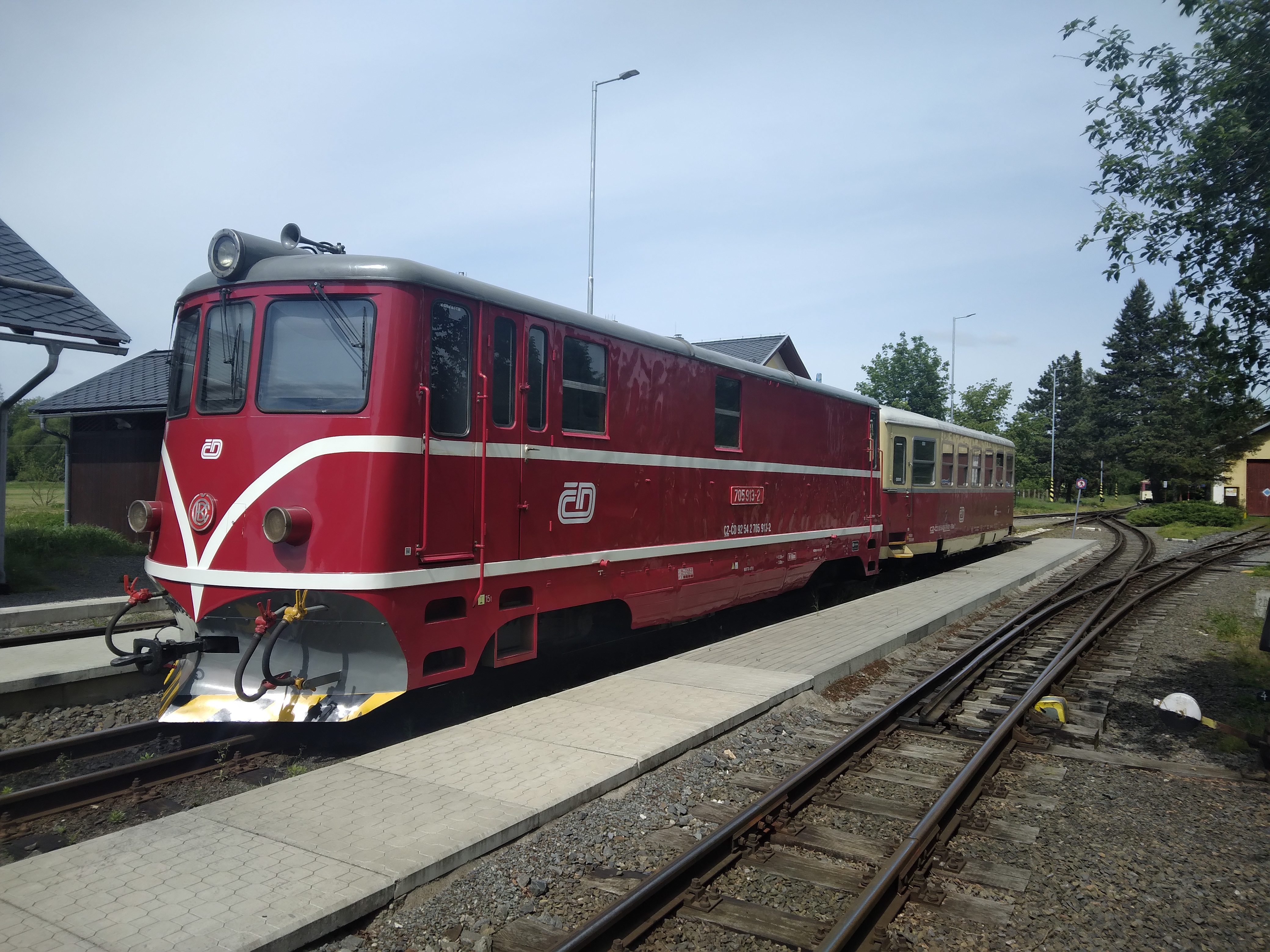
ČKD produced TU47 series narrow gauge locos in the 1950s in Prague. These have 2 driver's cab which is not so common on narrow gauge lines. This one operates in Osoblaha which is the last narrow gauge line of ČD.
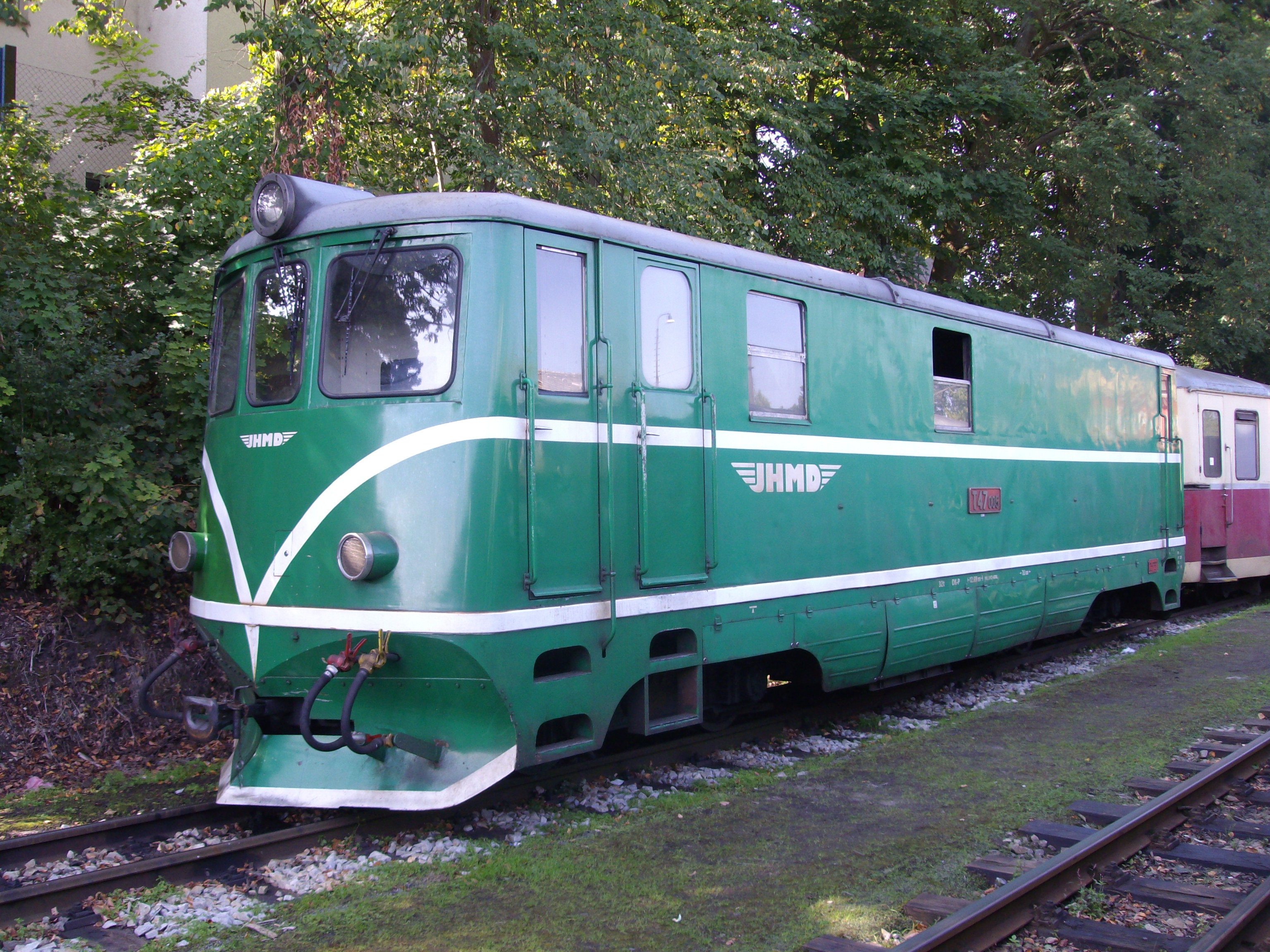
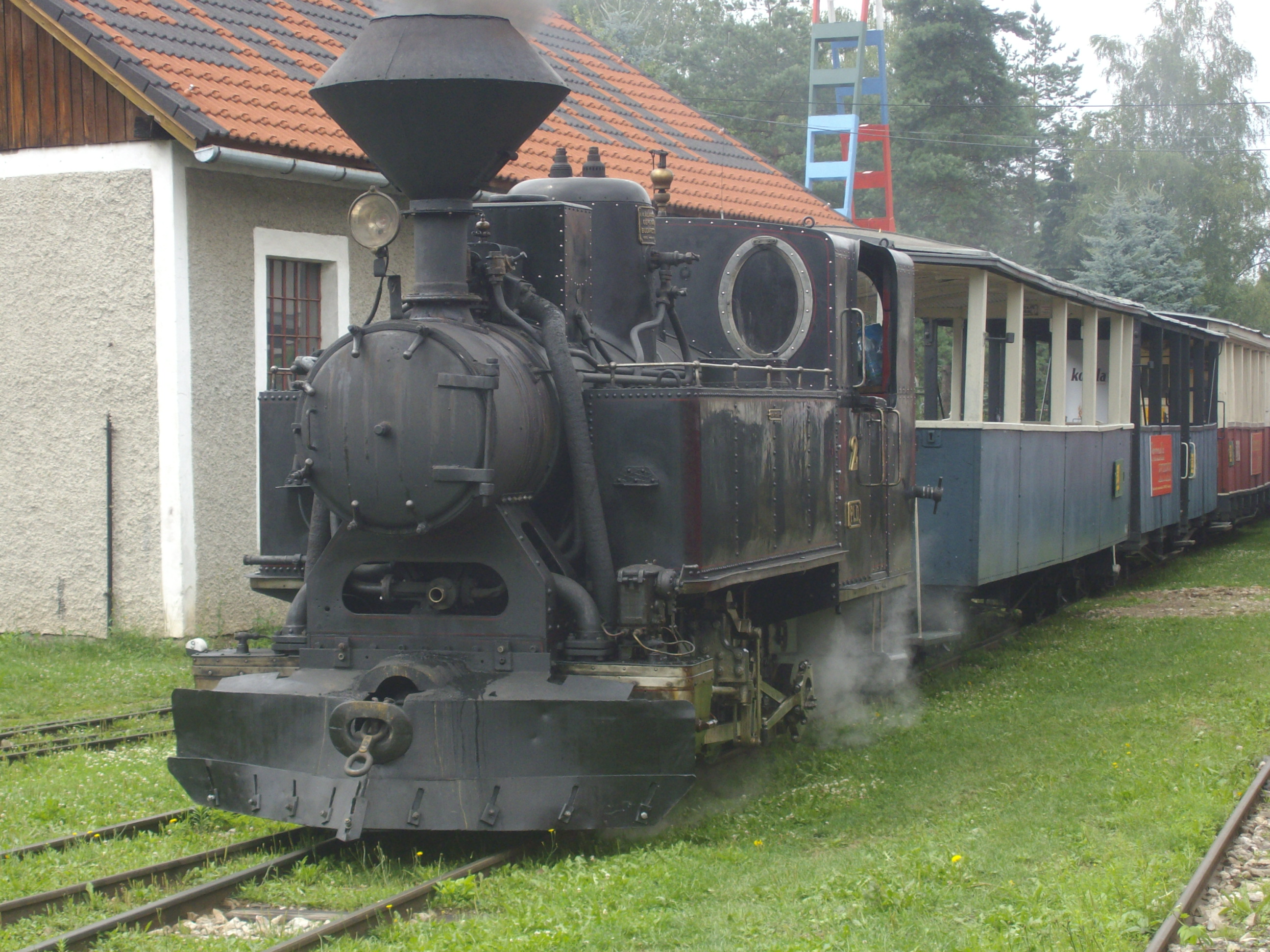
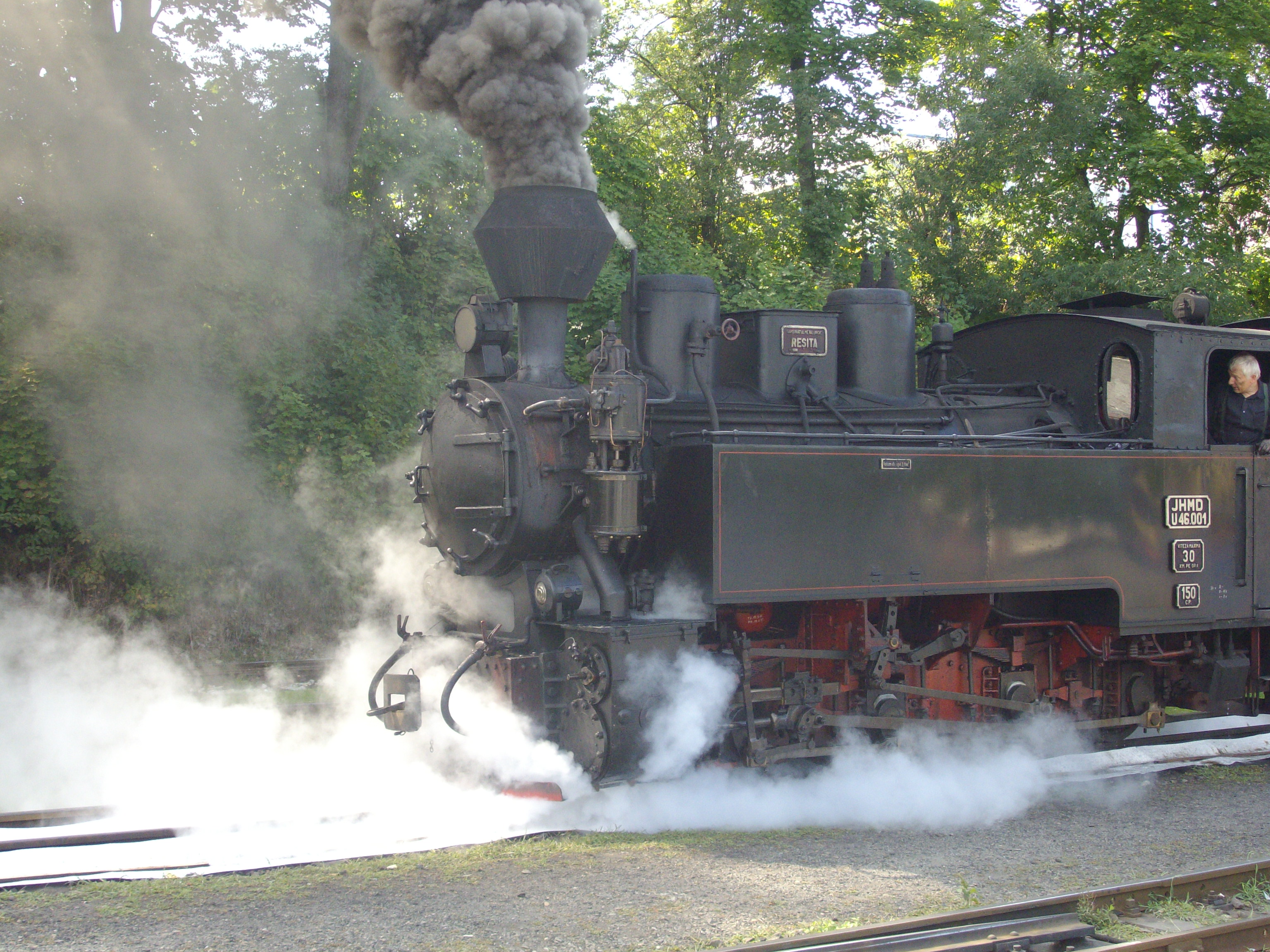
The Jindřichův Hradec Local Railways (JHMD) also operates some locos of TU47 series, both in red and green colours. These series also previously operated on the former narrow gauge line of Ružomberok, which is now located in Slovakia.
Austria
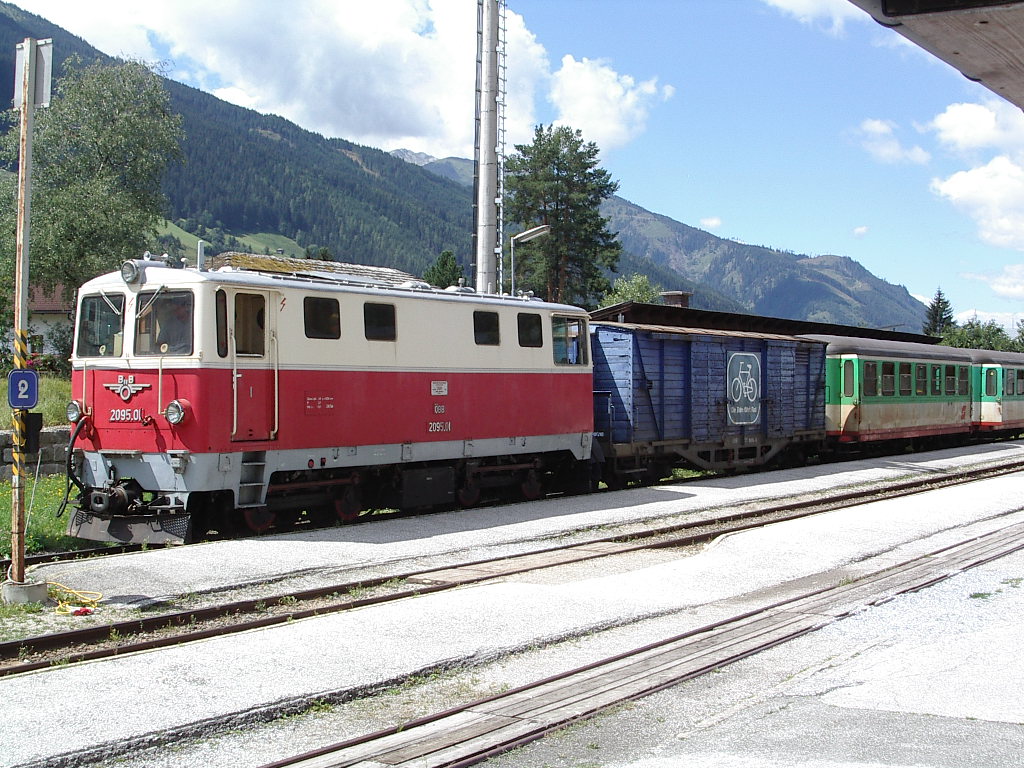
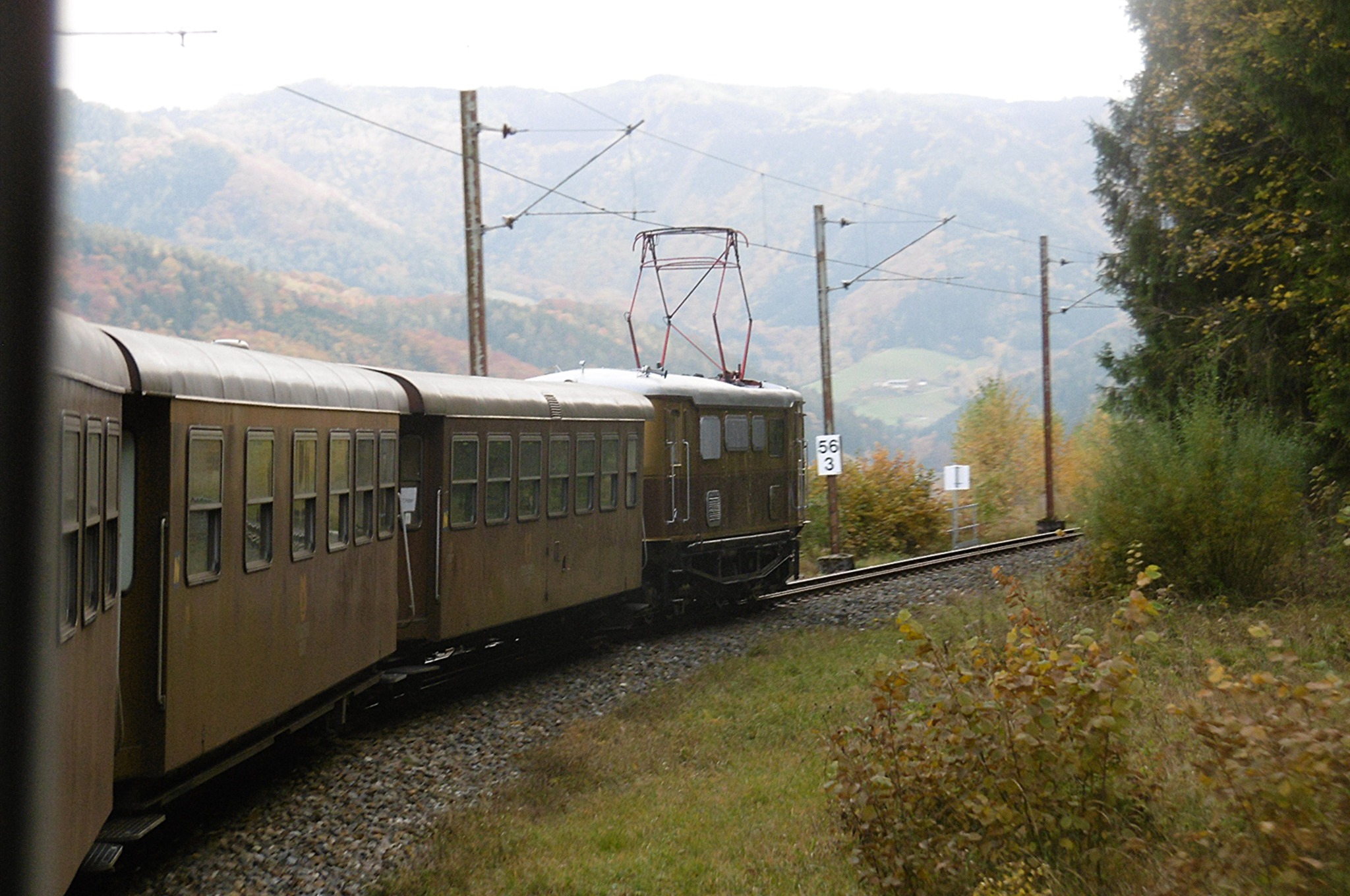
The ÖBB 2095 series diesel locomotives were built by Simmering-Graz-Pauker Factory between 1958 and 1962. On the Pinzgauer Lokalbahn they were operated regularly in 2007. This one has beautiful original BBÖ colours.
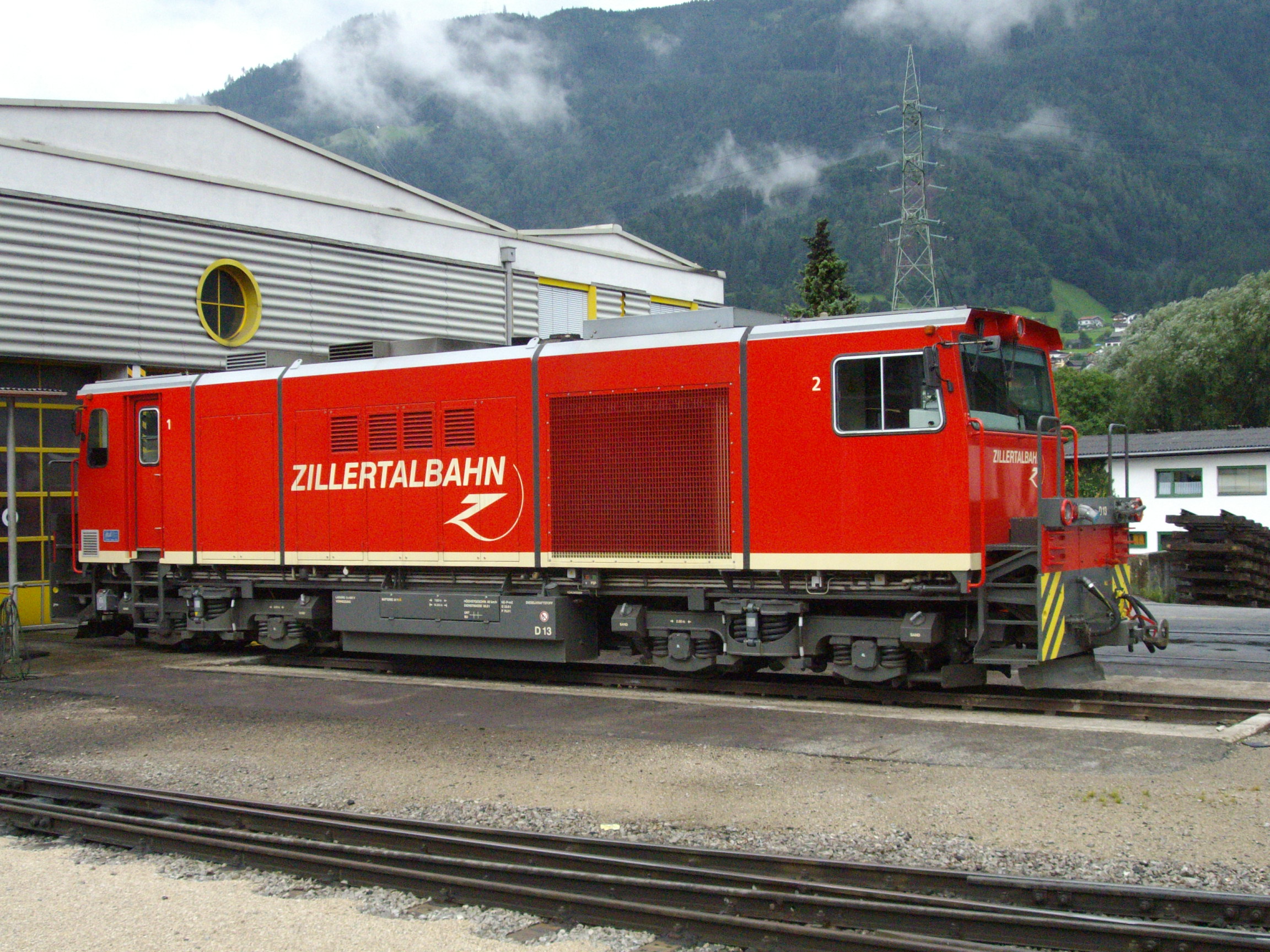
Zillertalbahn got 7 high-permormance diesel locomotives between 2004 and 2012. They are used for both freight and passenger trains. Their local nickname is Lupo. The loco in the picture was sold to the Pinzgauer Lokalbahn.
Lithuania
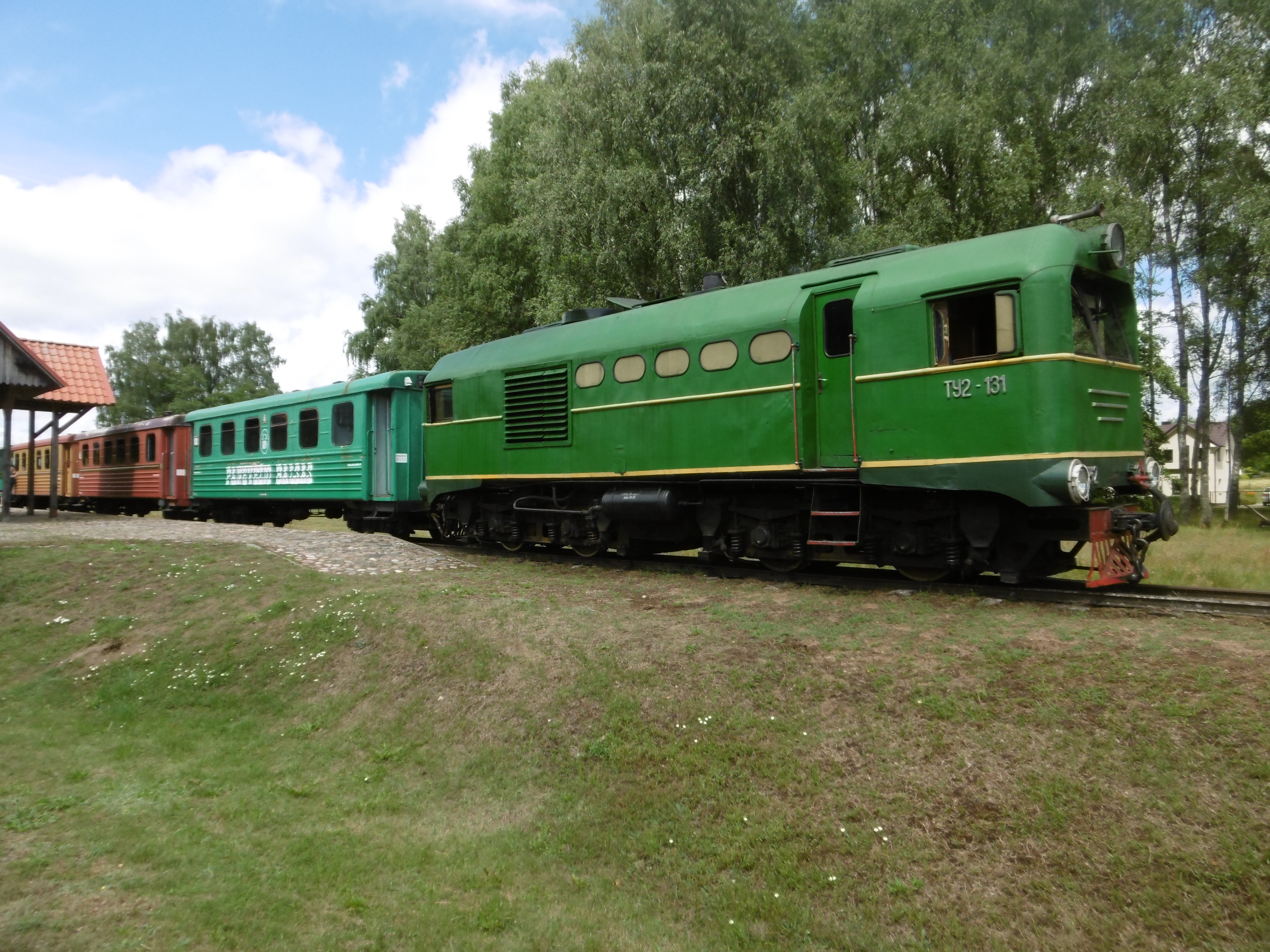
The TU2 series was built in the 1950s by Kaluga machine factory in the Soviet Union with tank engines. They are in operation only on the last Lithuathian narrow gauge line (Panevežys - Rubikai) and on Ukrainian narrow gauge railways. They are suprisingly quiet vehicles.
Ukraine
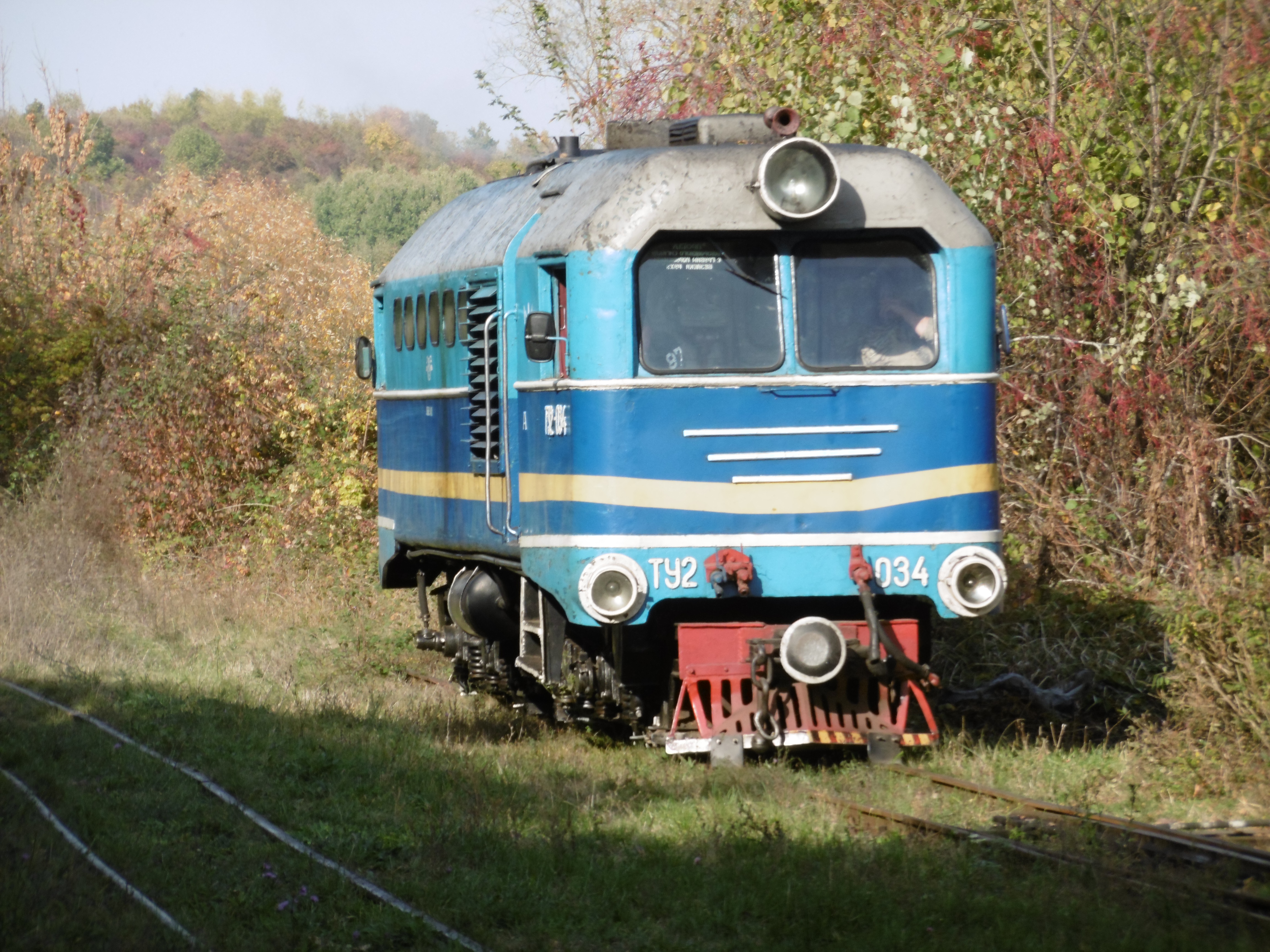
The Borzhava narrow gauge railway was shut down just before the war. TU2 diesel locomotives are still in operation in other parts of Ukraine, such as Haivoron. This type is the last in my collection to have two cabs.
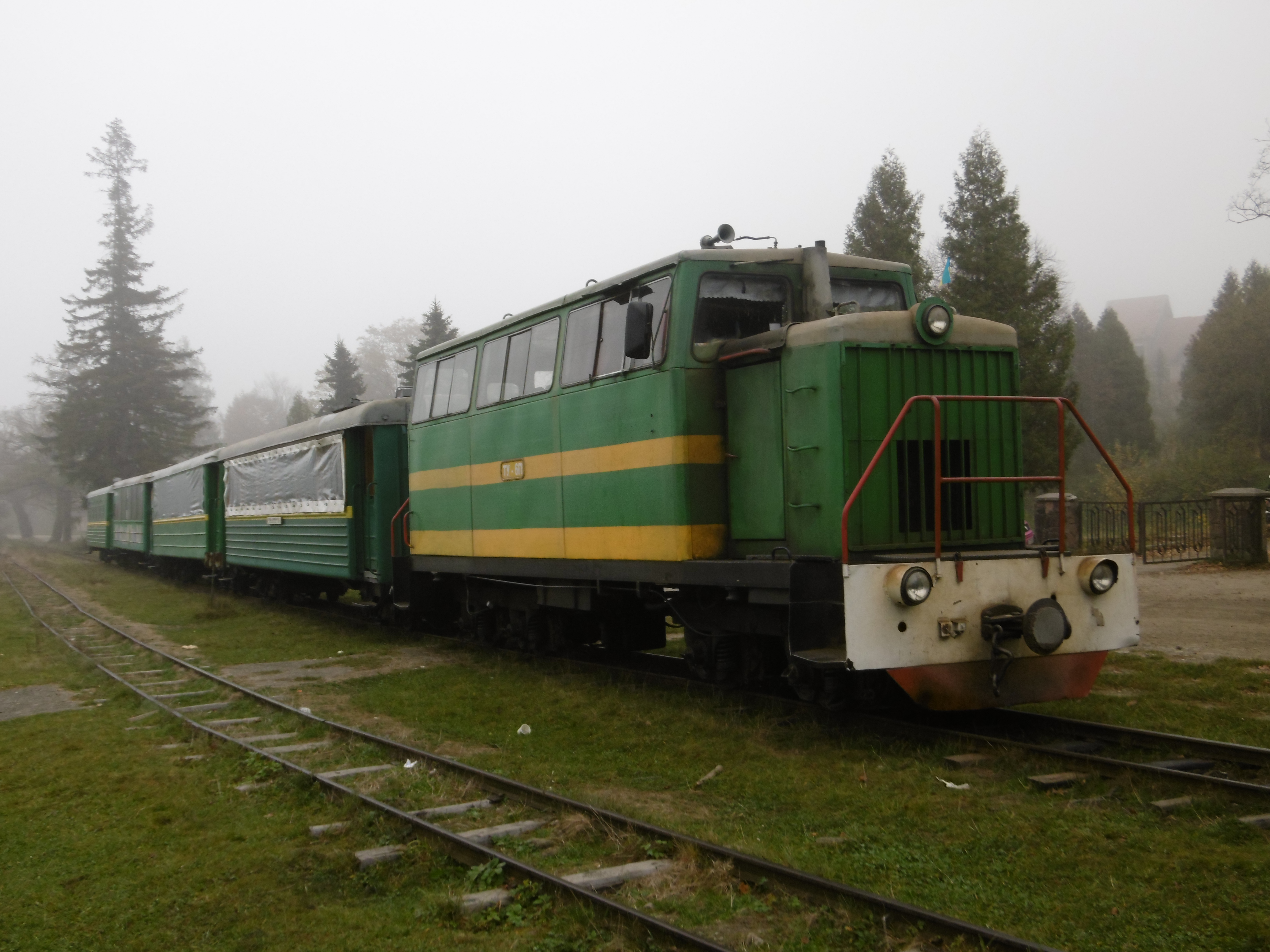
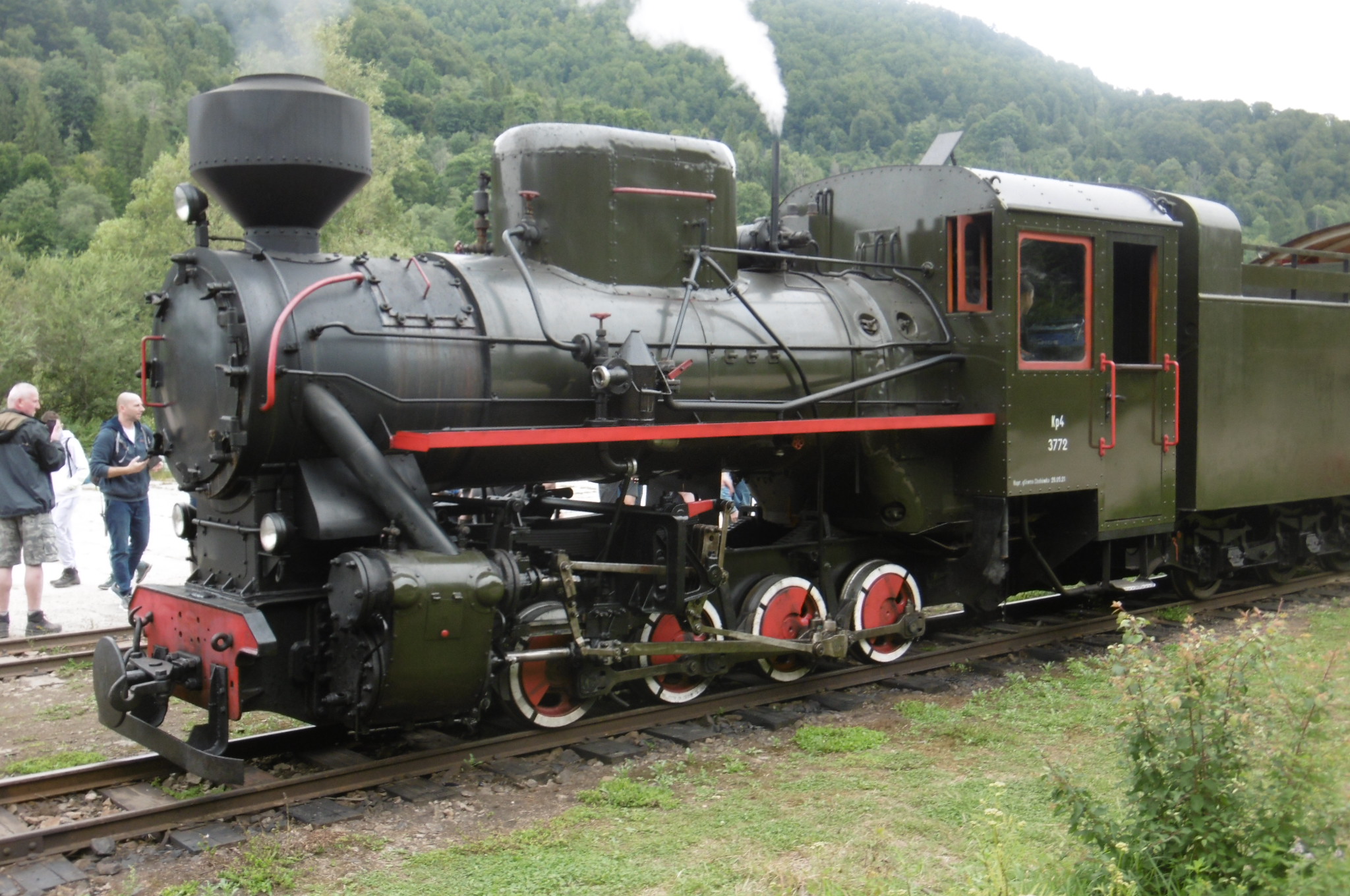
The former Vyhoda Forest Railway has become a tourist attraction under the name "Carpathian Railway". This TU6P locomotive or railcar from 1988 built in Kambarka was the standard engine for passenger trains.
Latvia
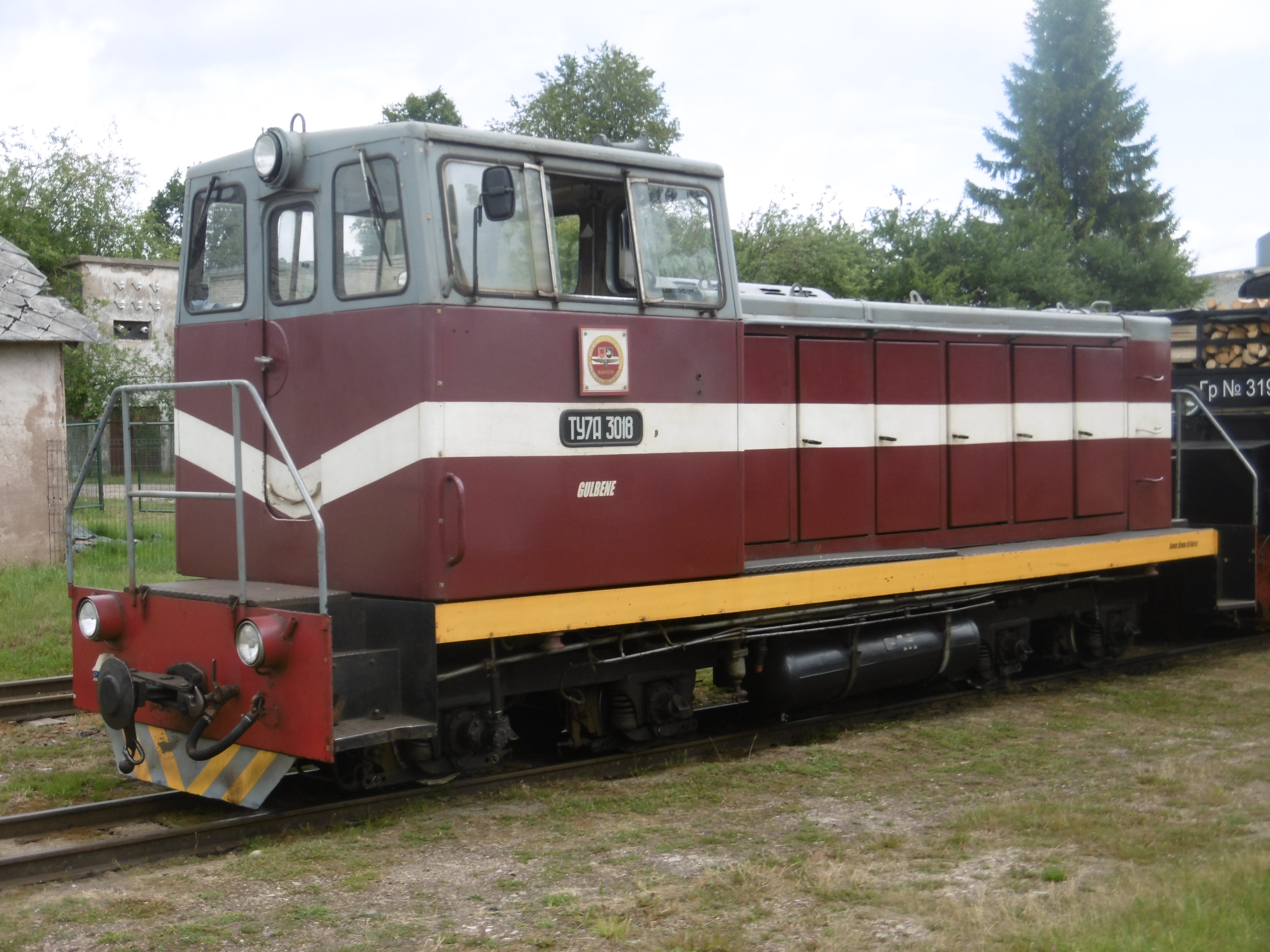
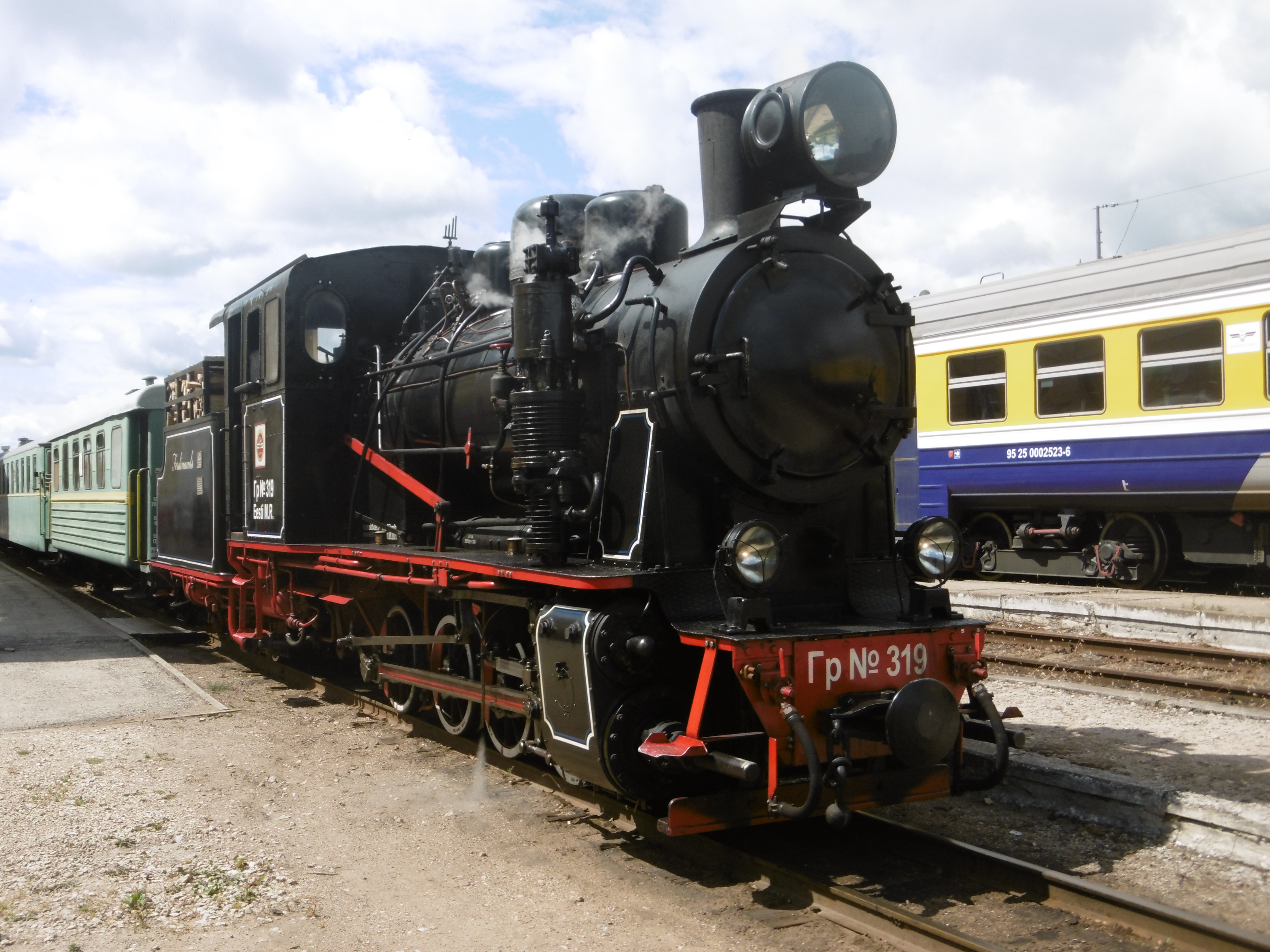
The TU7 series locomotives were built in the same factory which produced TU6 type. This TU7 engine works on the last daily operating narrow gauge railway of the Baltics, between Gulbene and Alūksne.
Wales
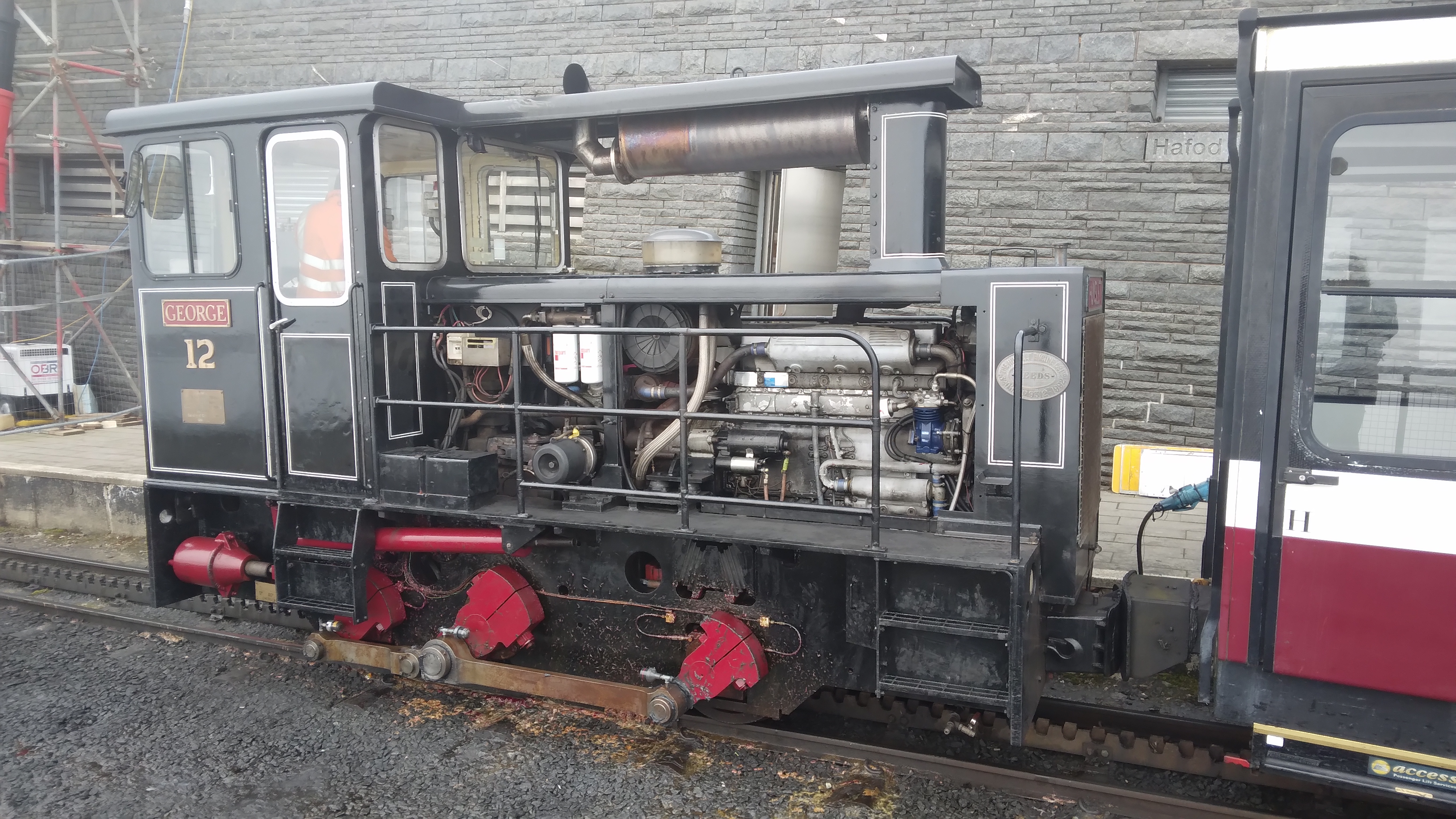
The Snowdon Mountain Railway is the UK's only narrow gauge cogwheel railway. Hunslet-built diesel or steam locomotives take passenger trains up the summit of Snowdon.




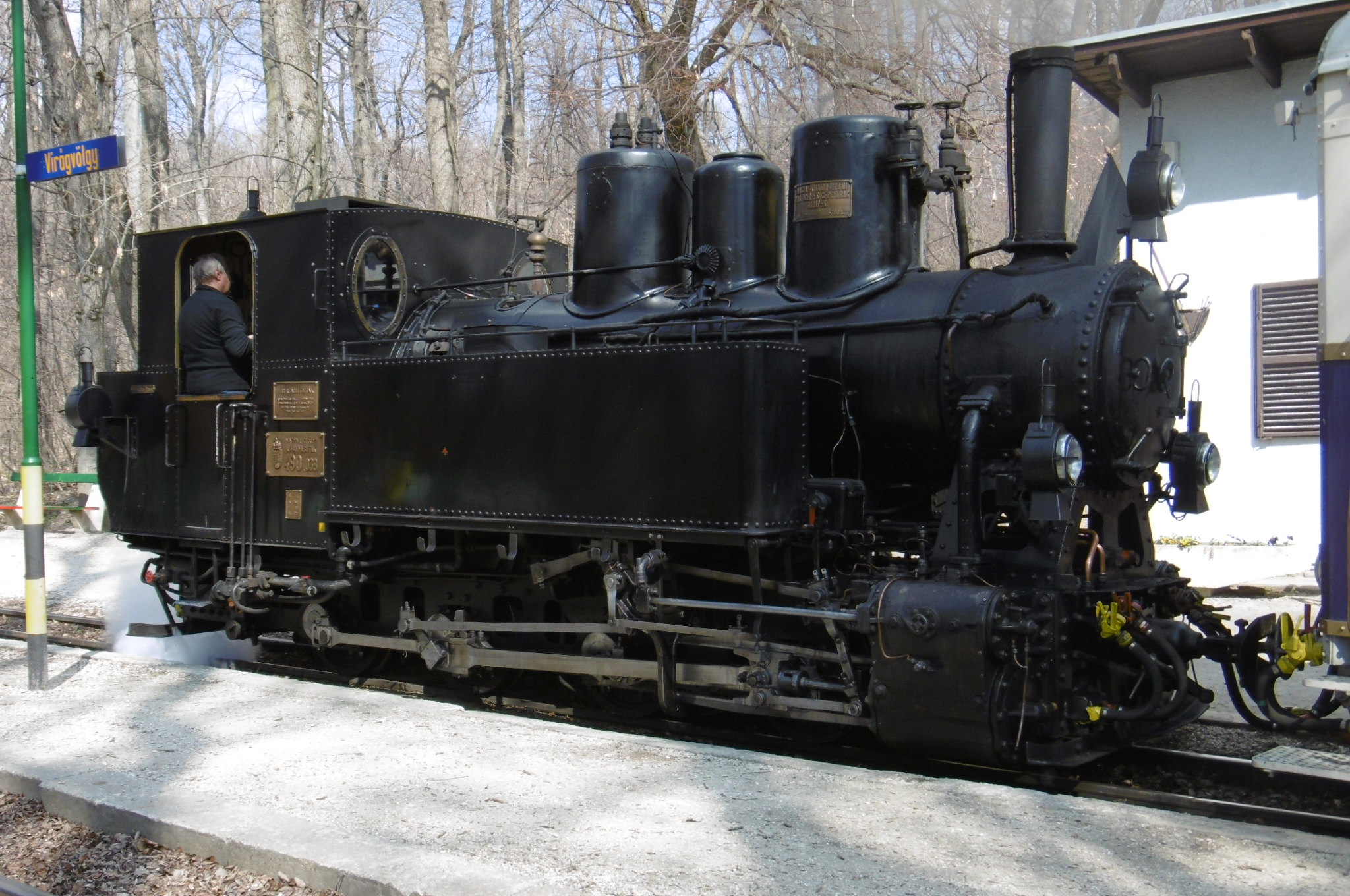
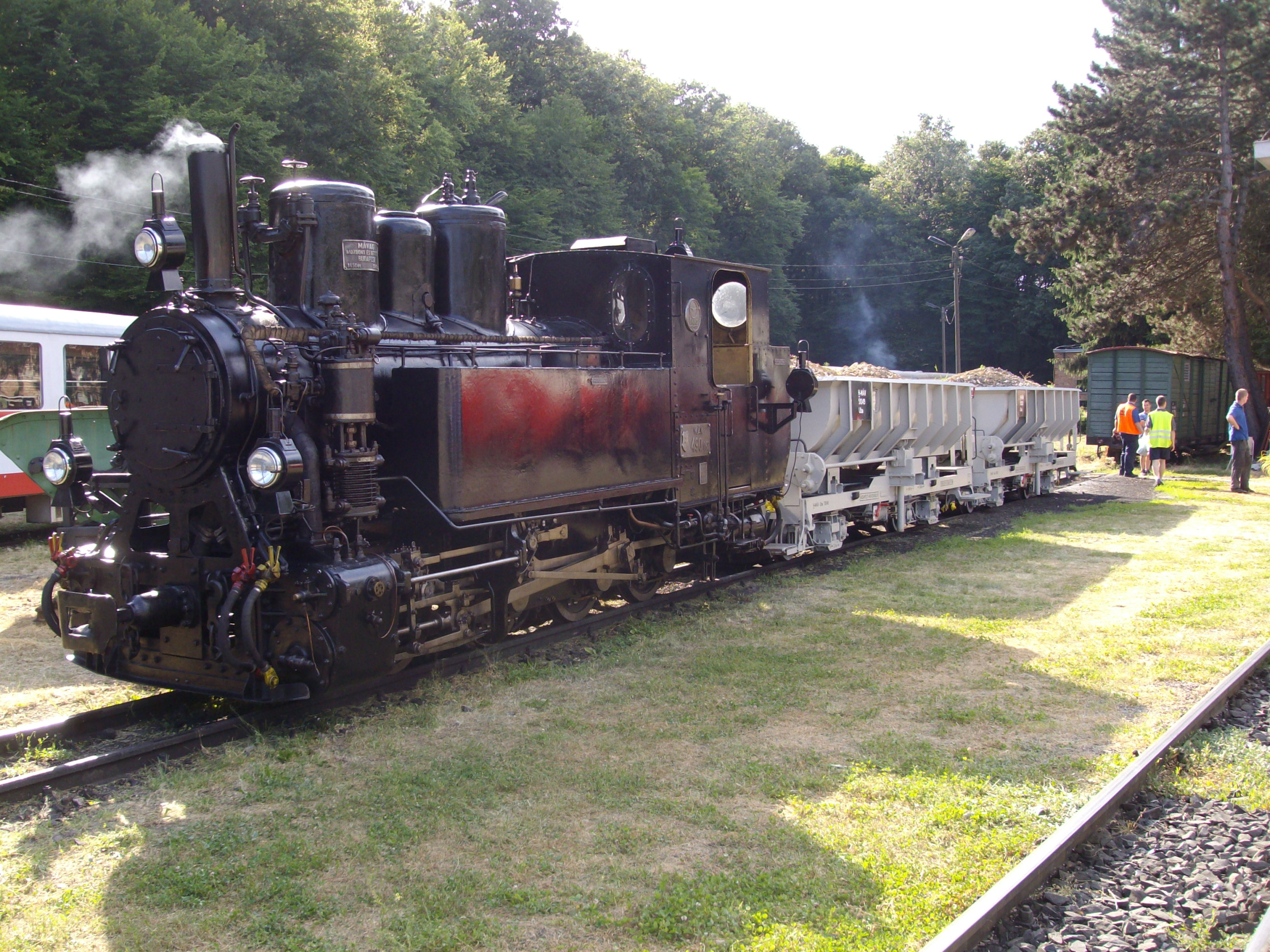
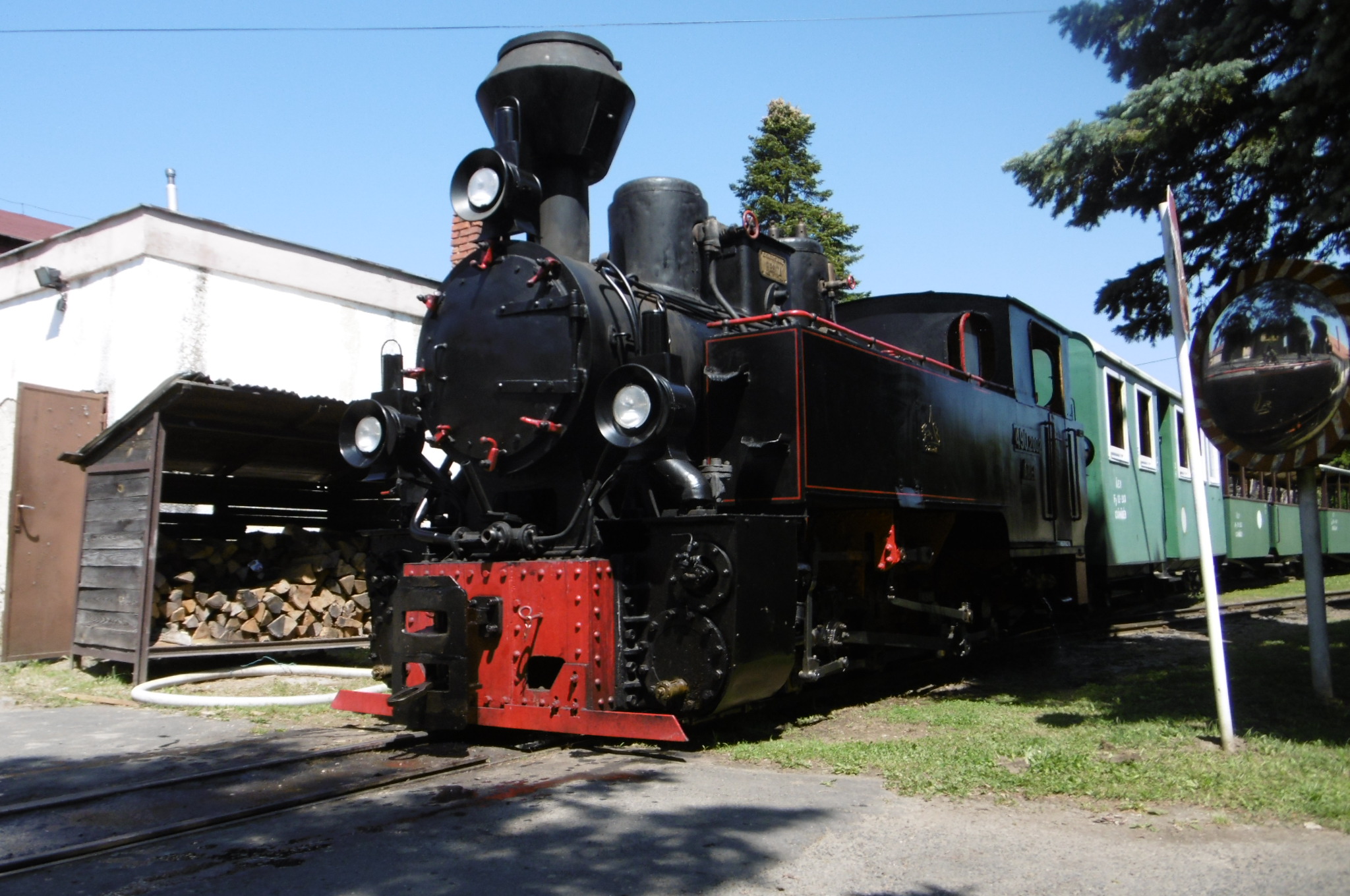
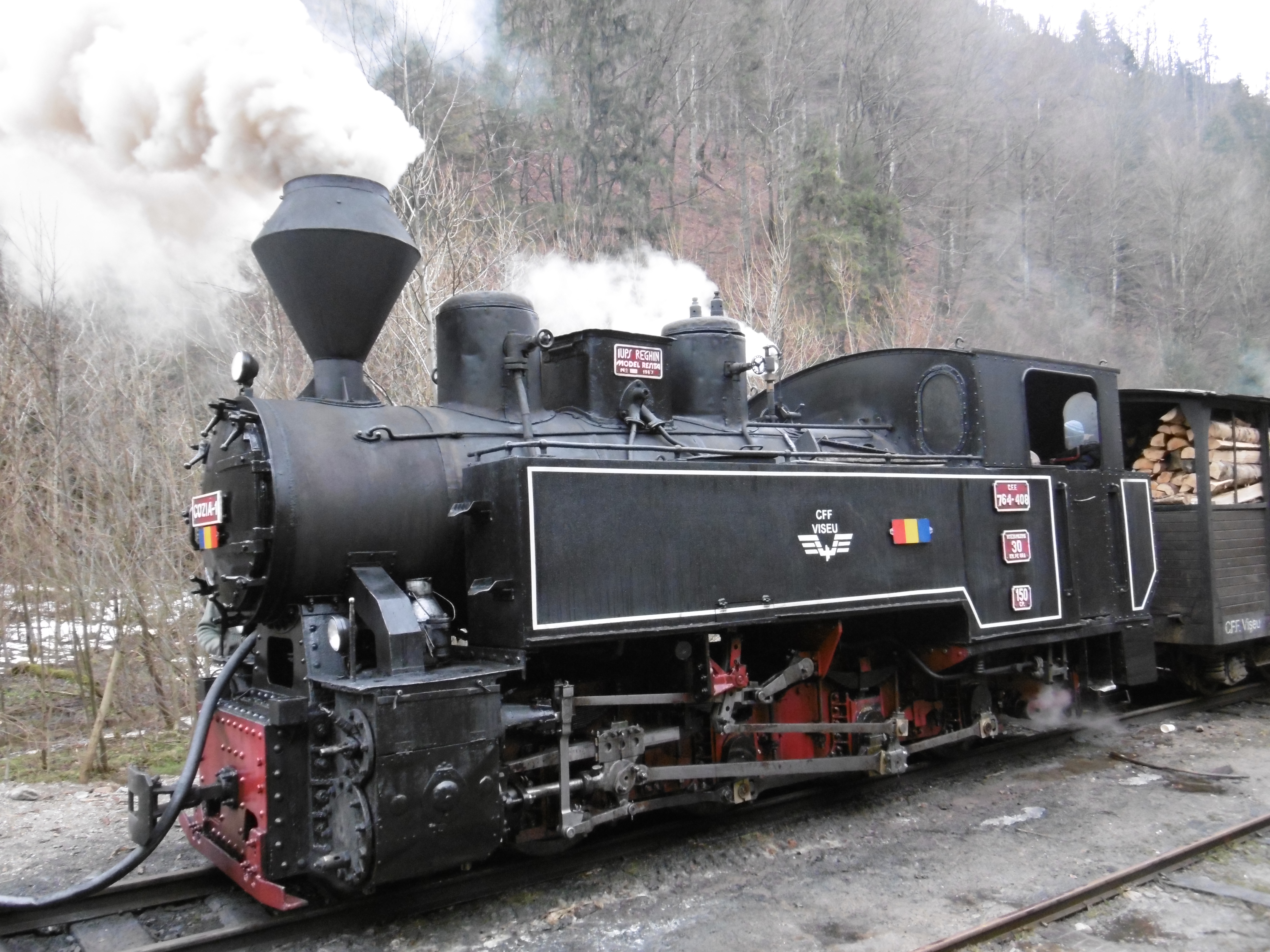
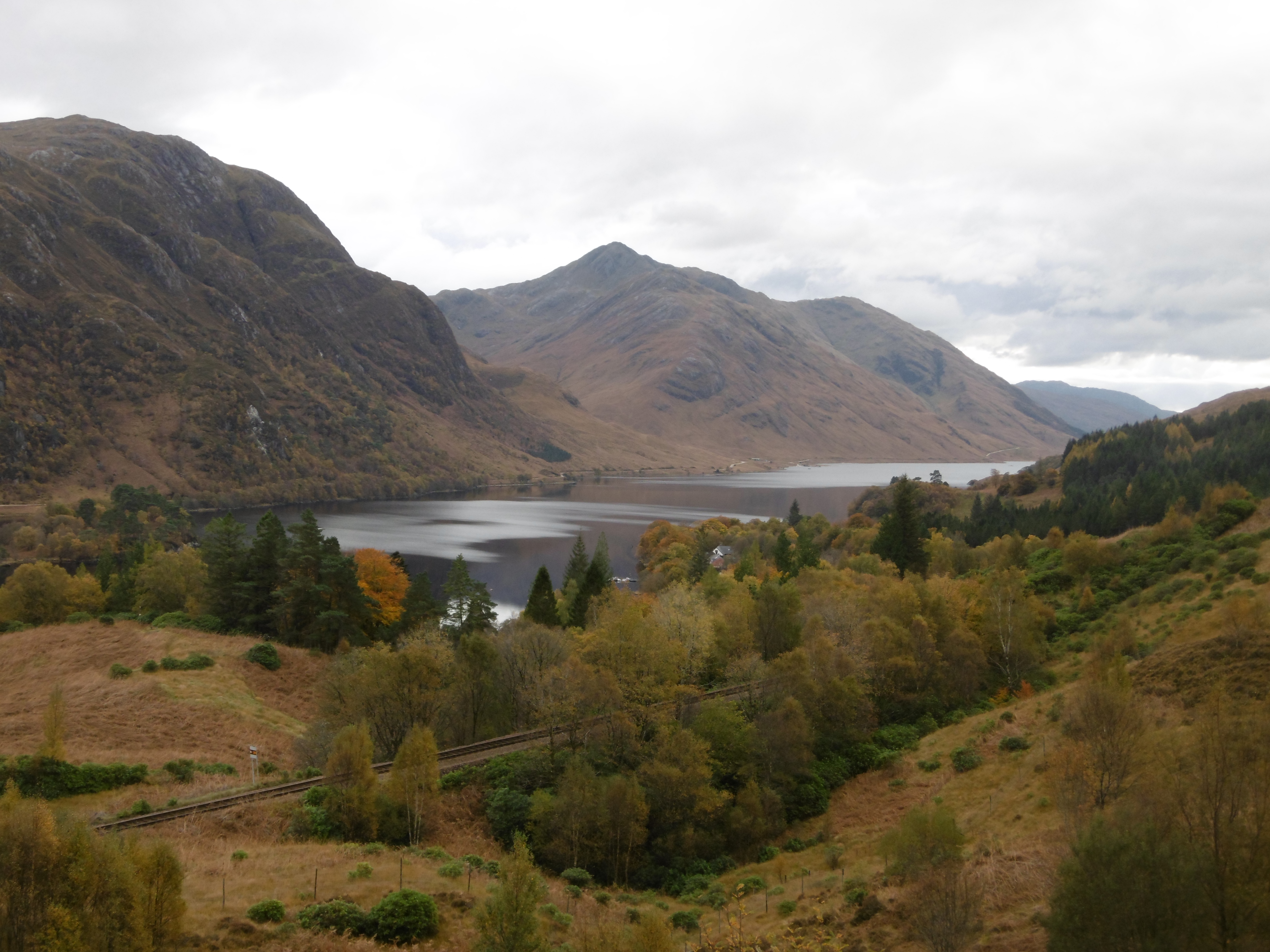
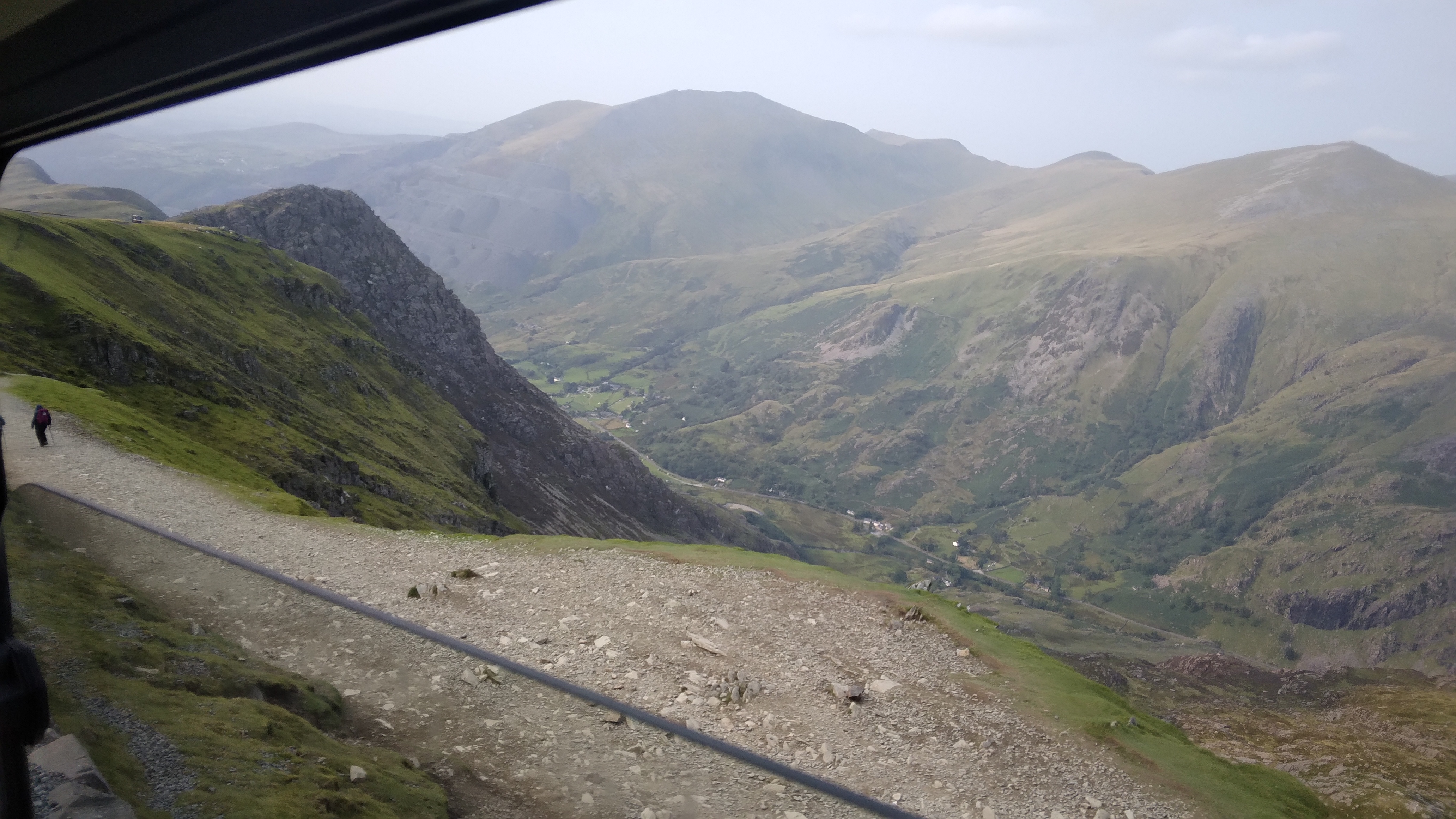
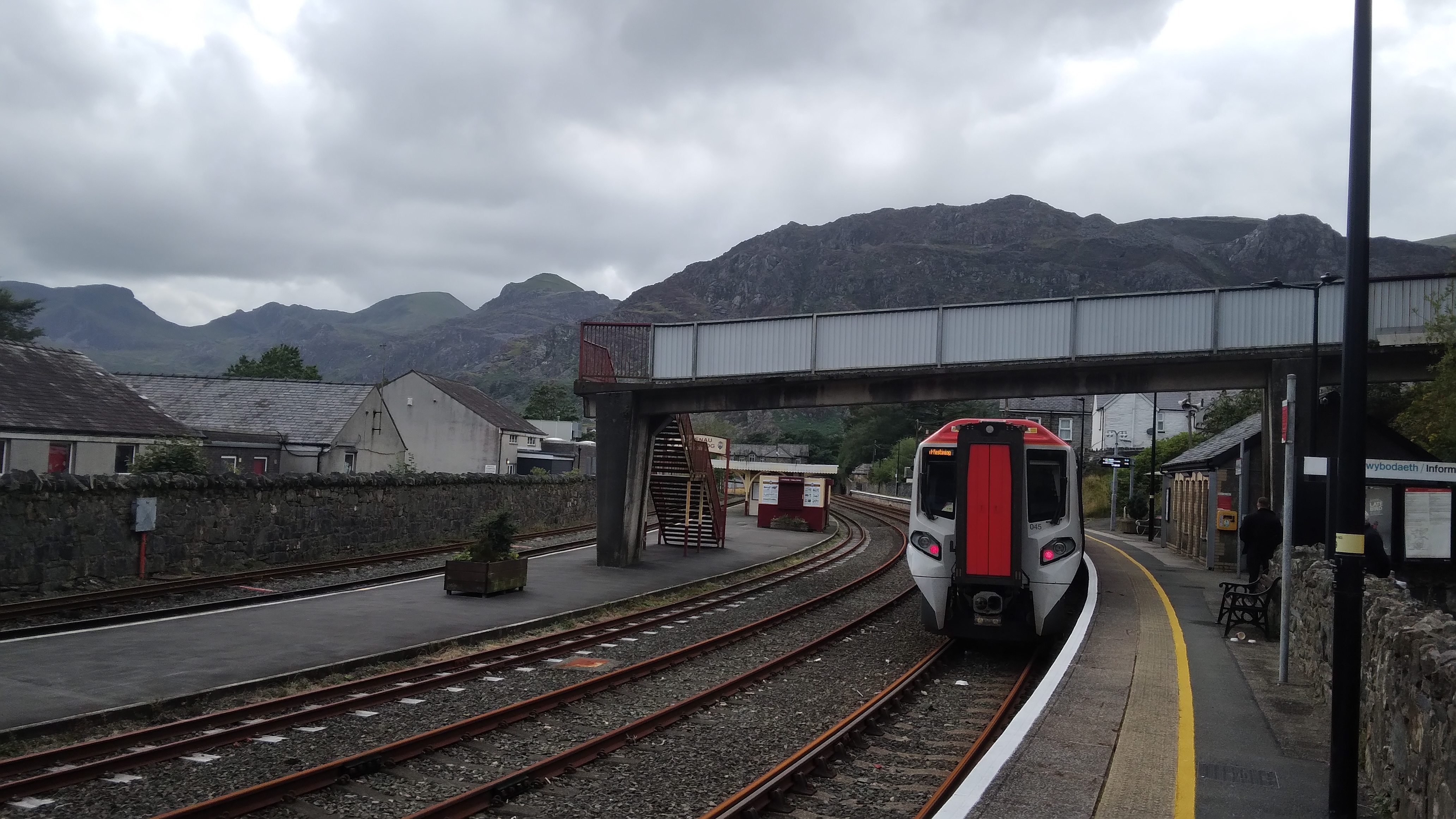
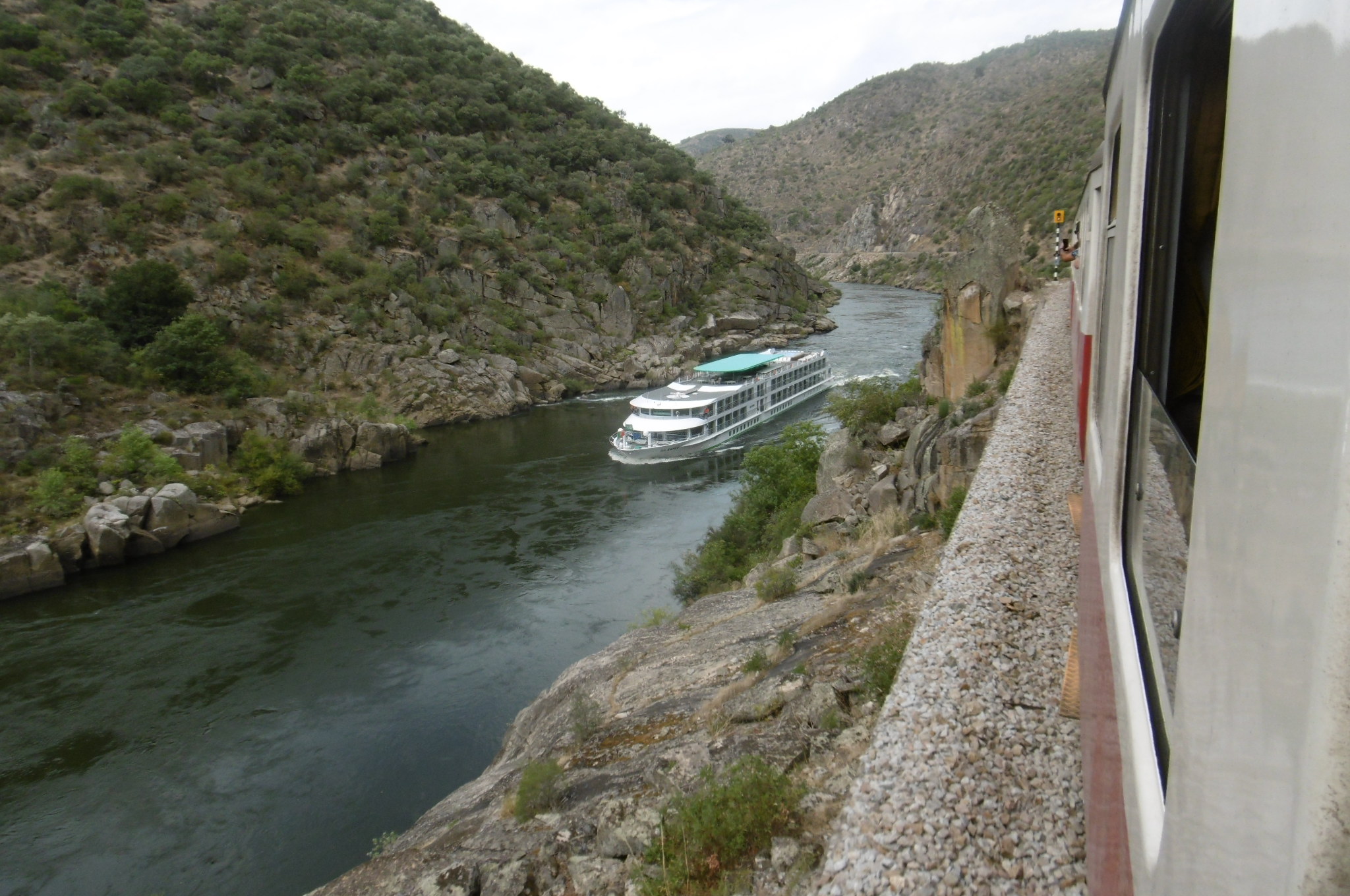
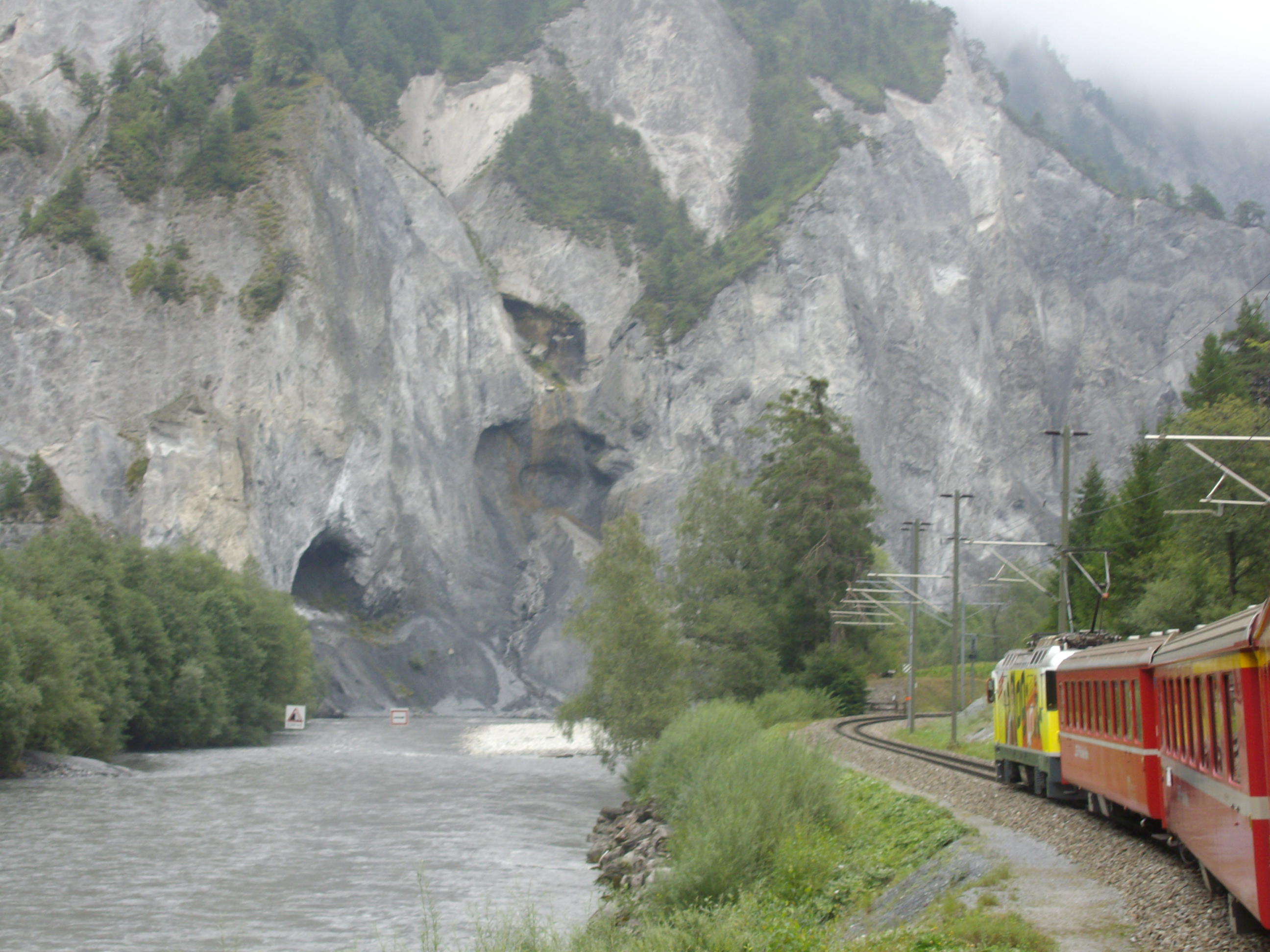
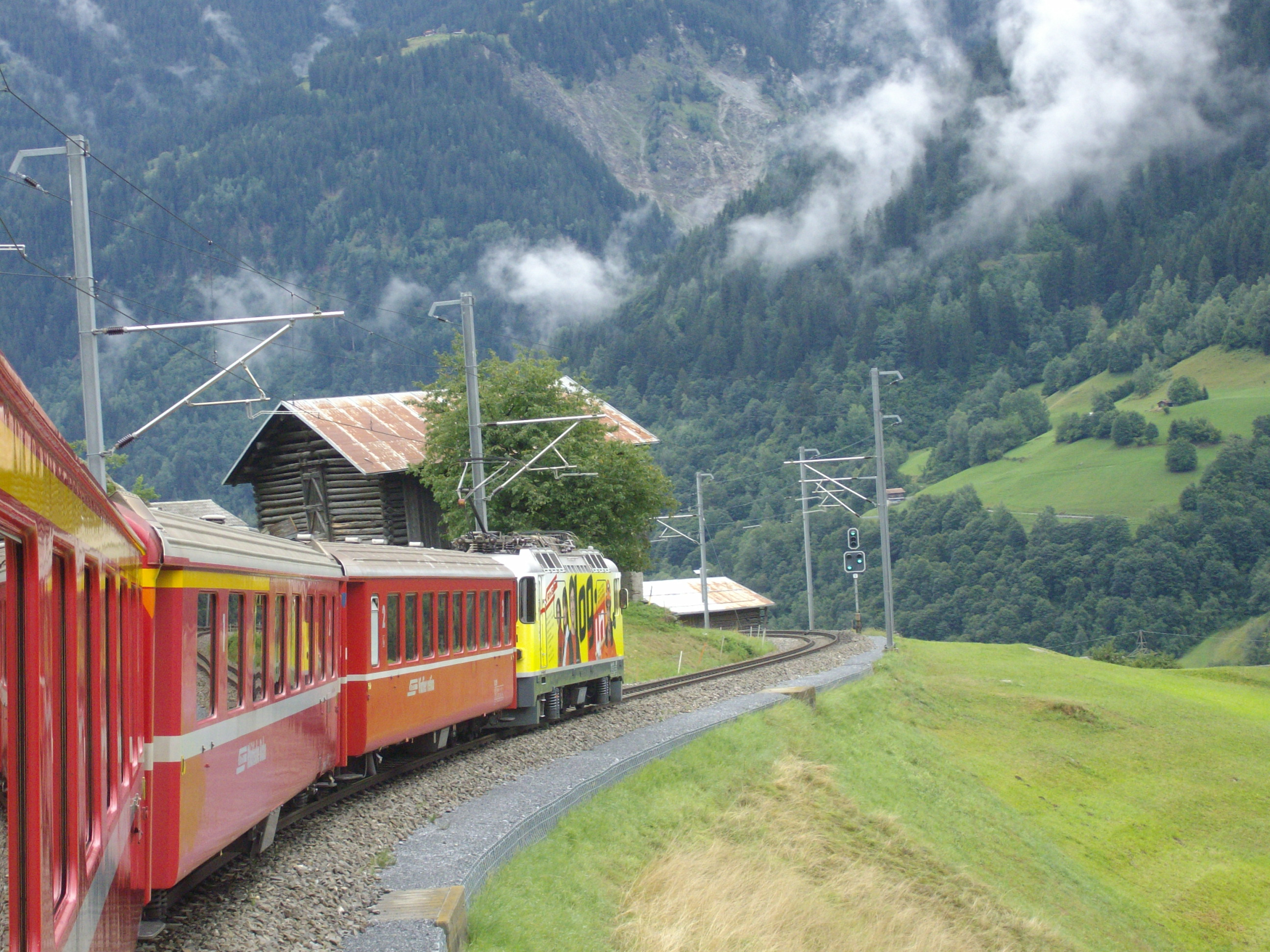
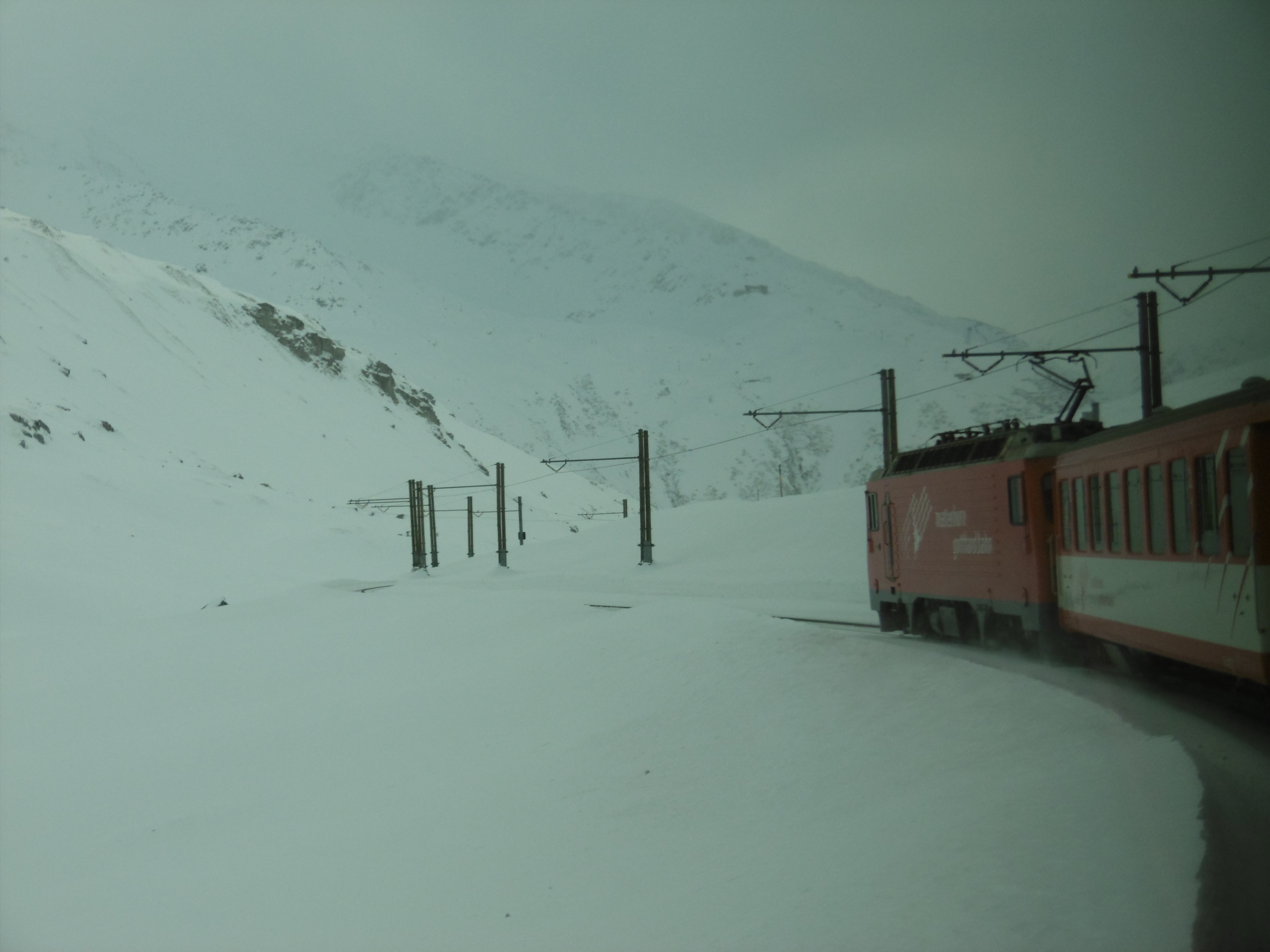
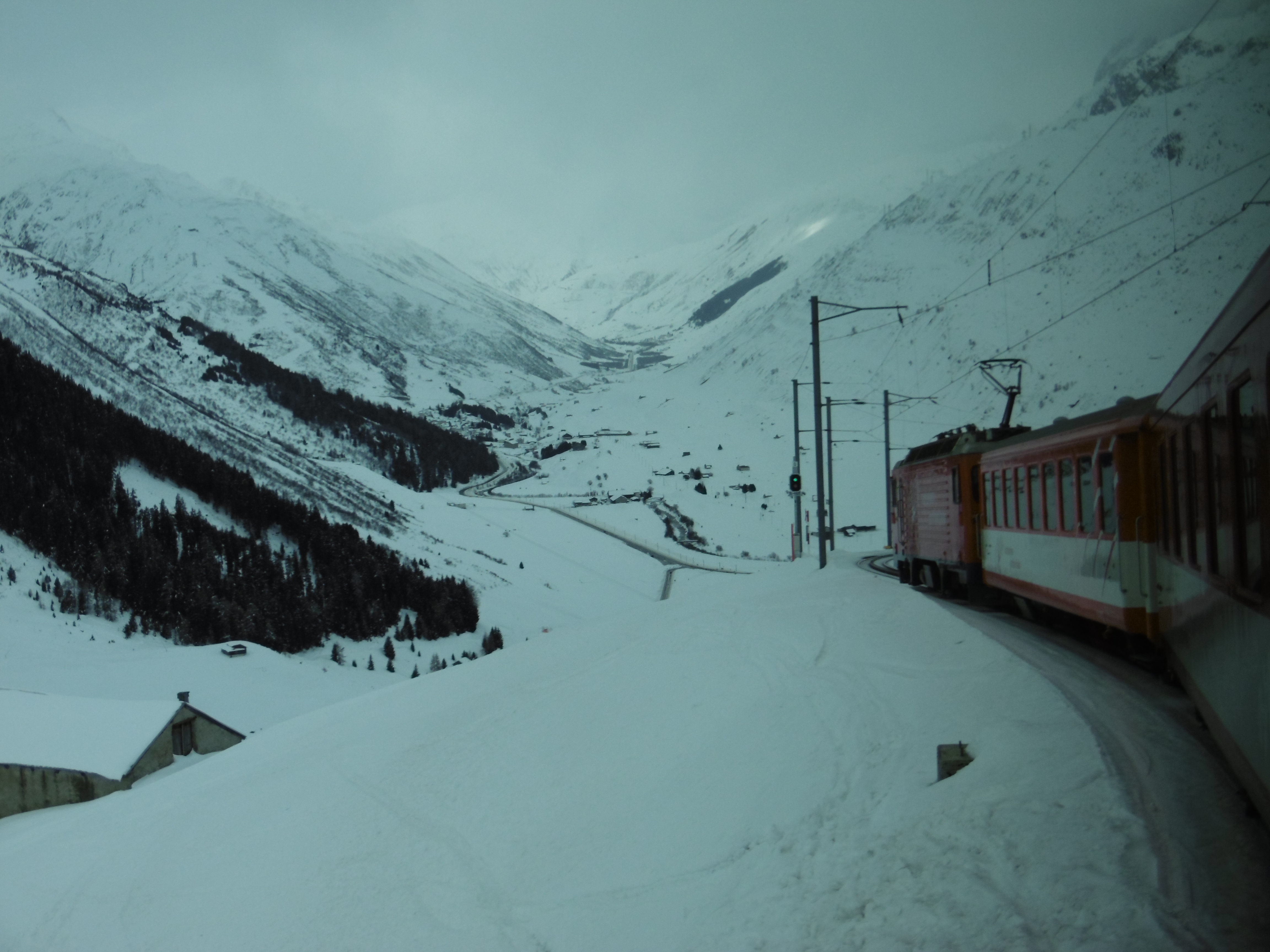








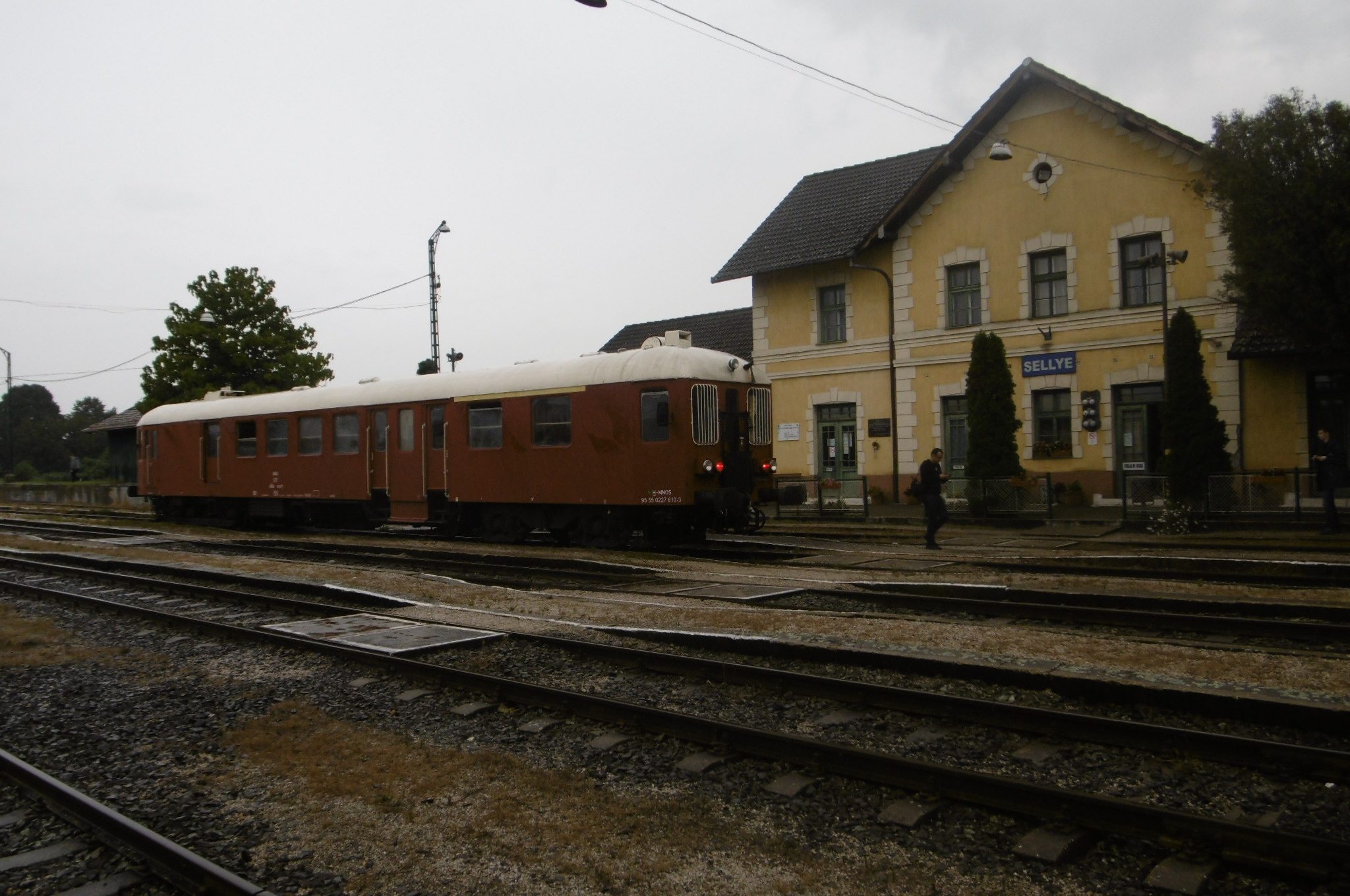
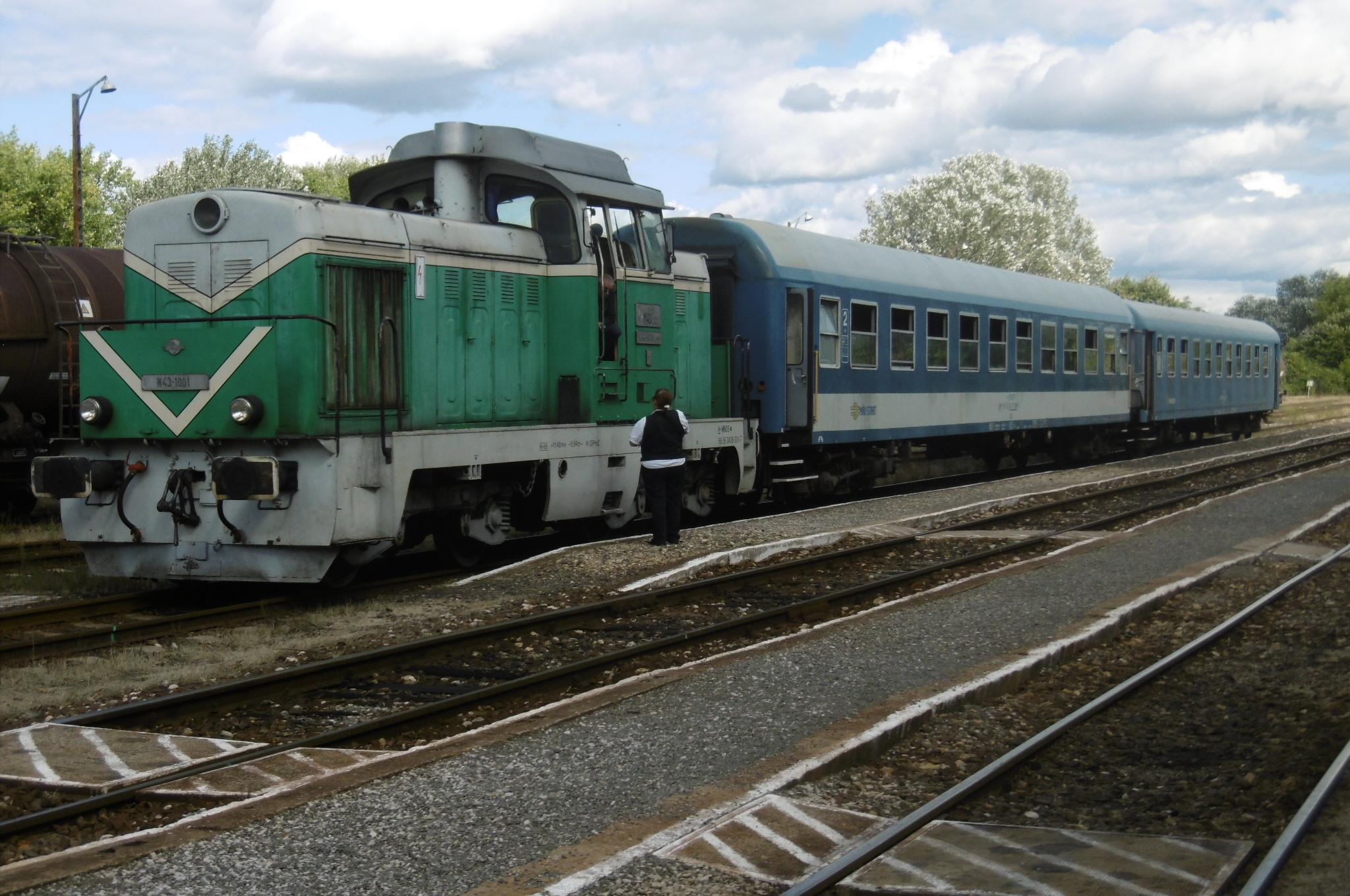
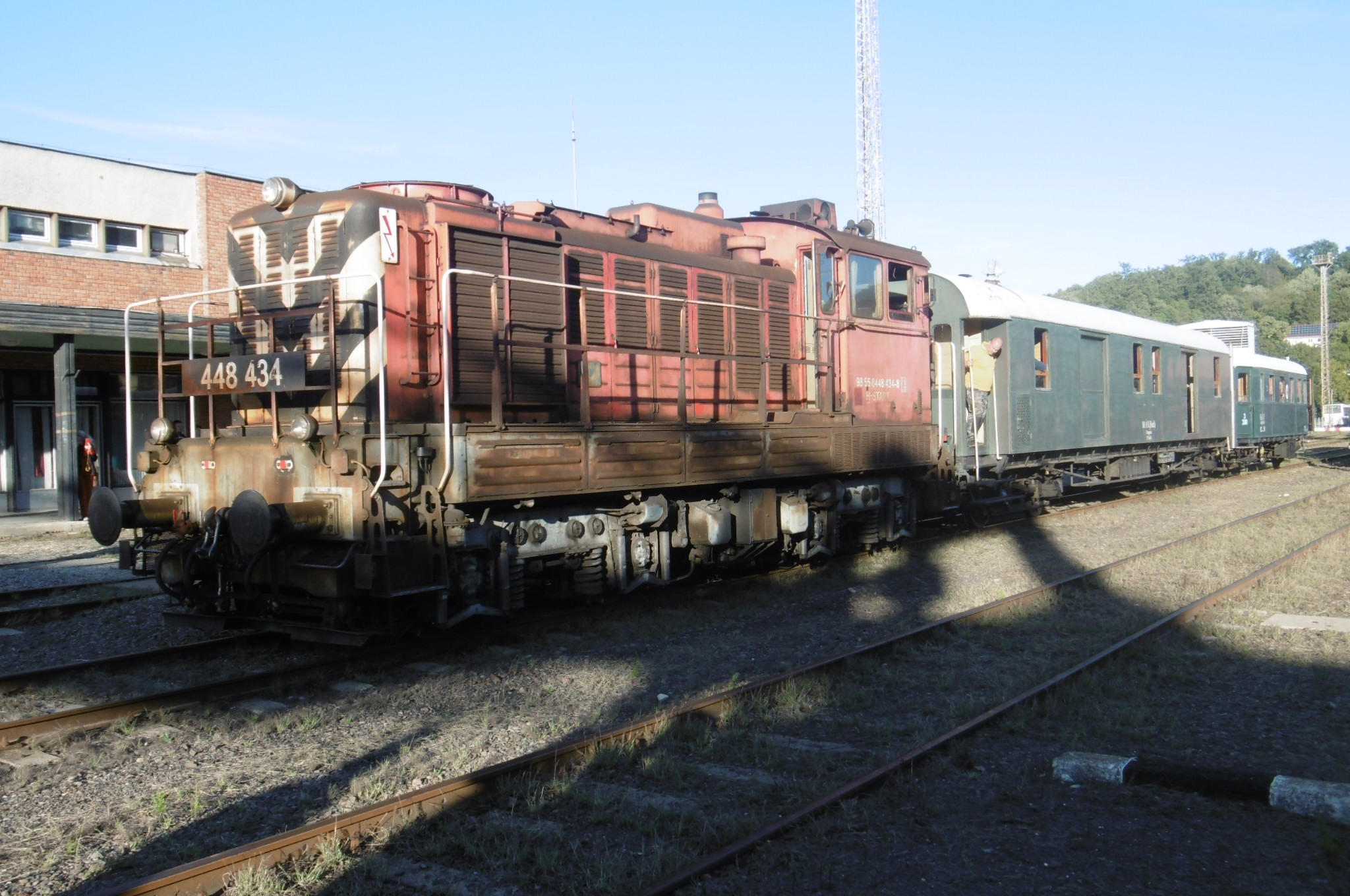
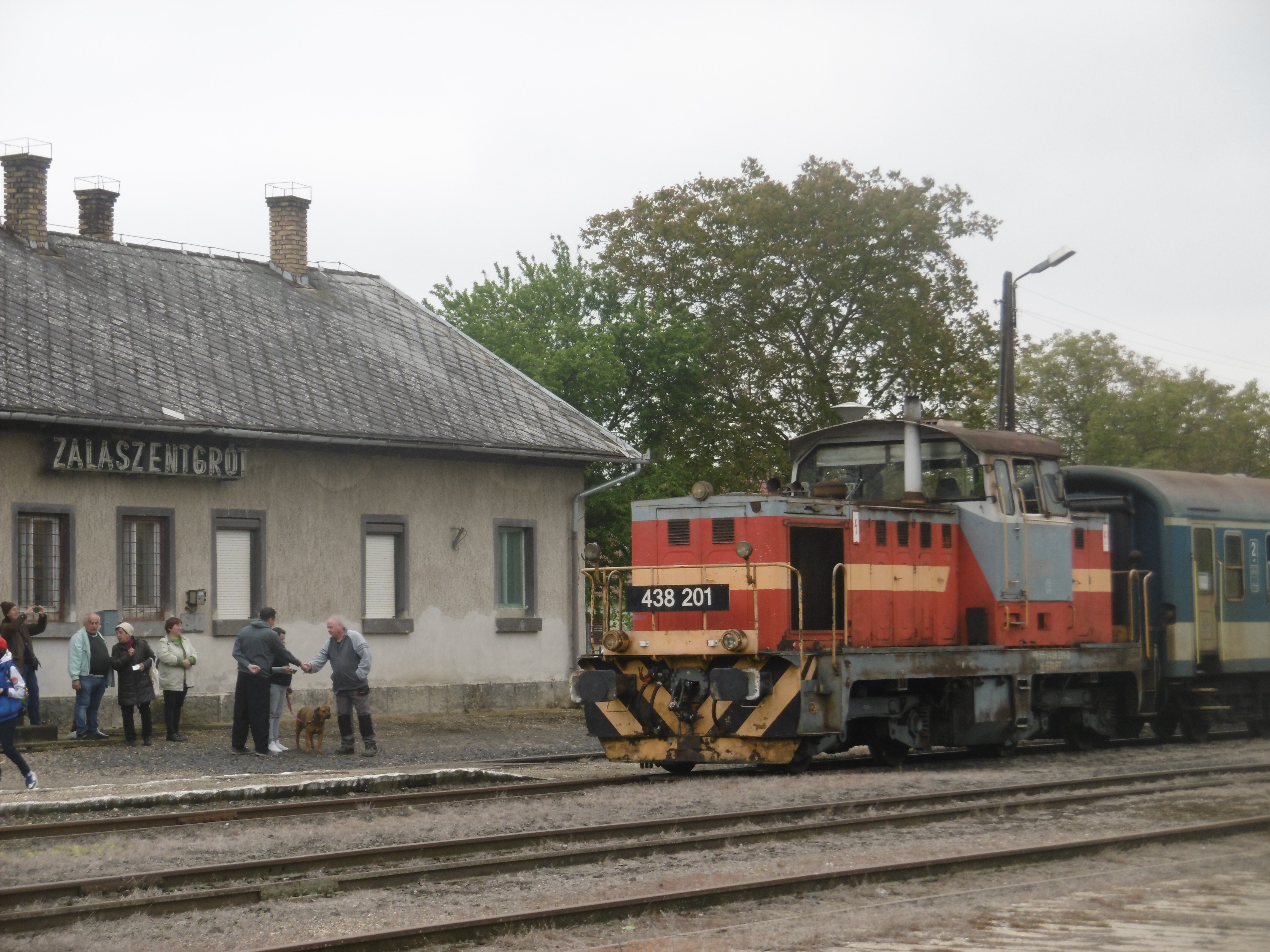

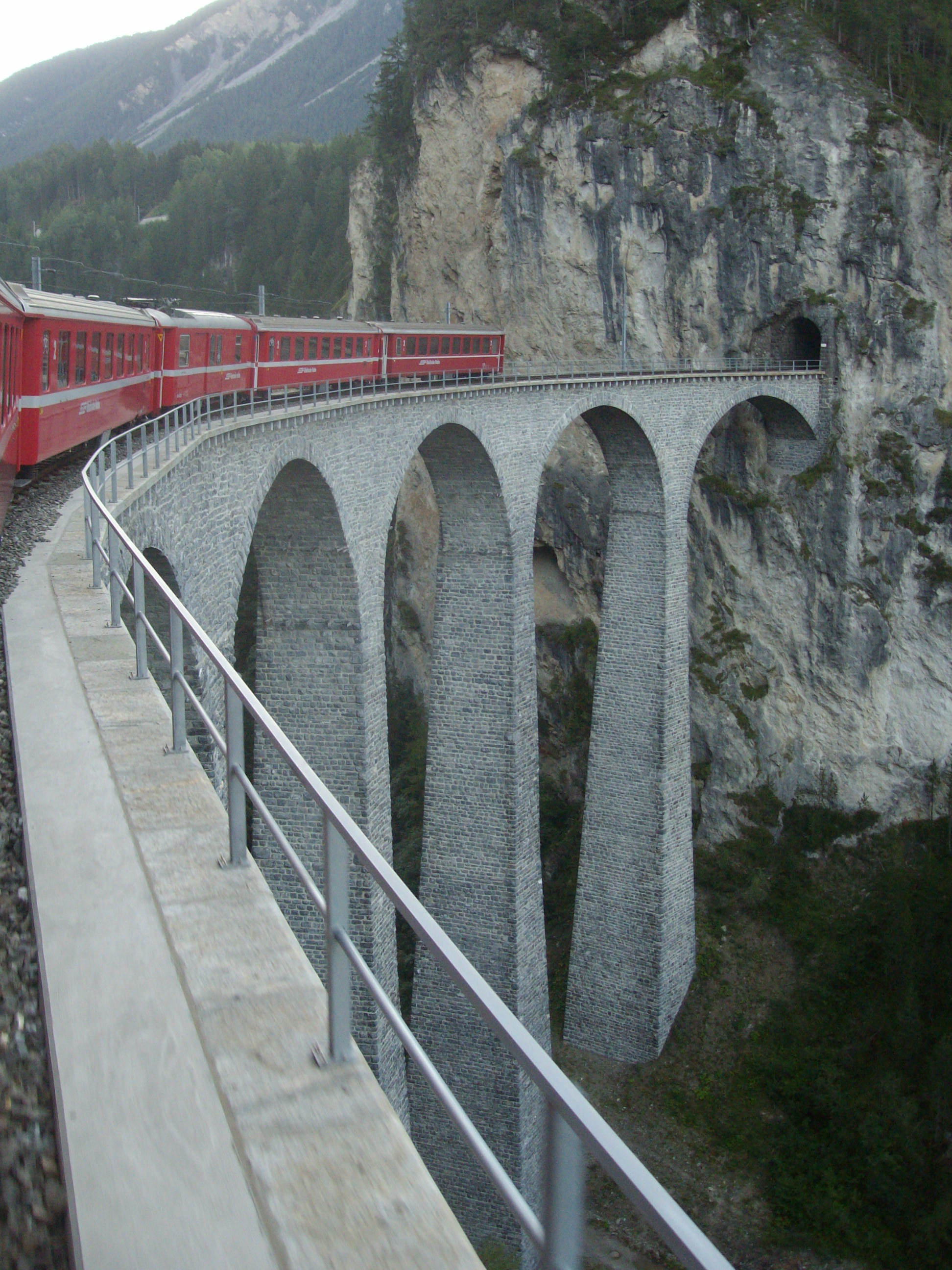 Landwasser-viaduct in Switzerland, Graubünden canton is well-known, it is the symbol of the Albula-line. Both Glacier and Bernina Express use it.
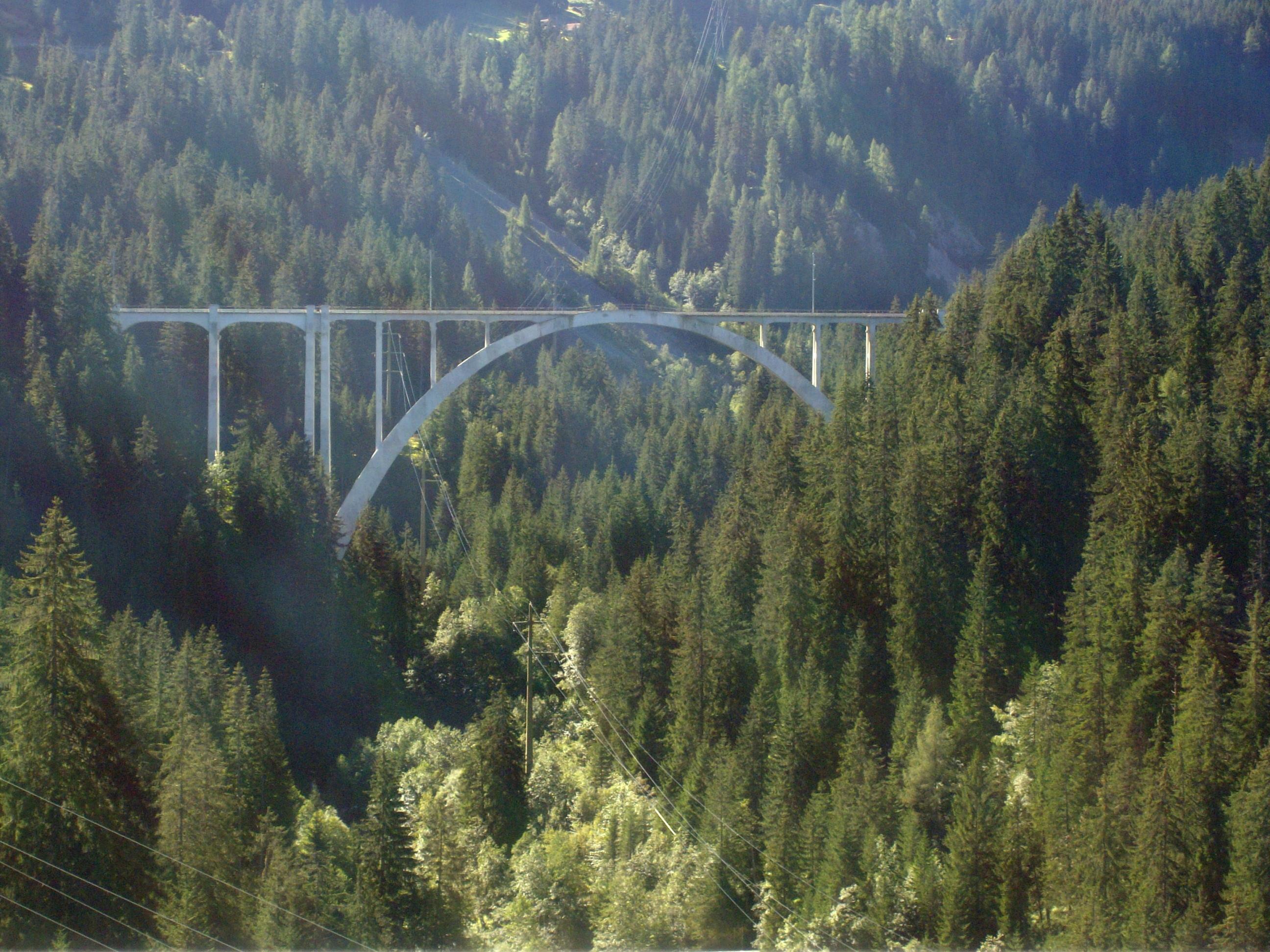 Langwieser-viaduct is very impressive on the Arosa line, however less people have heard about it than about Landwasser. It was a technical miracle at the beginning of the 20th century.
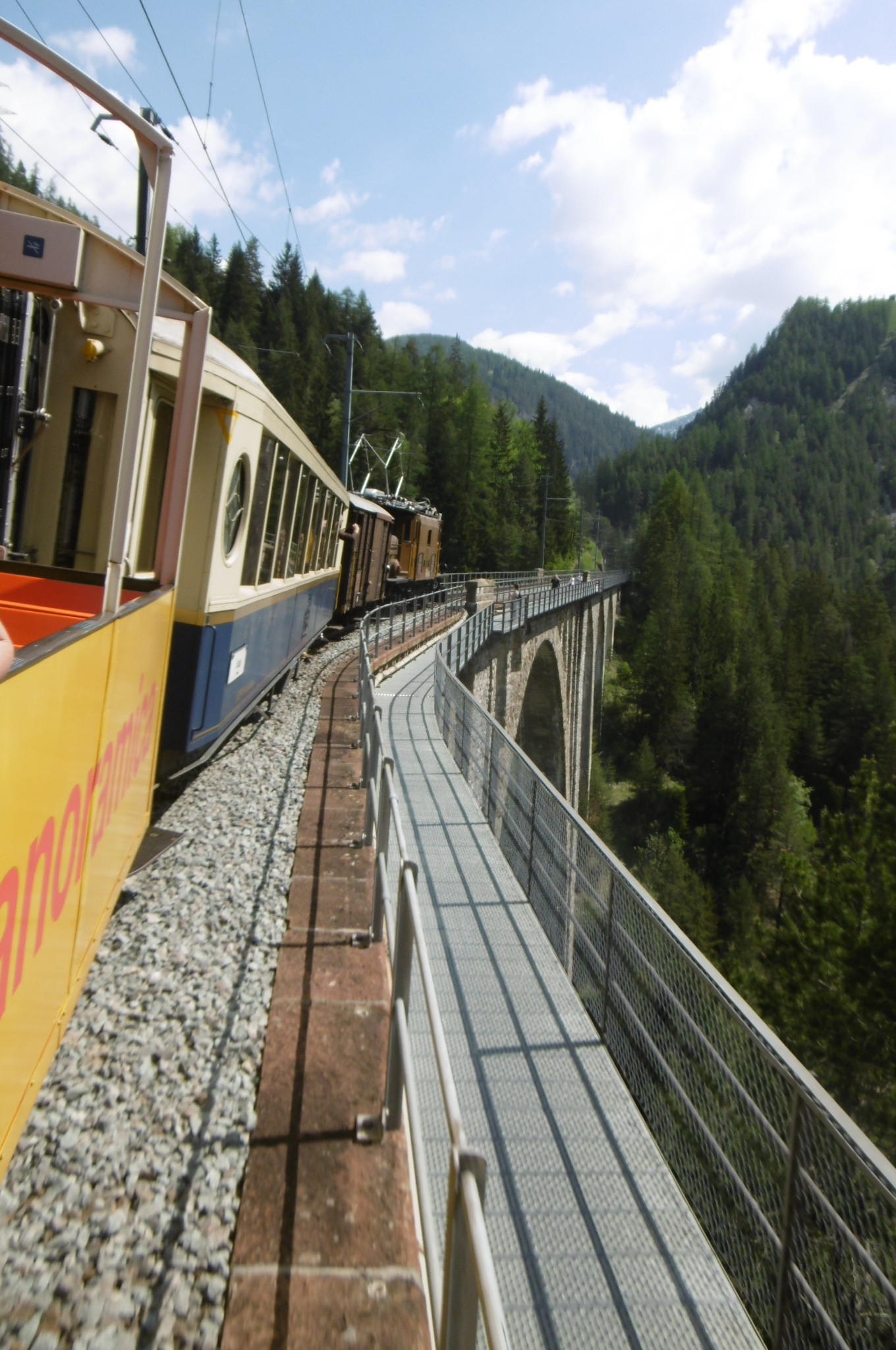 Nor Landwasser, neither Langwieser is the highest vidauct of the Rhätische Bahn. It is the Wiesner-viaduct, 89 metres above the land, on the Filisur-Davos line. The viaduct also has a narrow sidewalk.
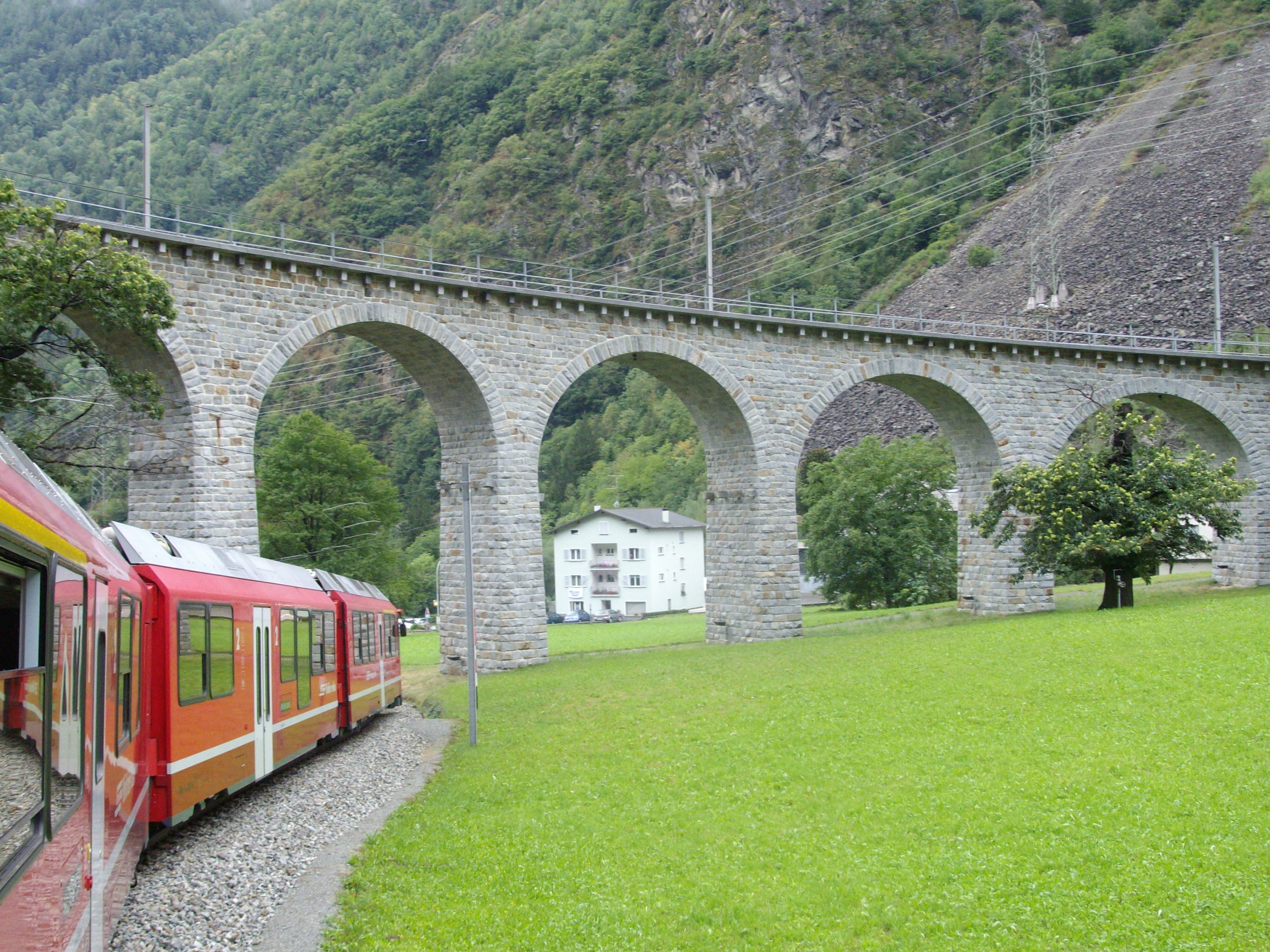 Rhätesche Bahn has a 4th iconic viaduct in Brusio, on the Bernina line which is a part of a loop.
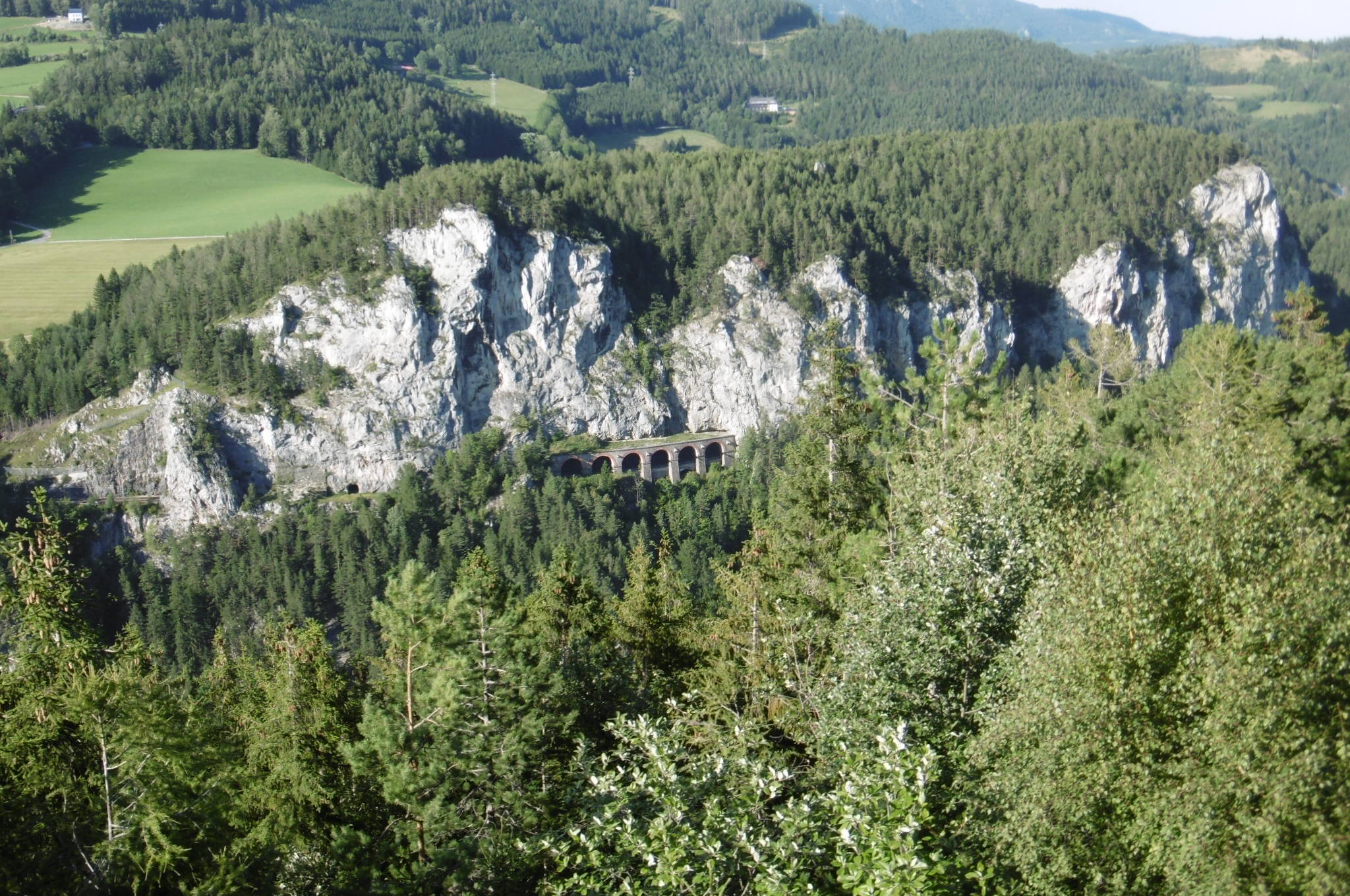
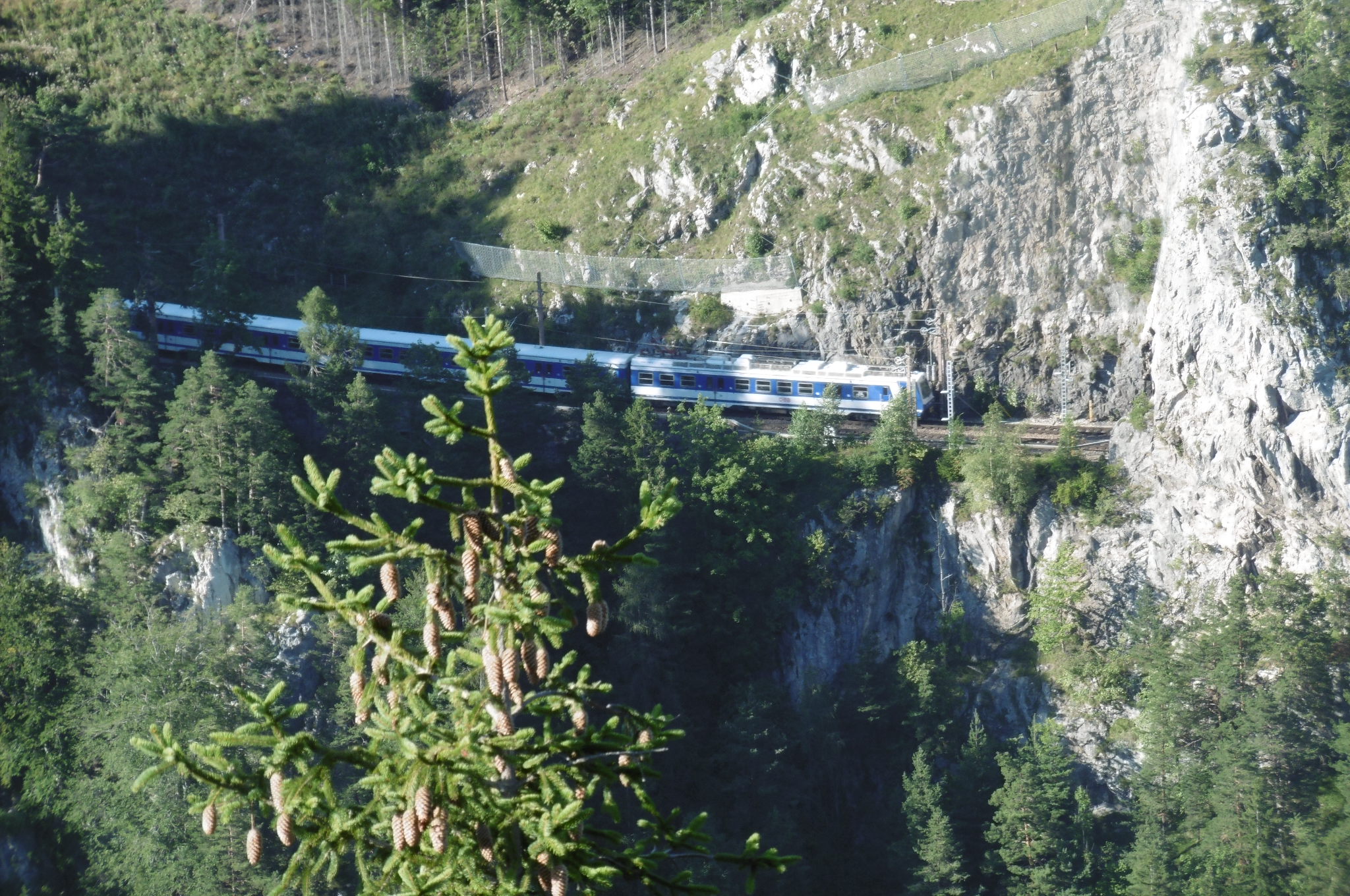
 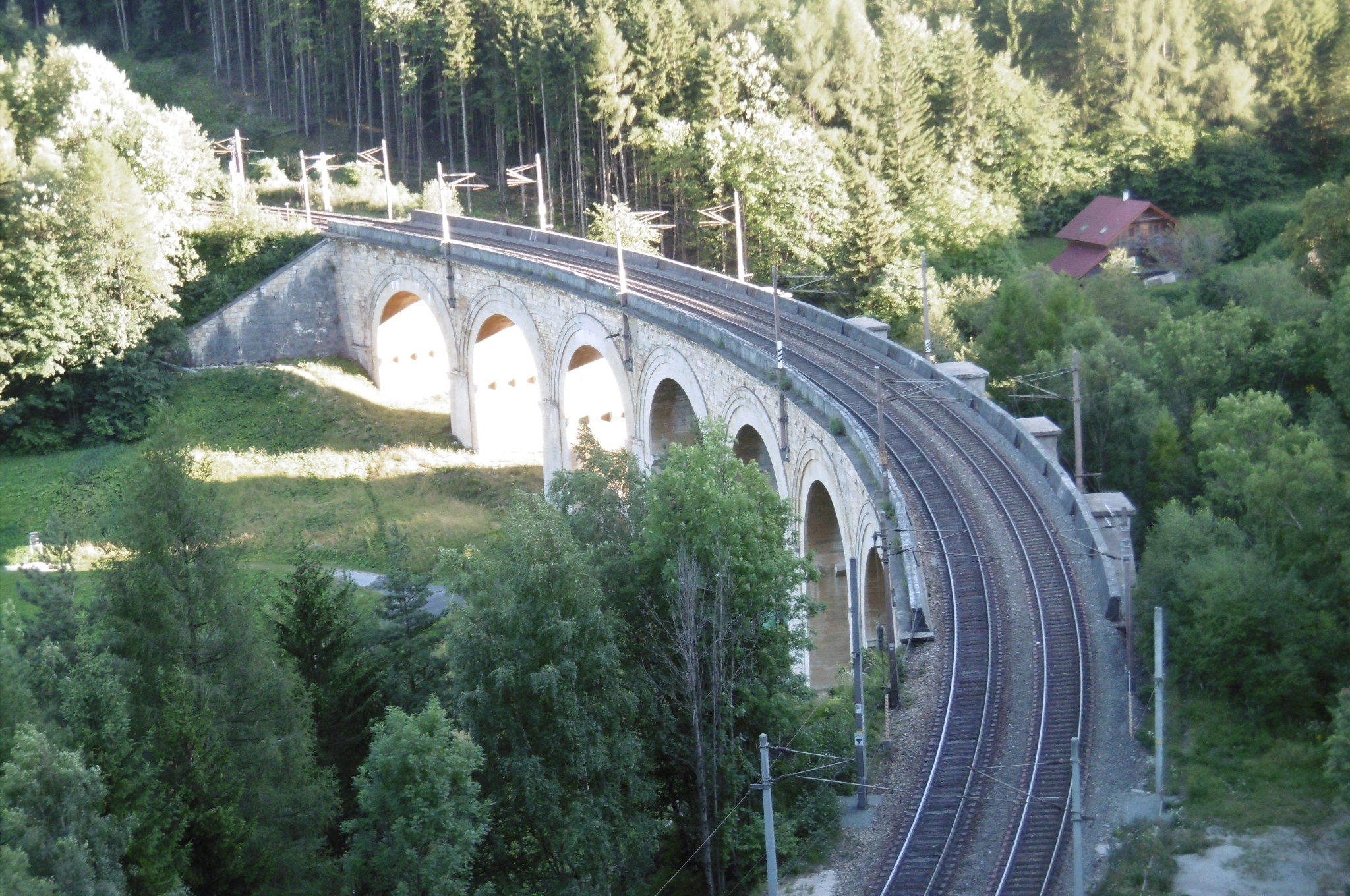 Semmering Railway was the first line which crossed higher mountains, built between 1848 and 1854 in Austria. Near the railway there is a special tourist route (Bahnwanderweg) from where you can take nice photos of the line.
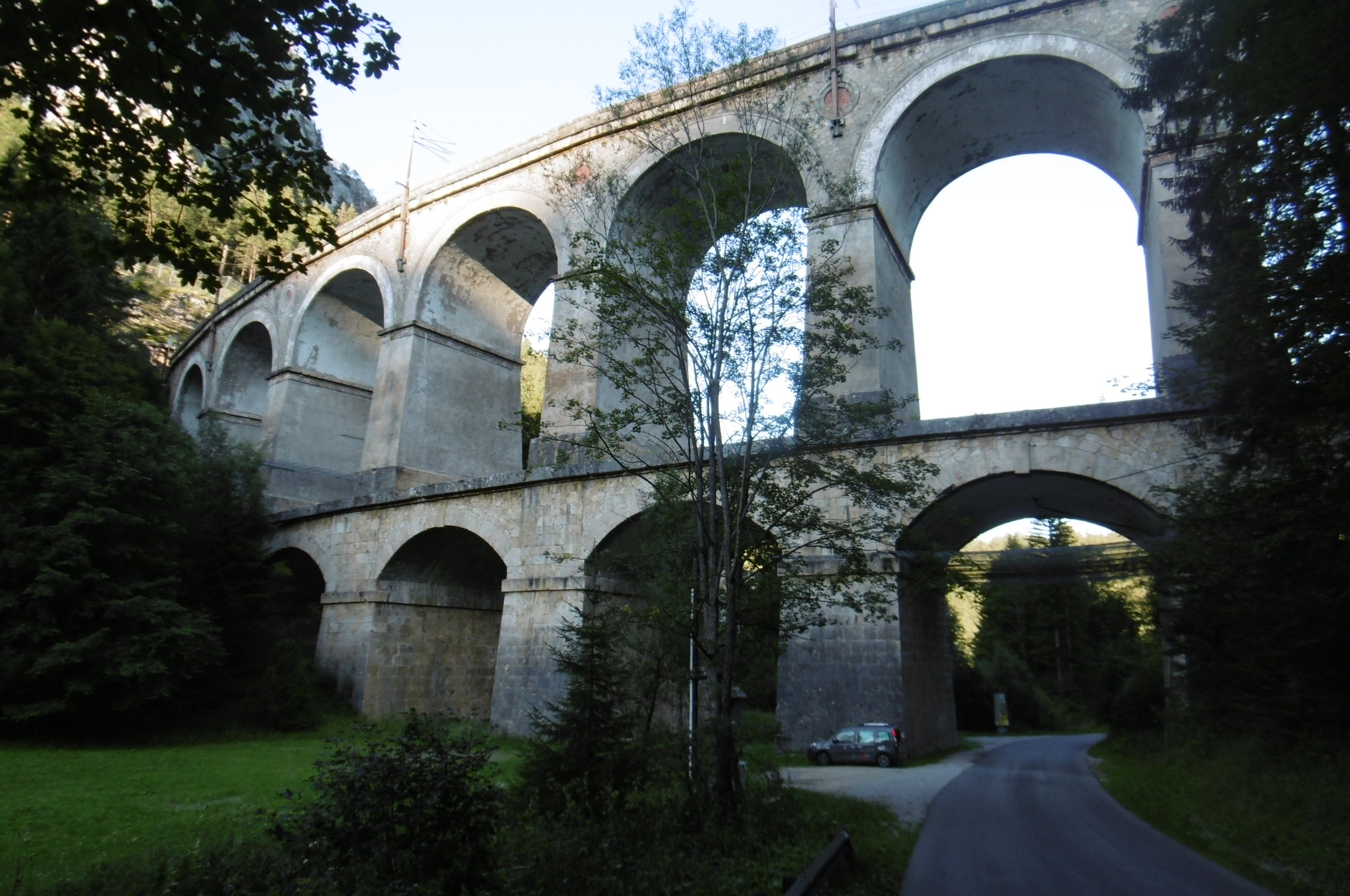 Kalte-Rinne-viaduct is the highest one of the Semmering Railway. Near this viaduct there is a small museum about the railway designer, Carl von Ghega. The Semmering line is part of the UNESCO World Heritage.
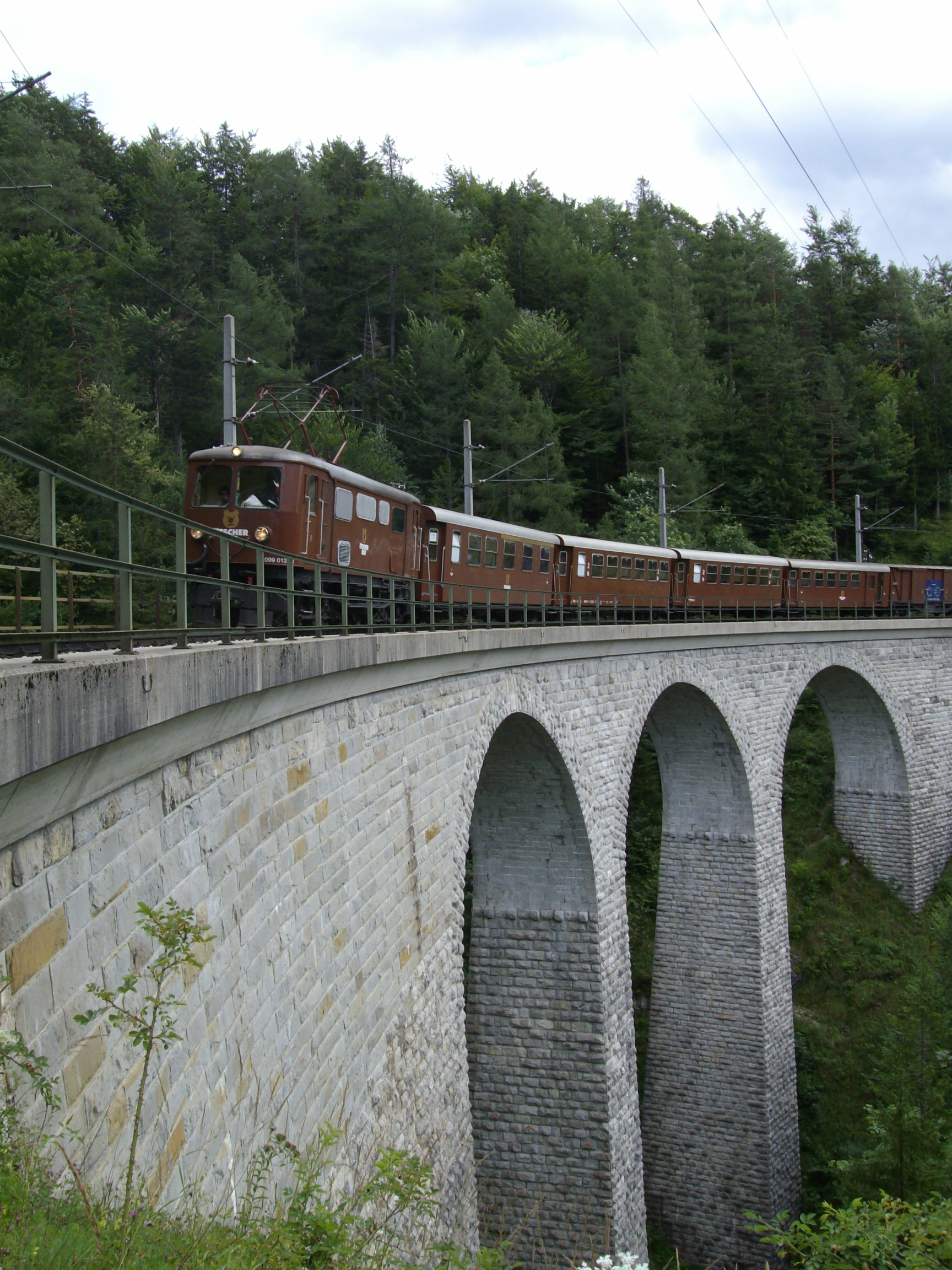 Mariazellerbahn has a scenic route from Sankt Pölten to Mariazell. It has several stone viaducts, you can find this one near Annaberg station. There are more beautiful railway viaducts in Austria but I haven't taken photos of the Arlbergbahn and the Tauernbahn.
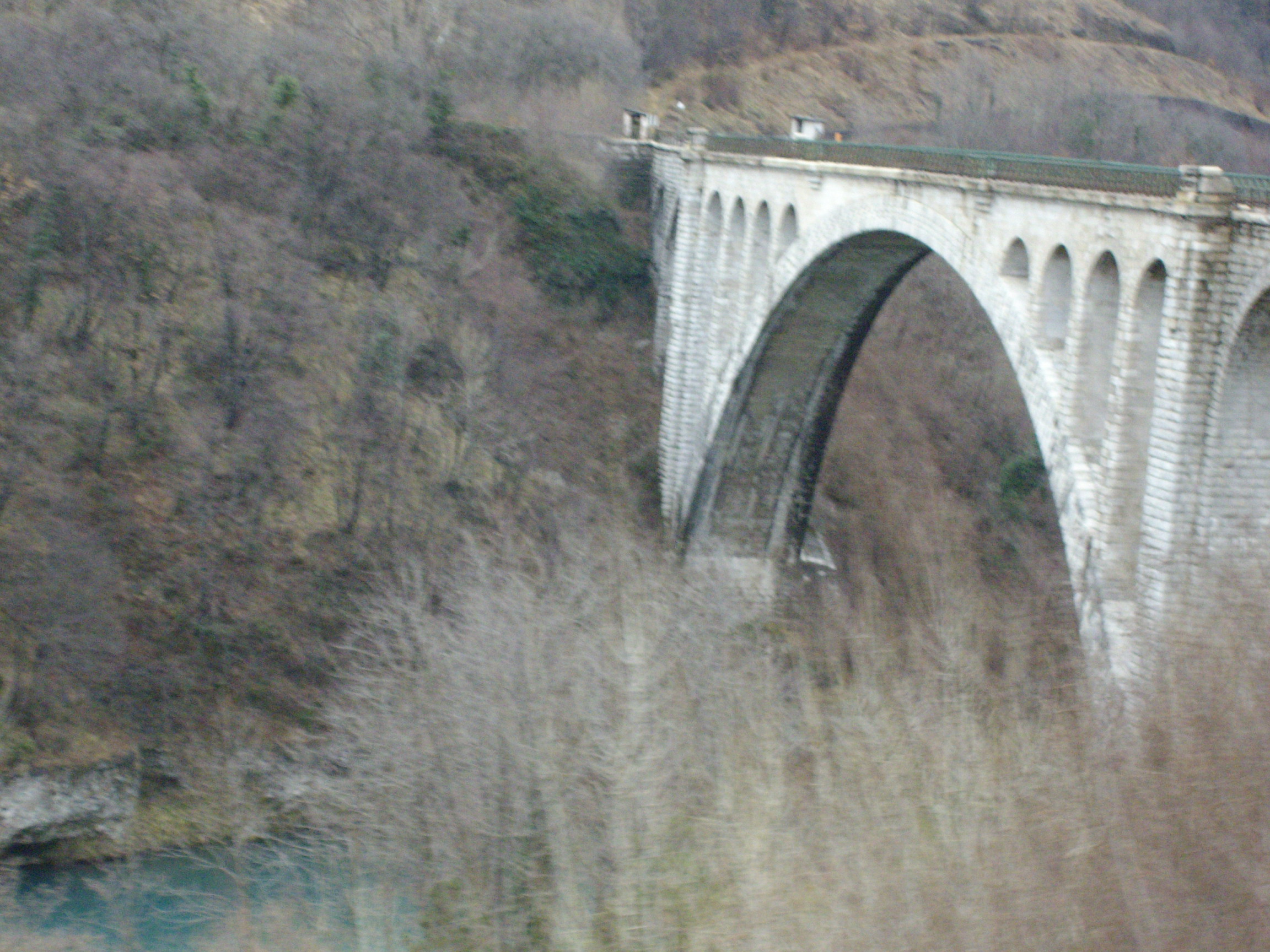 Solkan bridge is an iconic viaduct near Nova Gorica, in Slovenia, on the Sežana - Jesenice line.
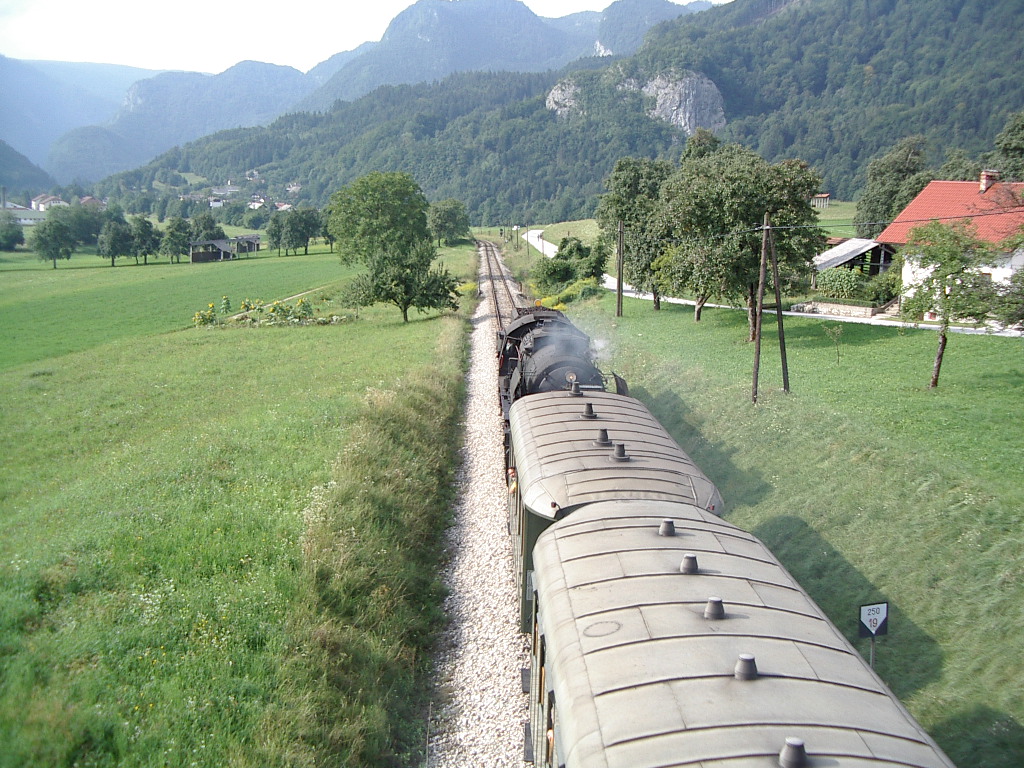
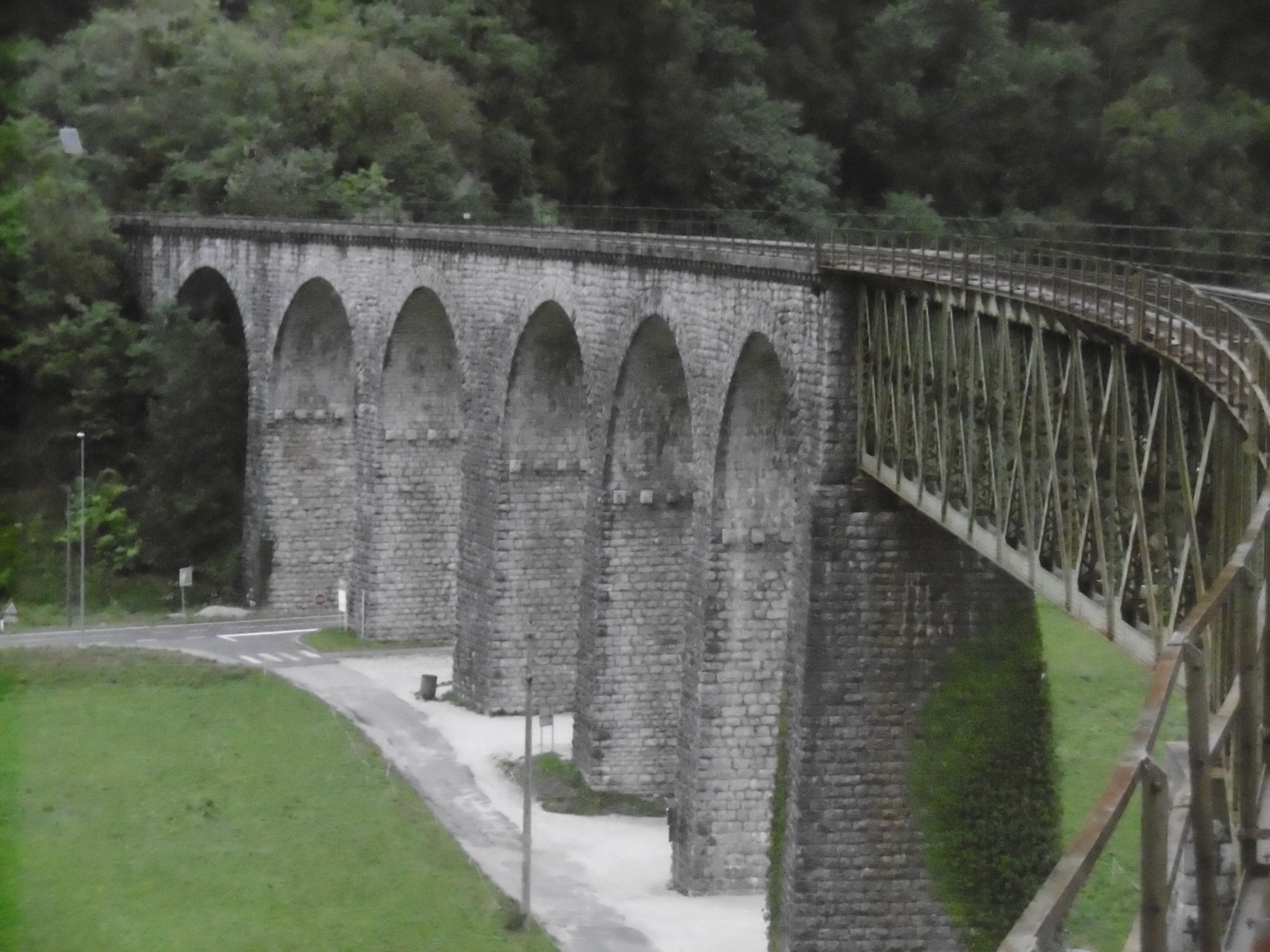 In Bača pri Modreju there is an other impressive brige on the Bohinj Railway.
 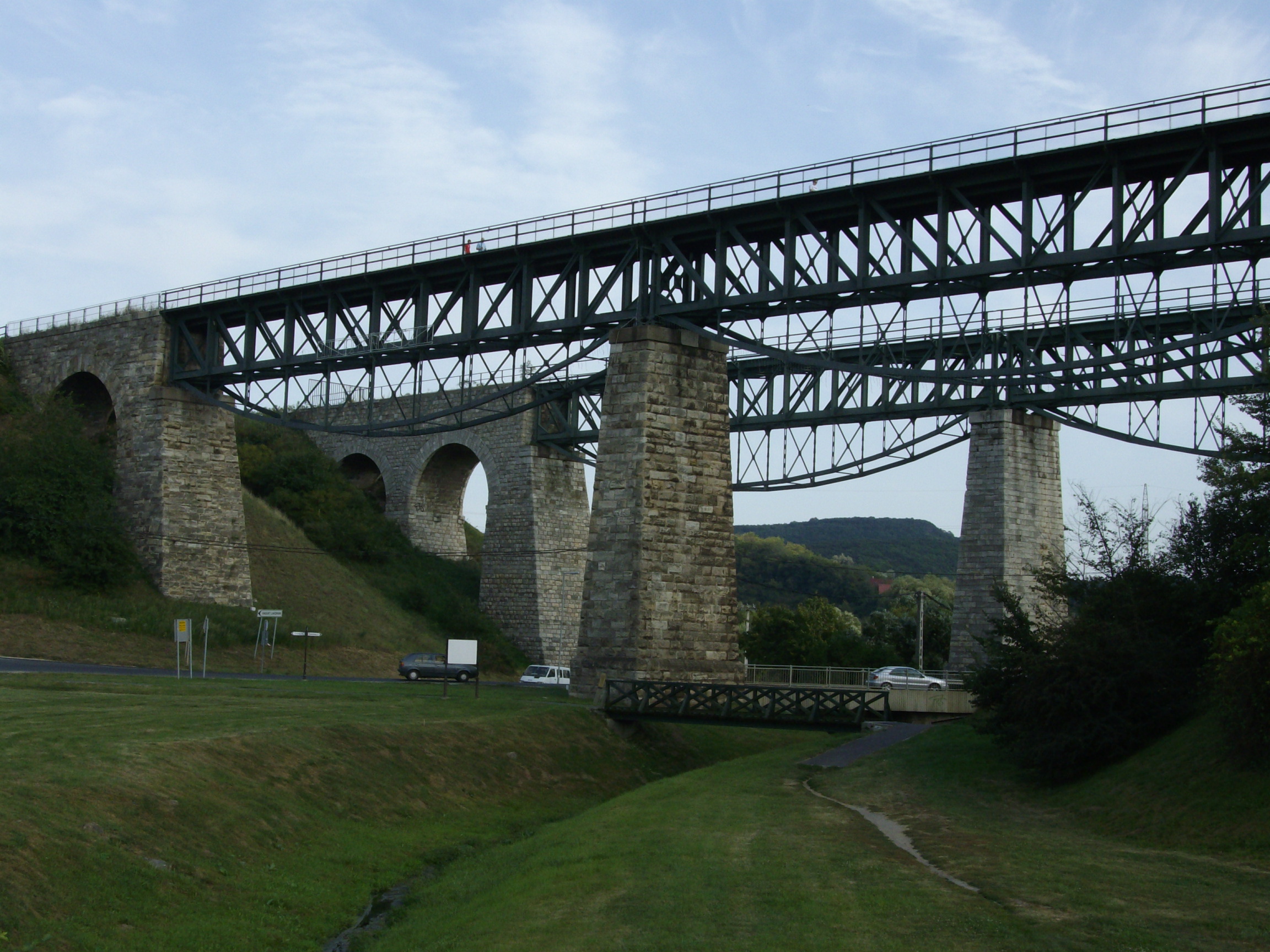 These are the most famous railway viaducts of Hungary, in Biatorbágy, however since 1979 they are out of use. In 1931 a crazy inventor blew up a rail. As a consequence the Budapest - Wien fast train derailed and fell down. Several people died in this accident.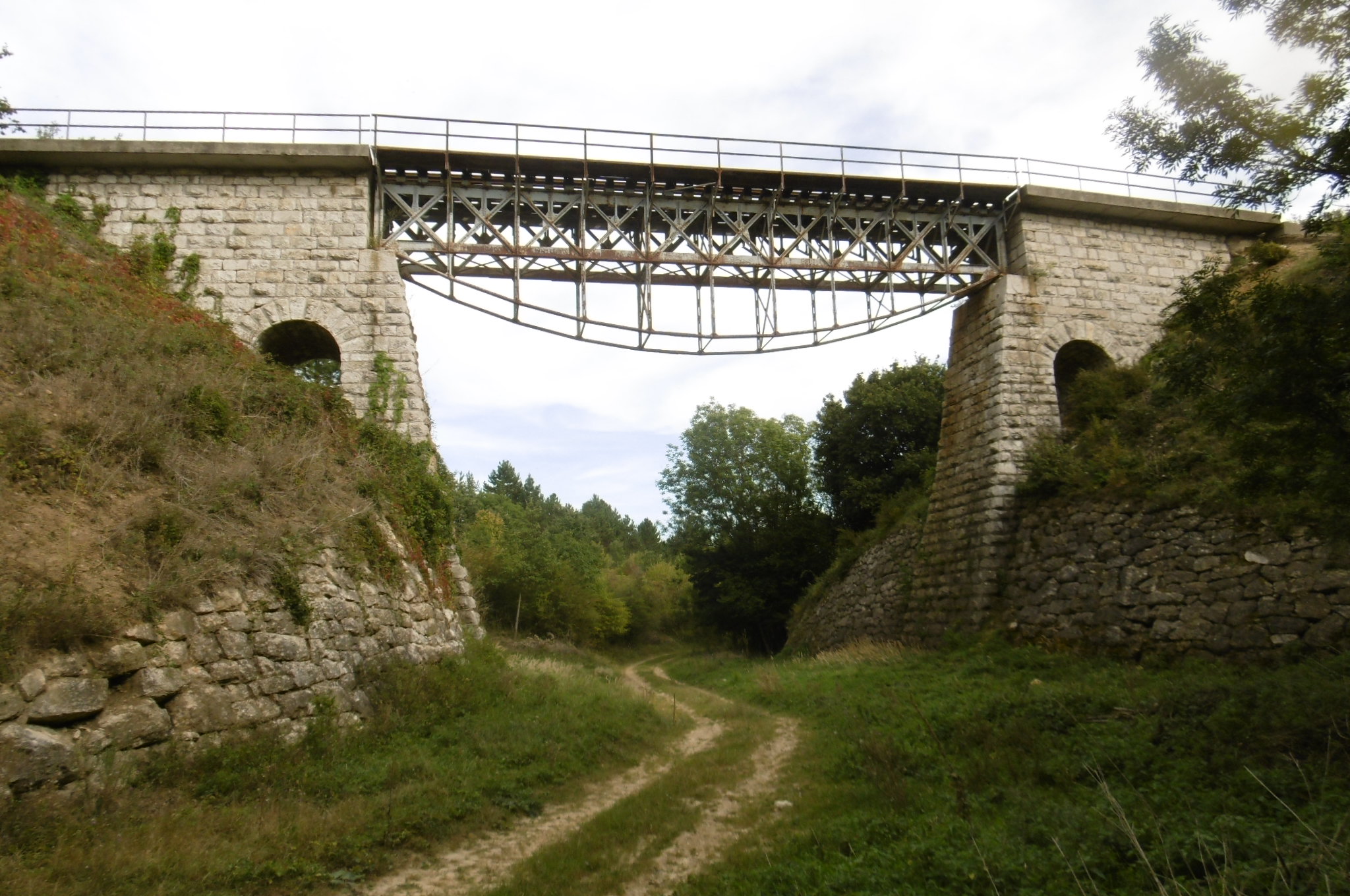
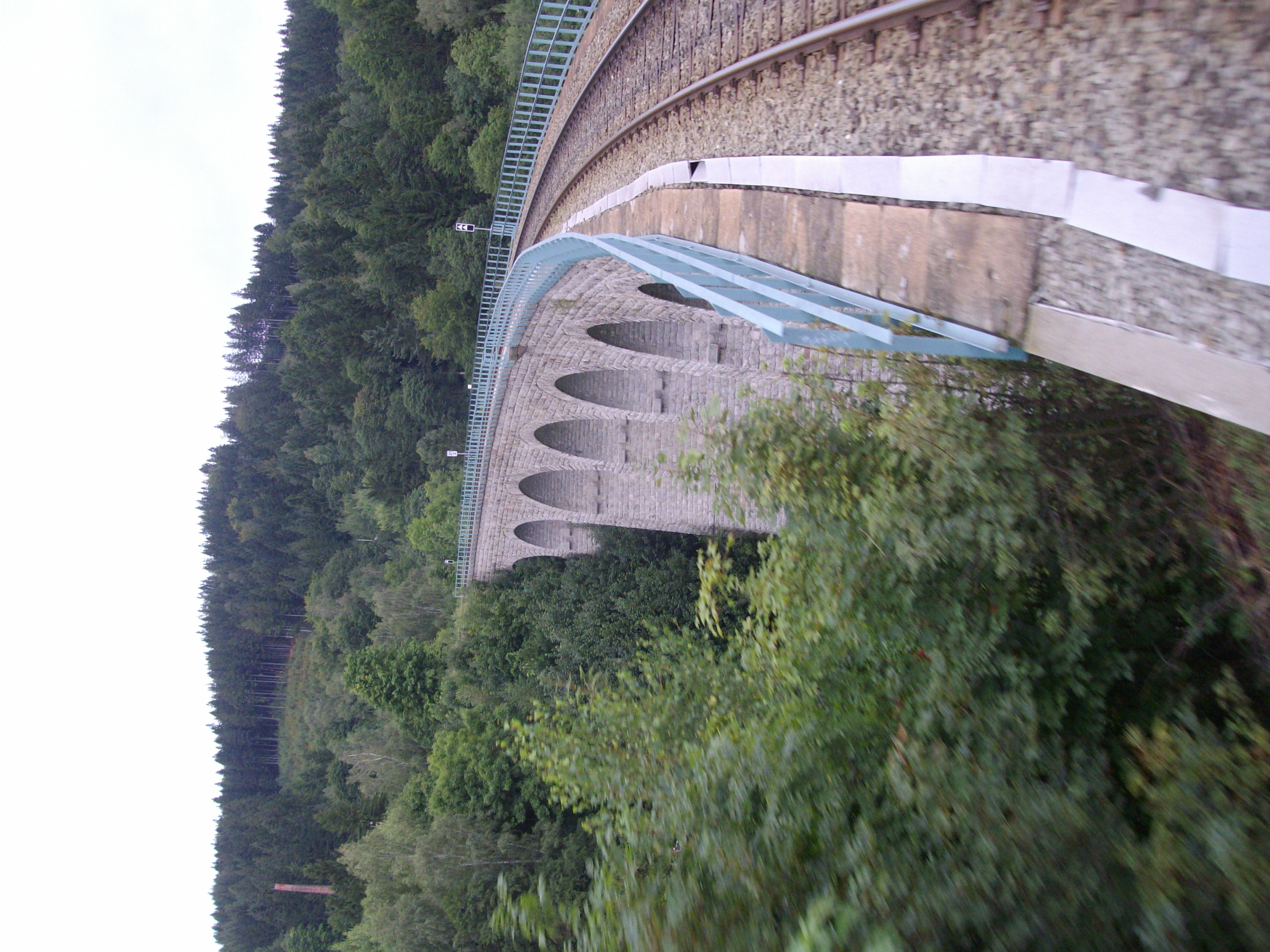 The Czech Republic has only few bigger viaducts. Smržovka viaduct is one of them on the Liberec - Tanvald line.
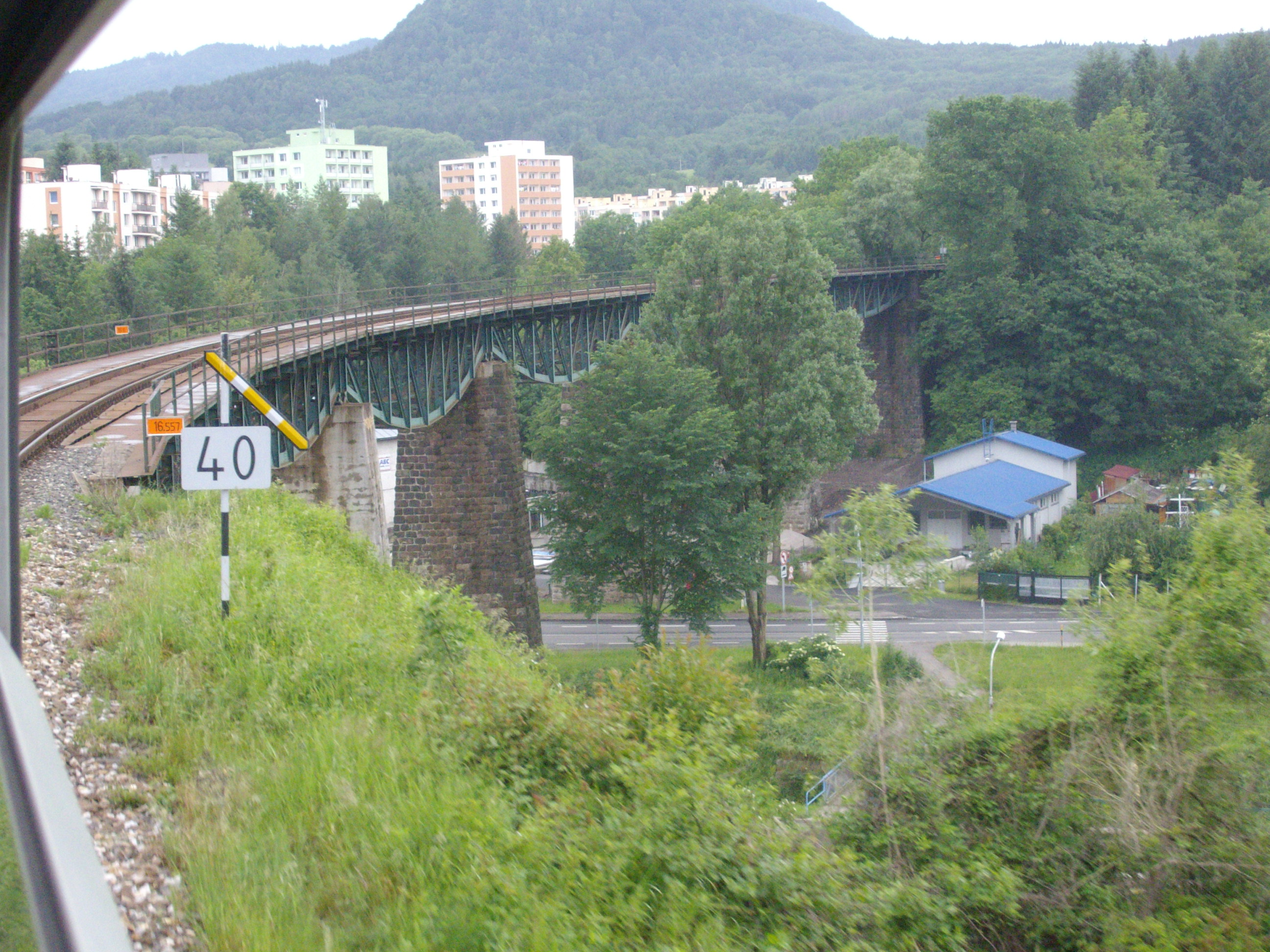 This viaduct is situated in Handlová, in Slovakia on the Horná Stubňá - Prievidza secondary line.
 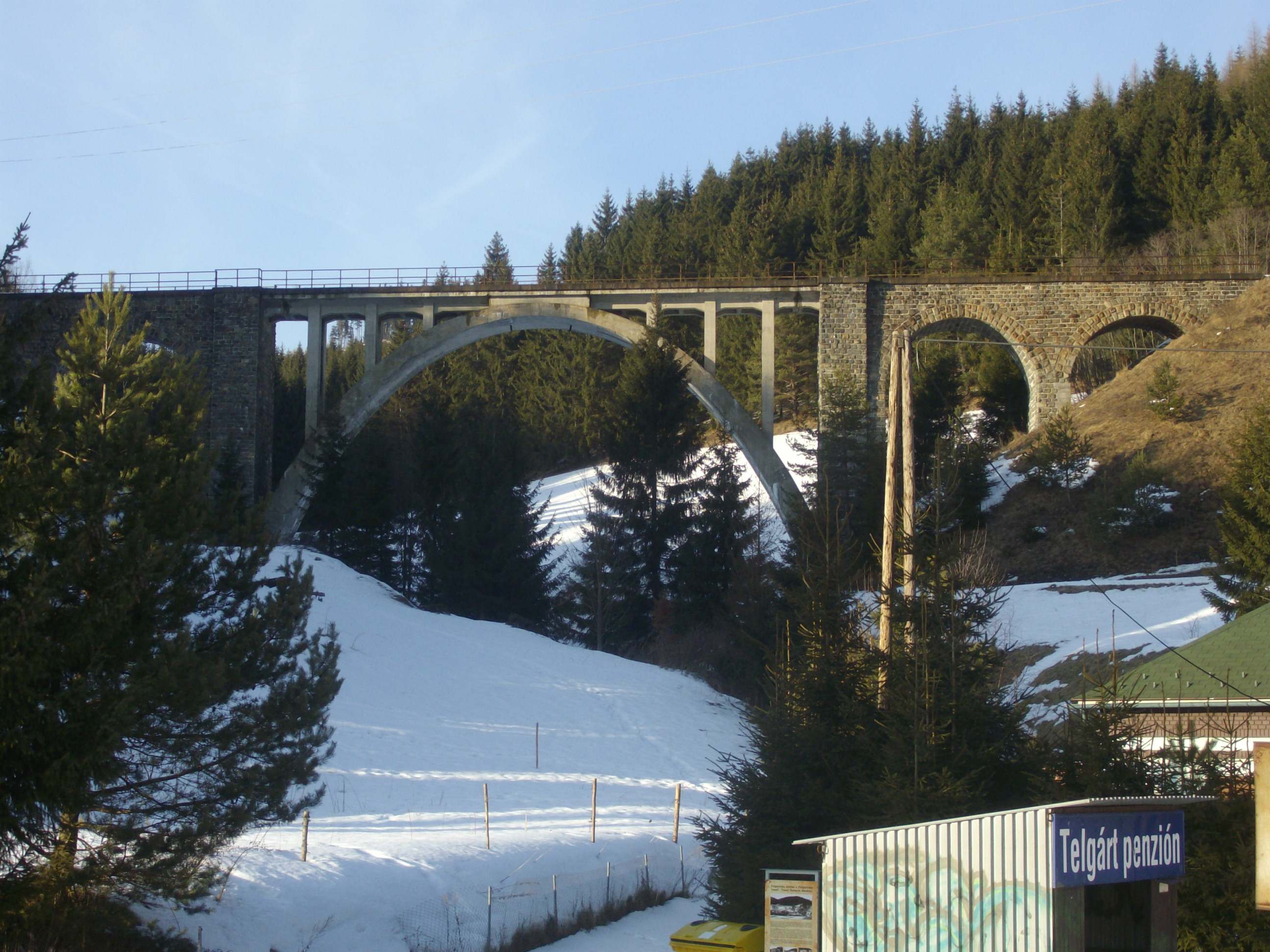 The viaduct of Telgárt is part of the only standard gauge railway loop in Middle-East Europe.
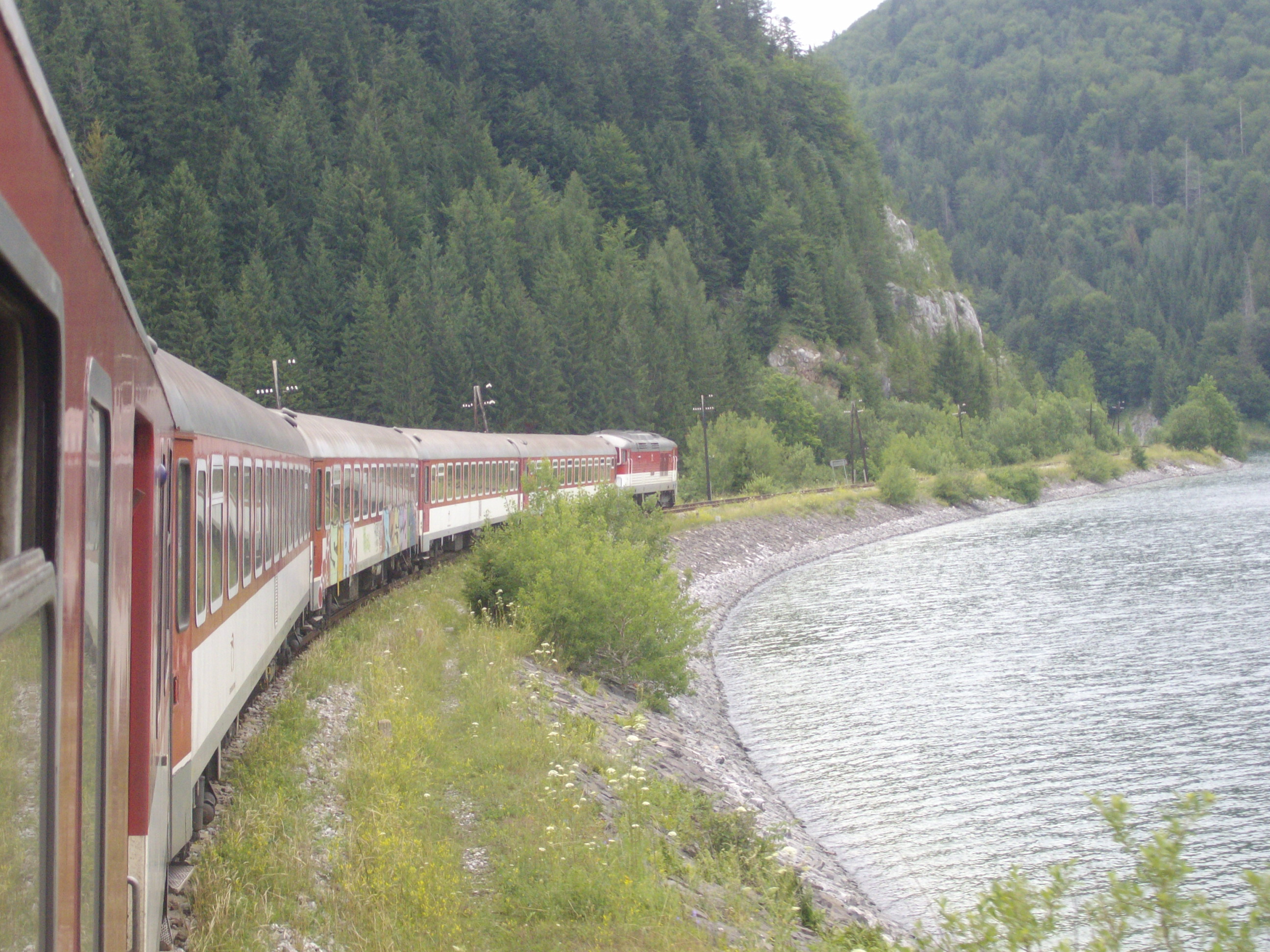
 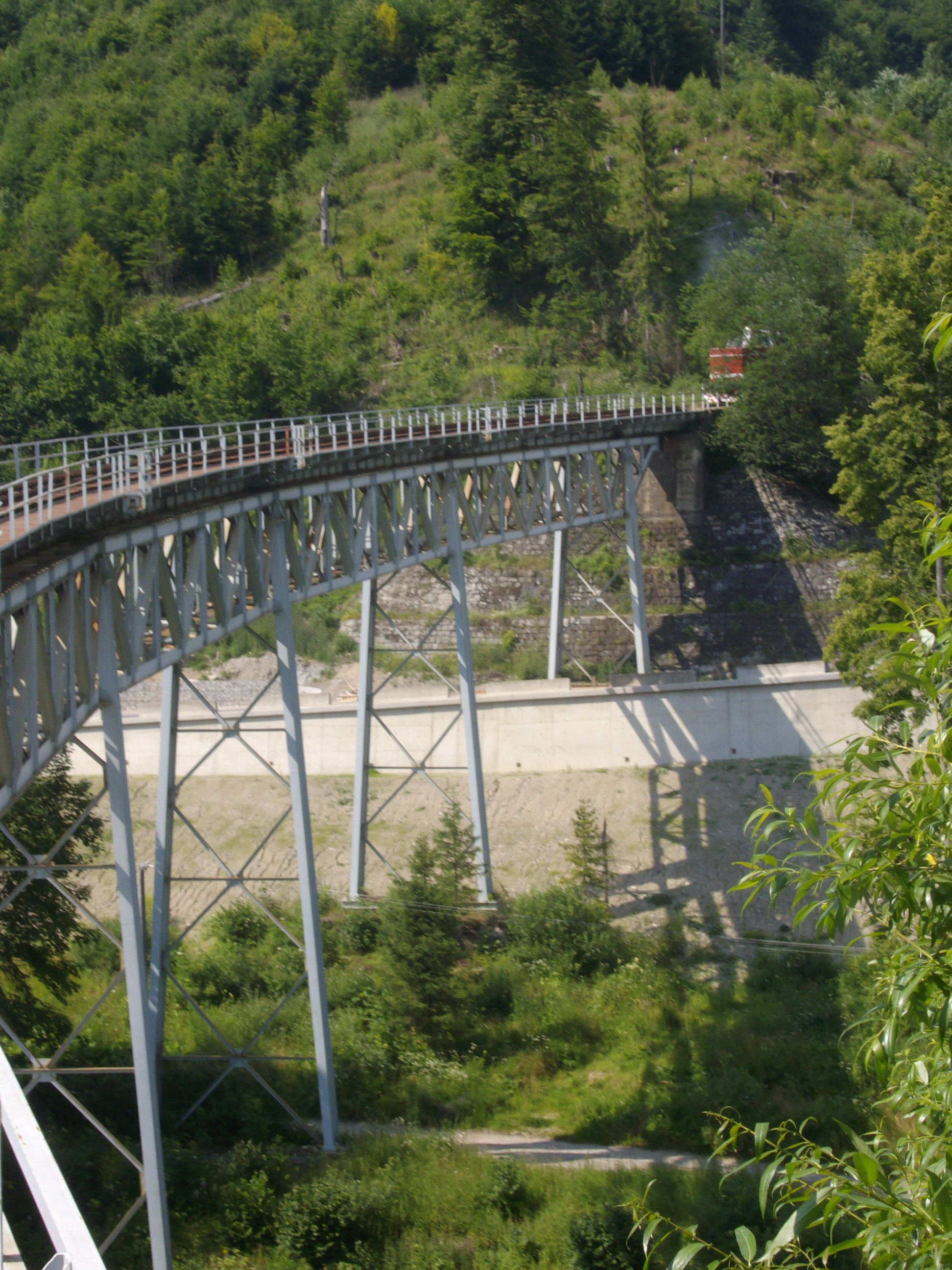 The Tisovec - Brezno line in Slovakia is really spectacular, especially between Tisovec and Zbojská. It is a former rack railway. The cog rail was rebuilt and in summer there are historic trains with steam locomotive.
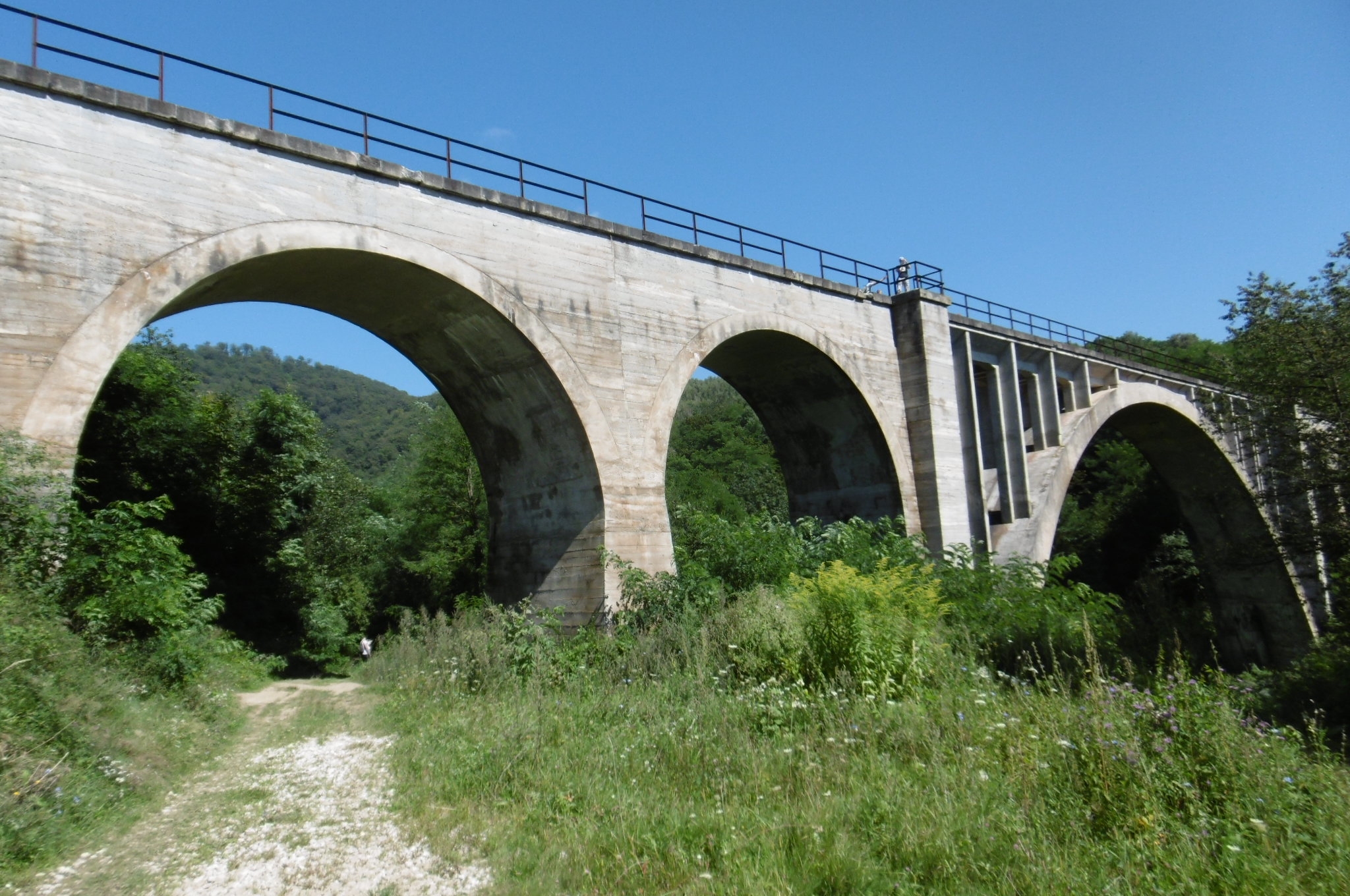 The Korpássky viaduct in Slovakia is the odd one in my collection: it is a part of an unfinished railway, no train has ever rolled on it. But nowadays it is a tourist attraction, you can pass through on it by foot or by bike.
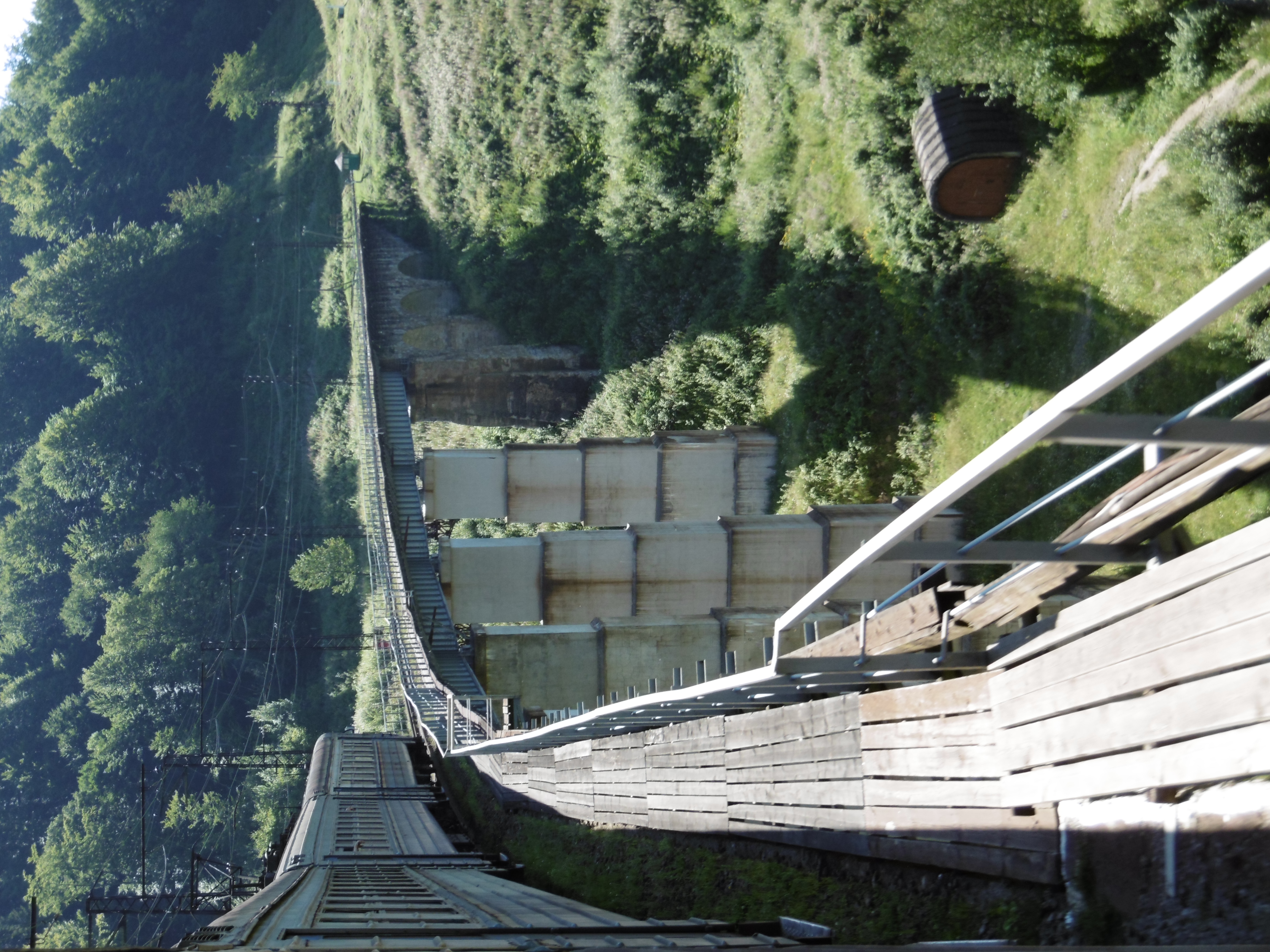 The railway line of the Uzhok Pass in Ukraine has few bigger viaducts, it is one them. The line is electrified but it has only single track.
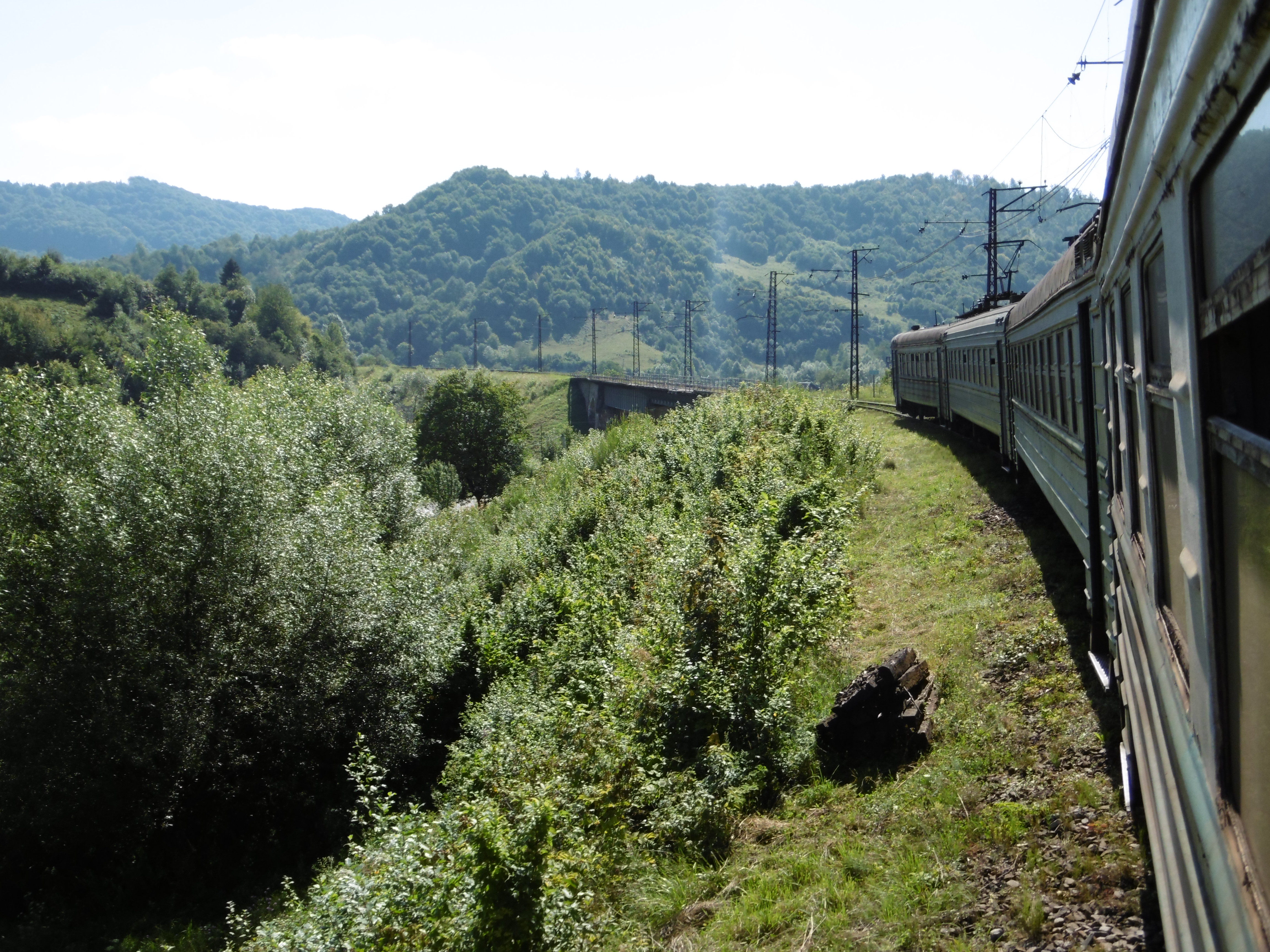
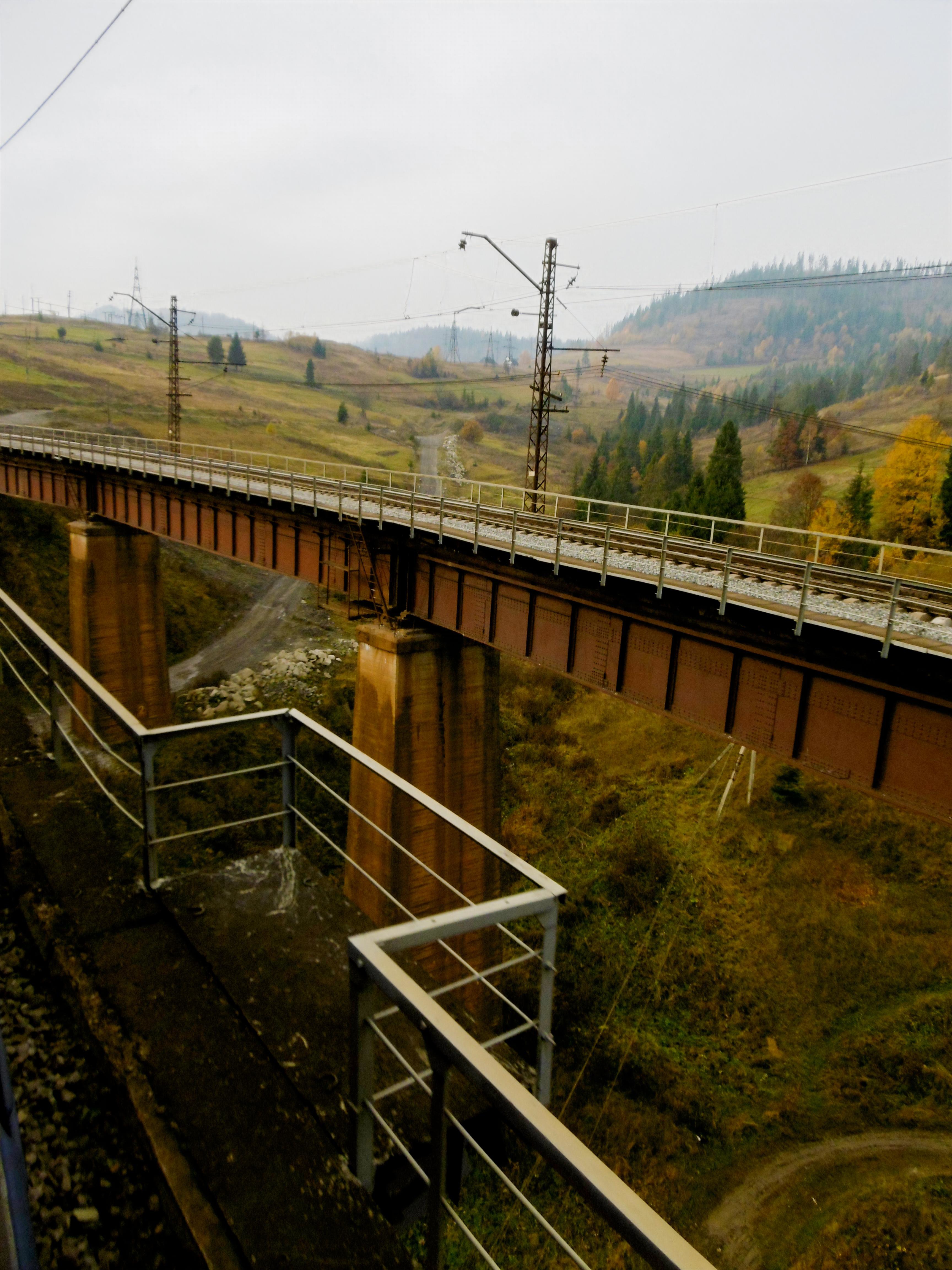 The Mukacheve - Lviv railway in Ukraine has several viaducts in the Carpathians.
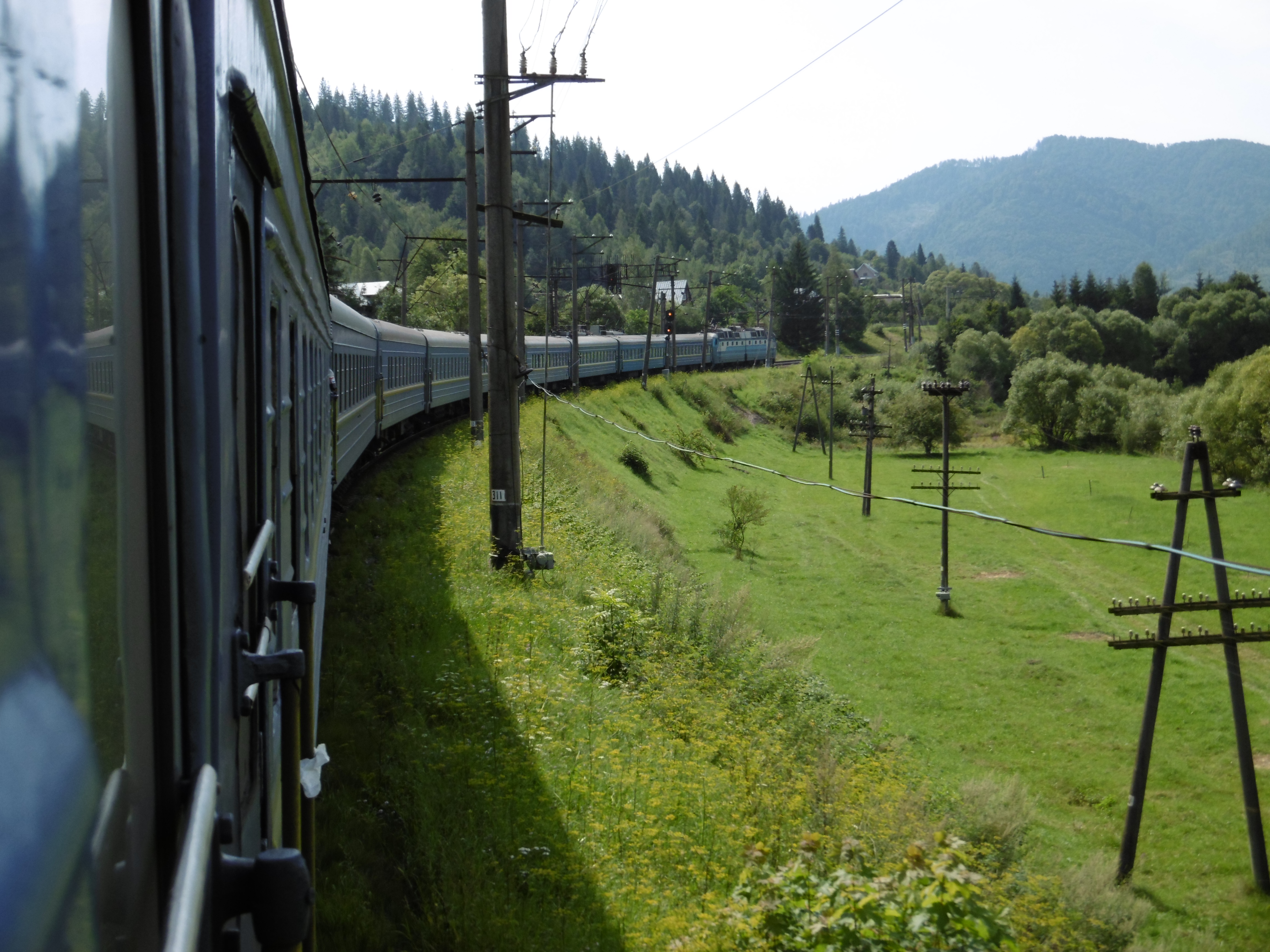
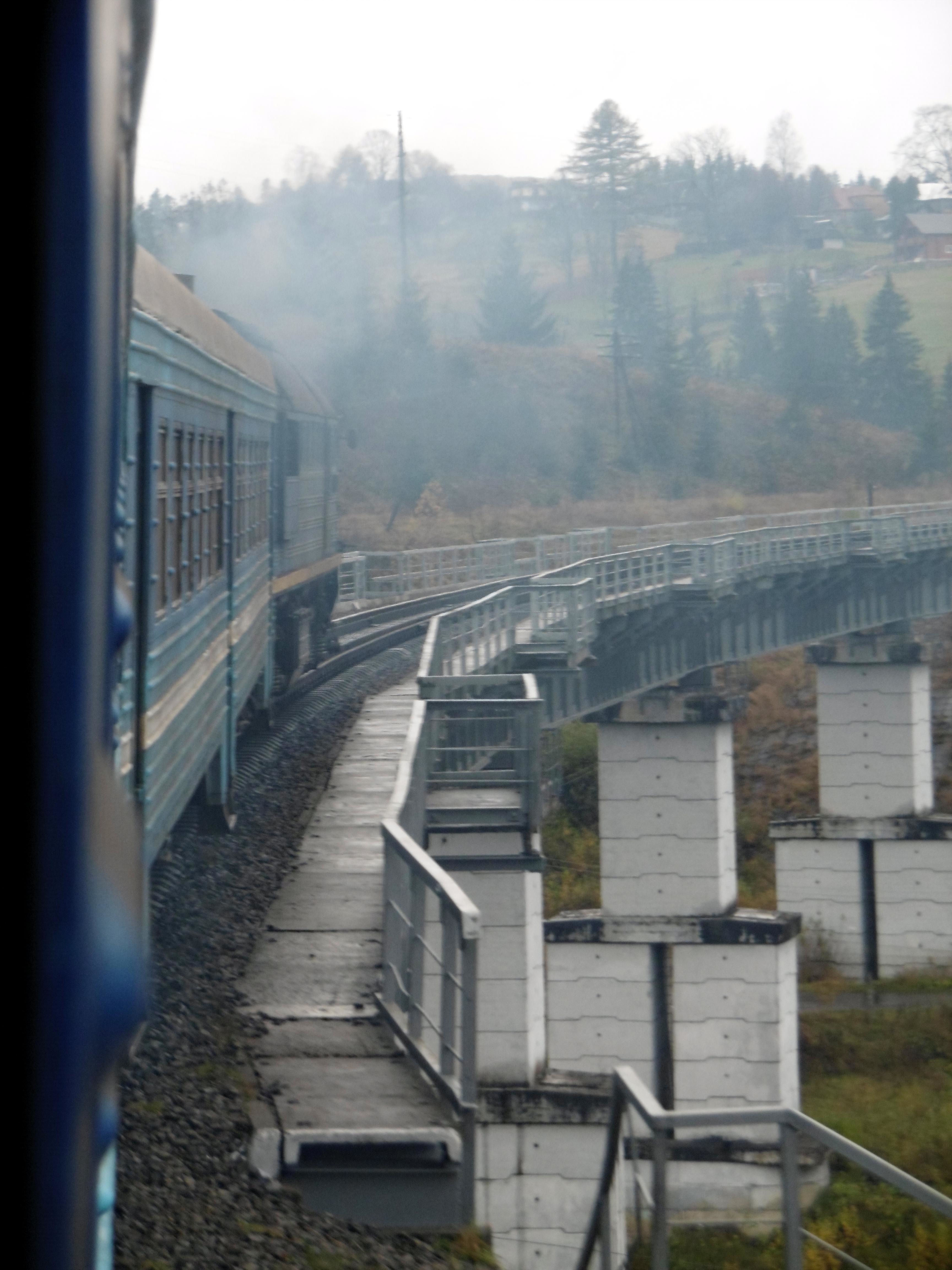 Ukraine has 3 railway lines through the Carpathians. It is the 3rd one which goes via Yablunytsia Pass. The biggest viaduct of this line is situated in Vorokhta. The old viaduct is out of use but it was preserved next to the new one.
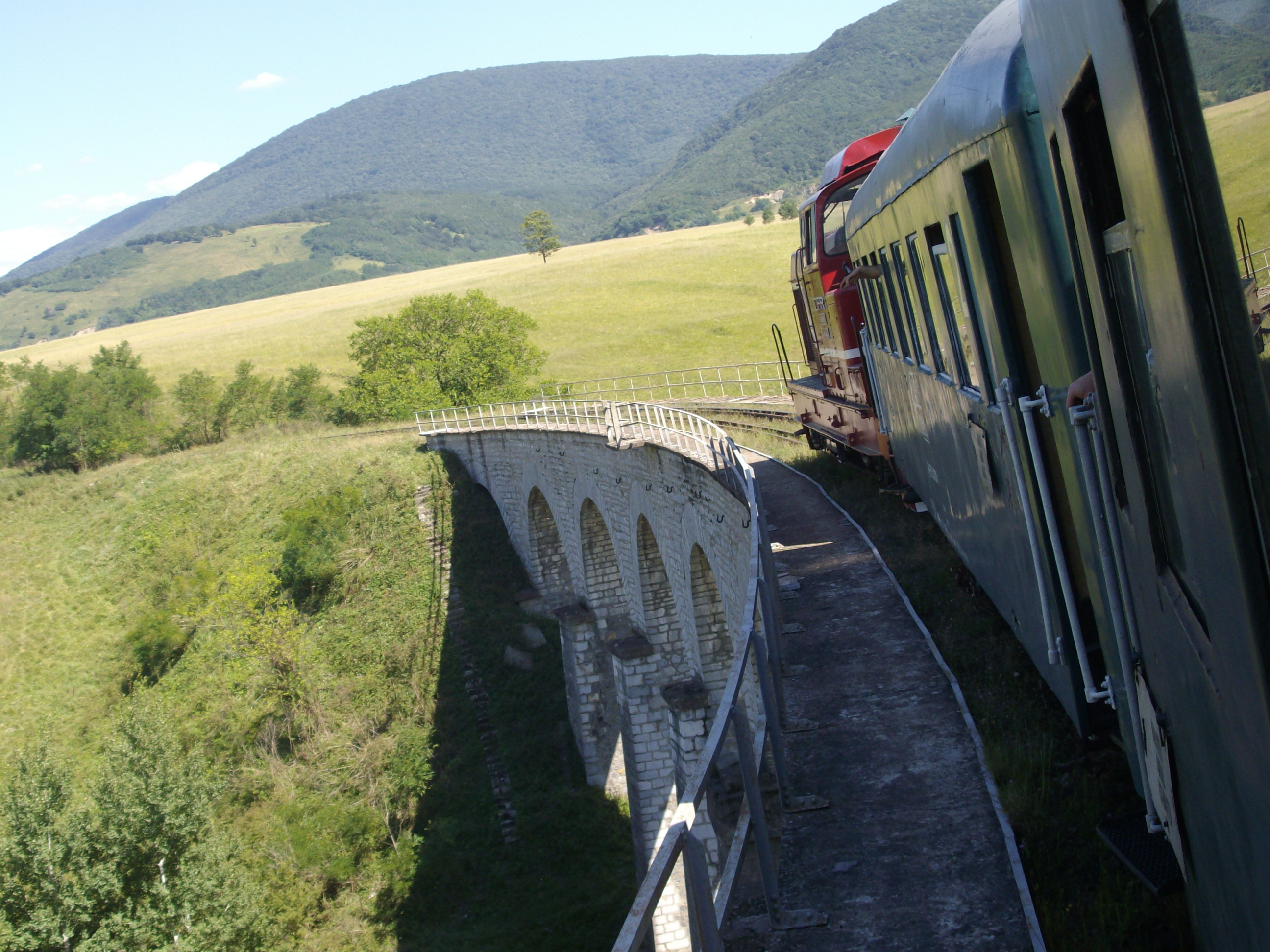
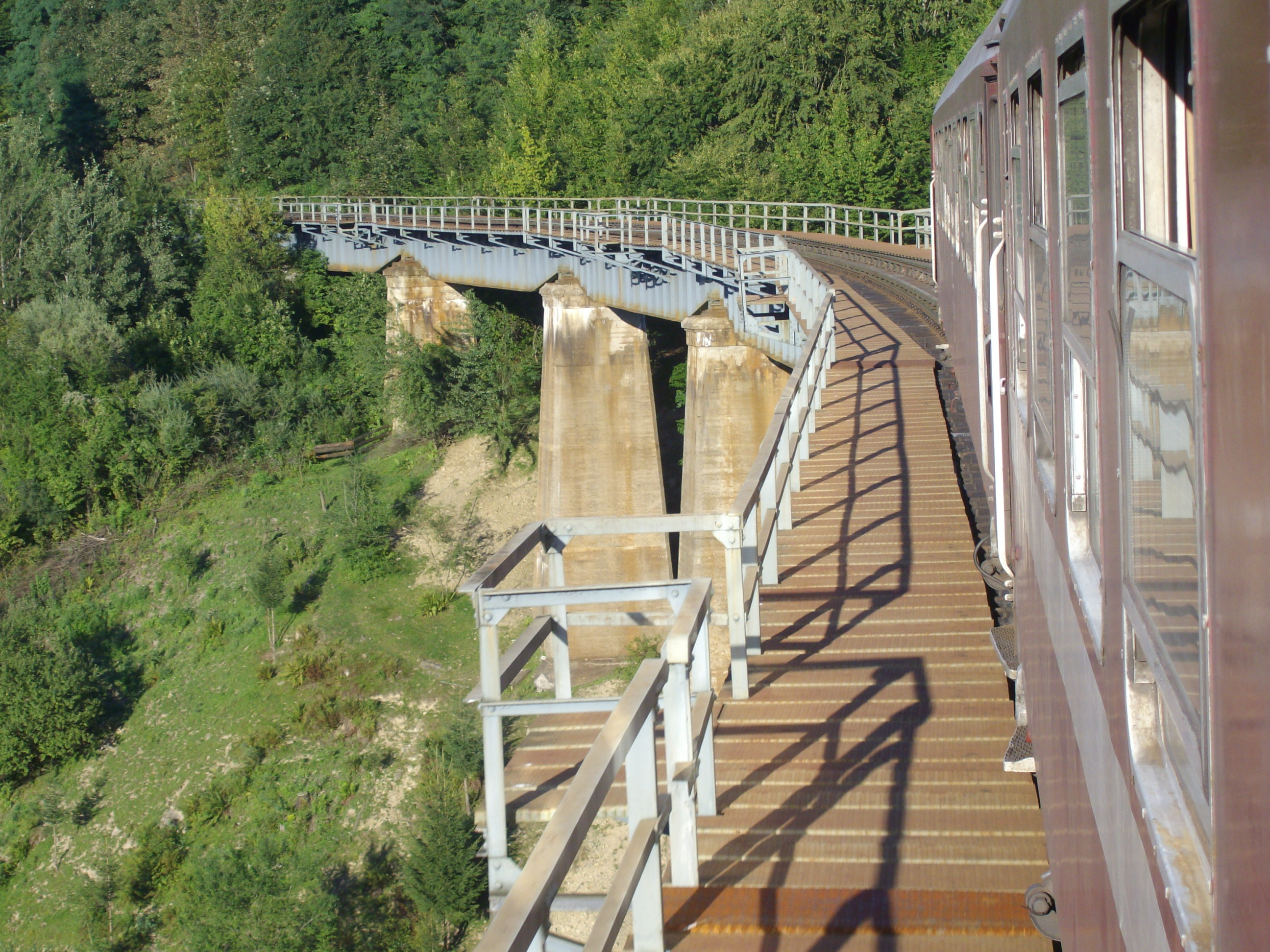 The viaduct of Romuli in Romania is the biggest on the Salva - Sighetu Marmatiei railway. However because of poor maintanence only light railcars can use it since last December.
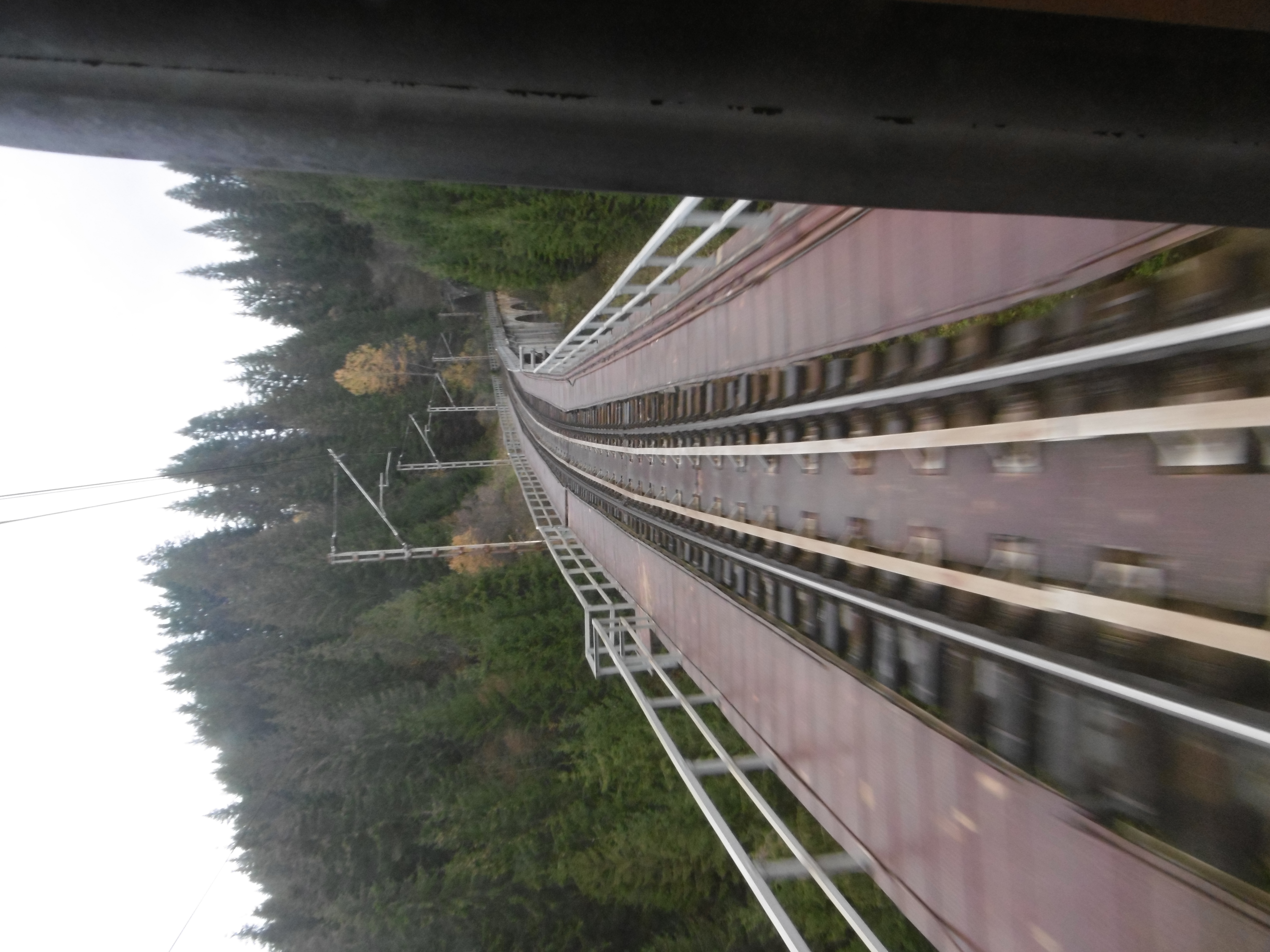 The Ilva Mică - Vatra Dornei railway was built on hard ground through the Eastern Carpathians. It was finished in 1938. The line has several viaducts and tunnels.
 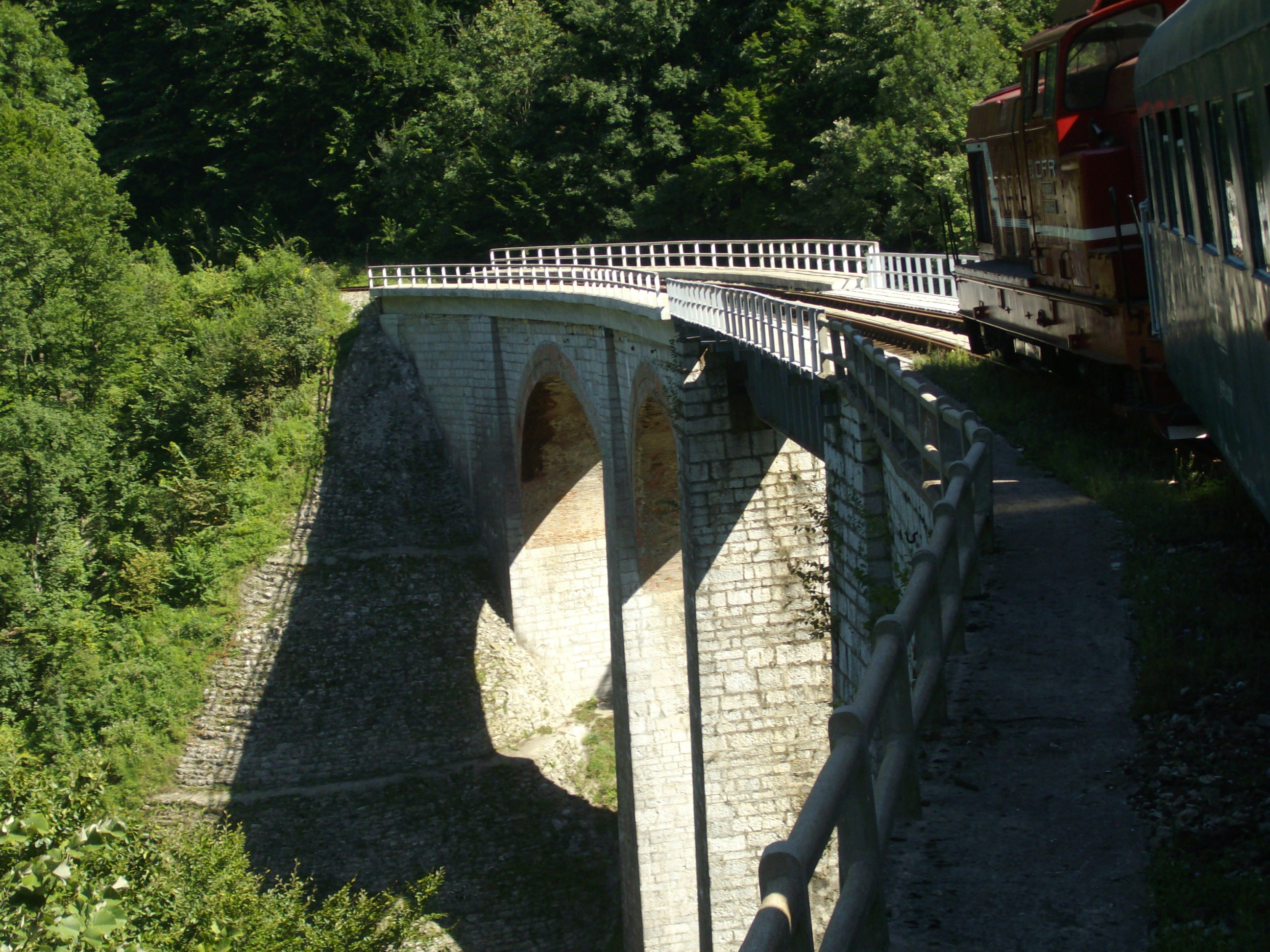 The Oravita - Anina line is the oldest railway in Romania. It was built to carry coal from Anina. The railway has tight curves, tunnels and some viaducts.
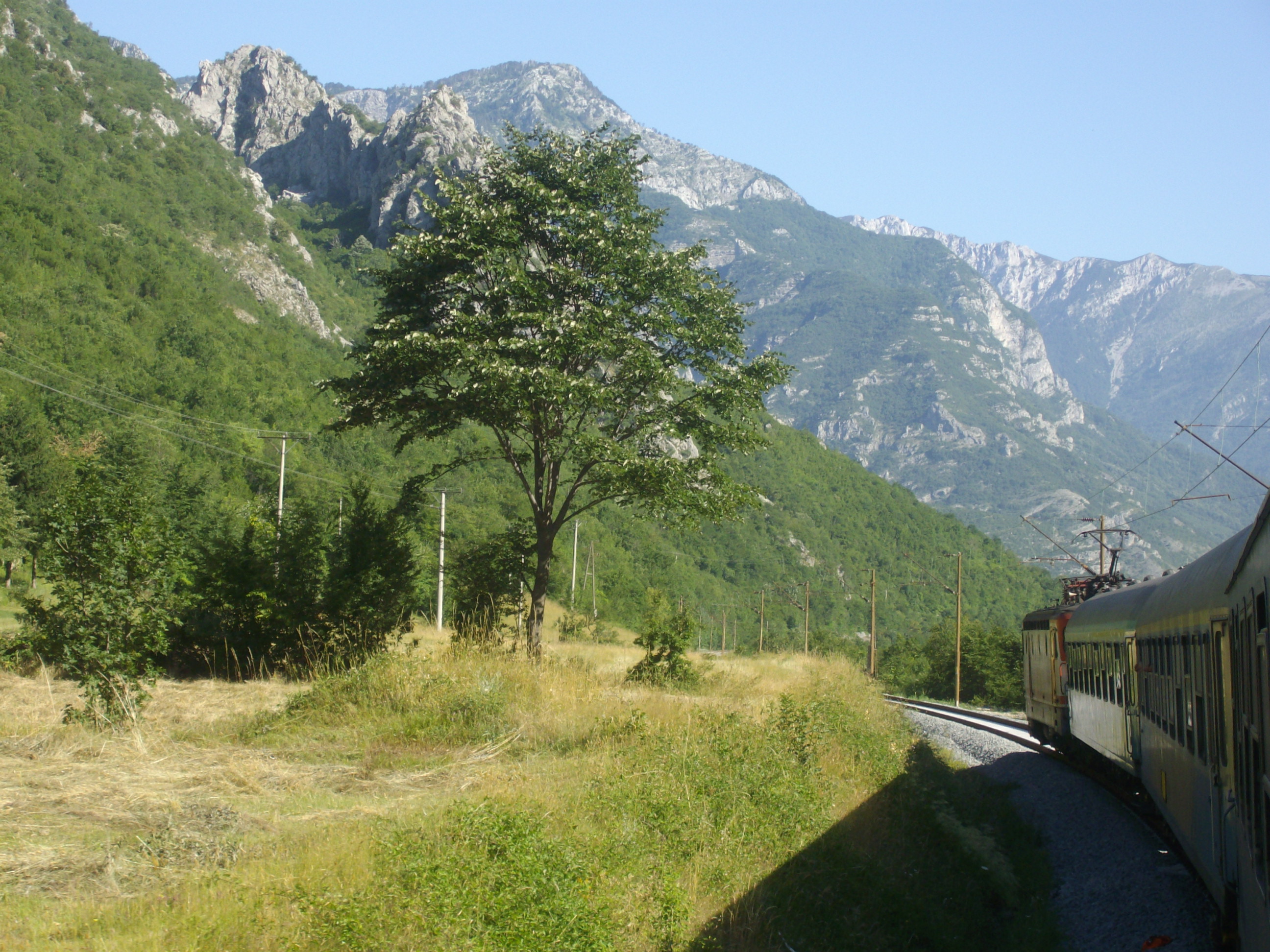
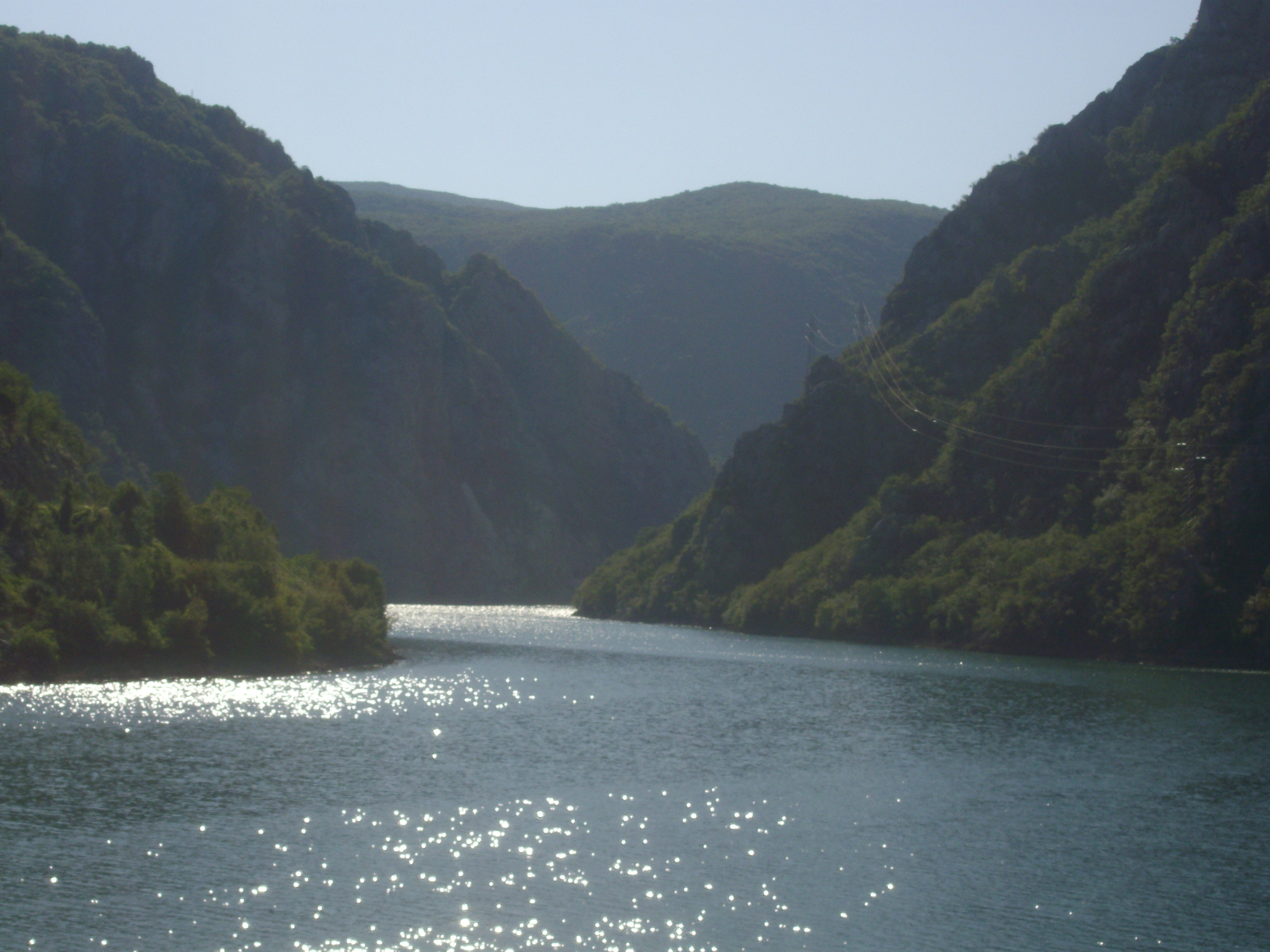
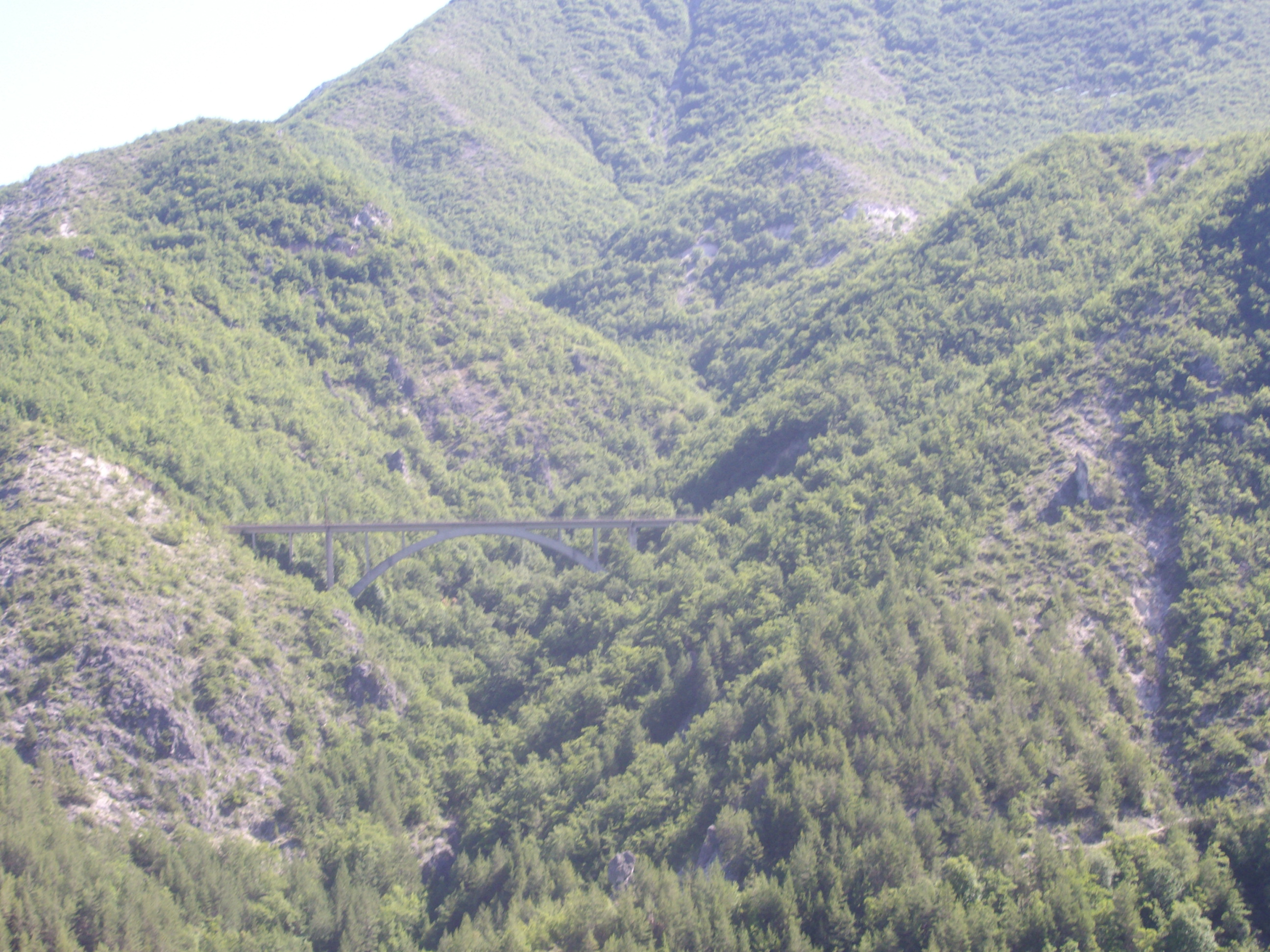
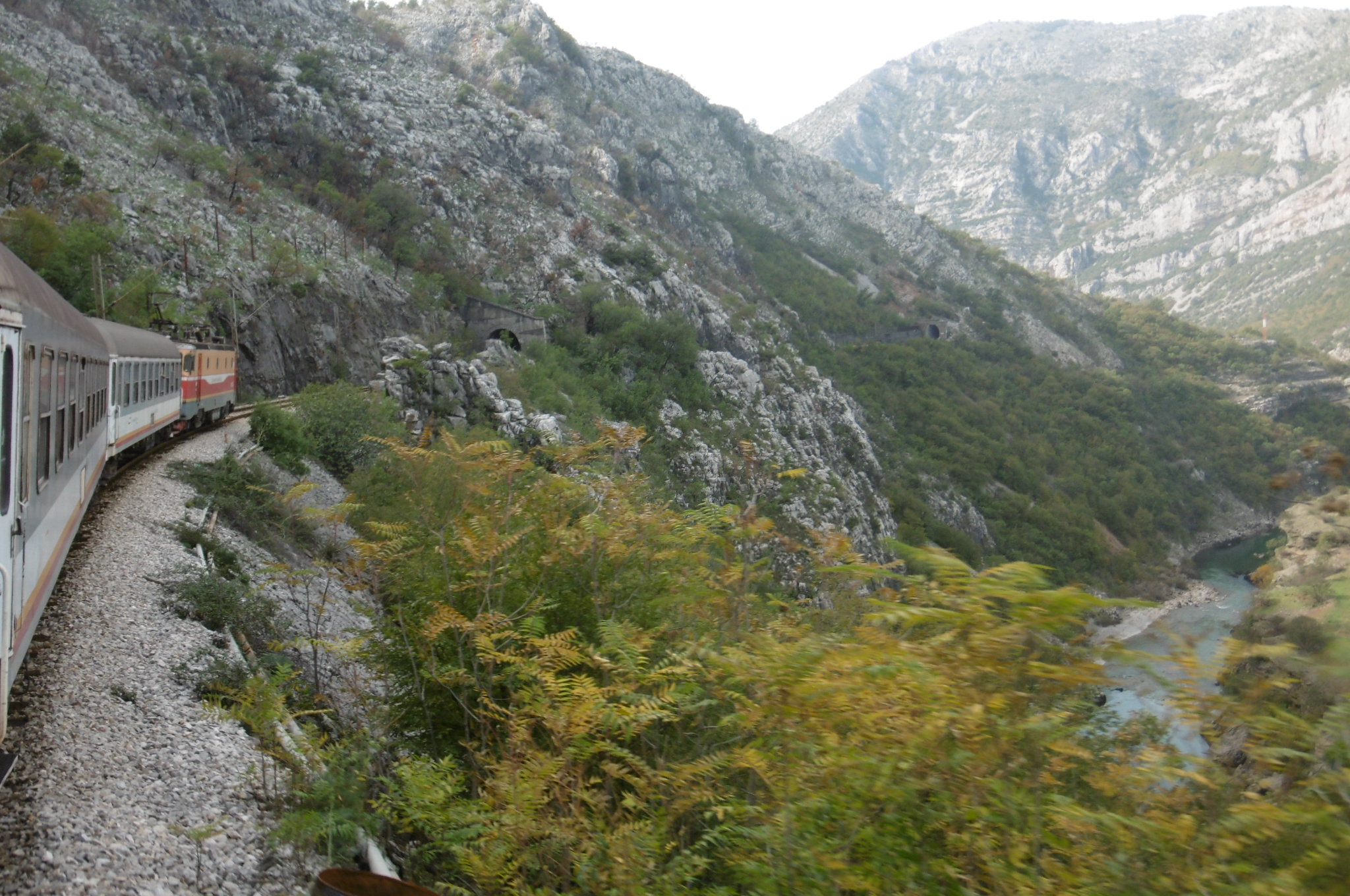
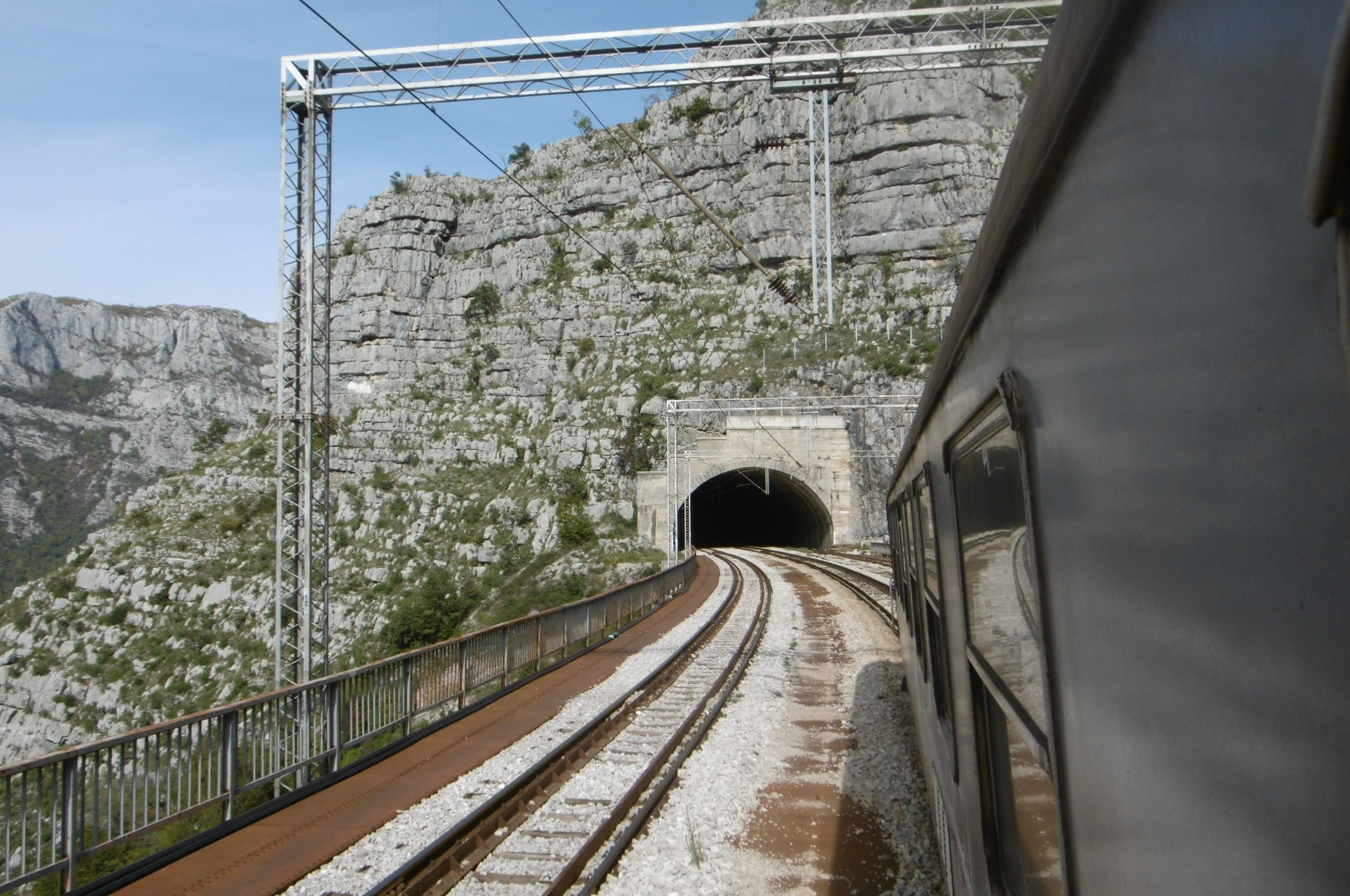
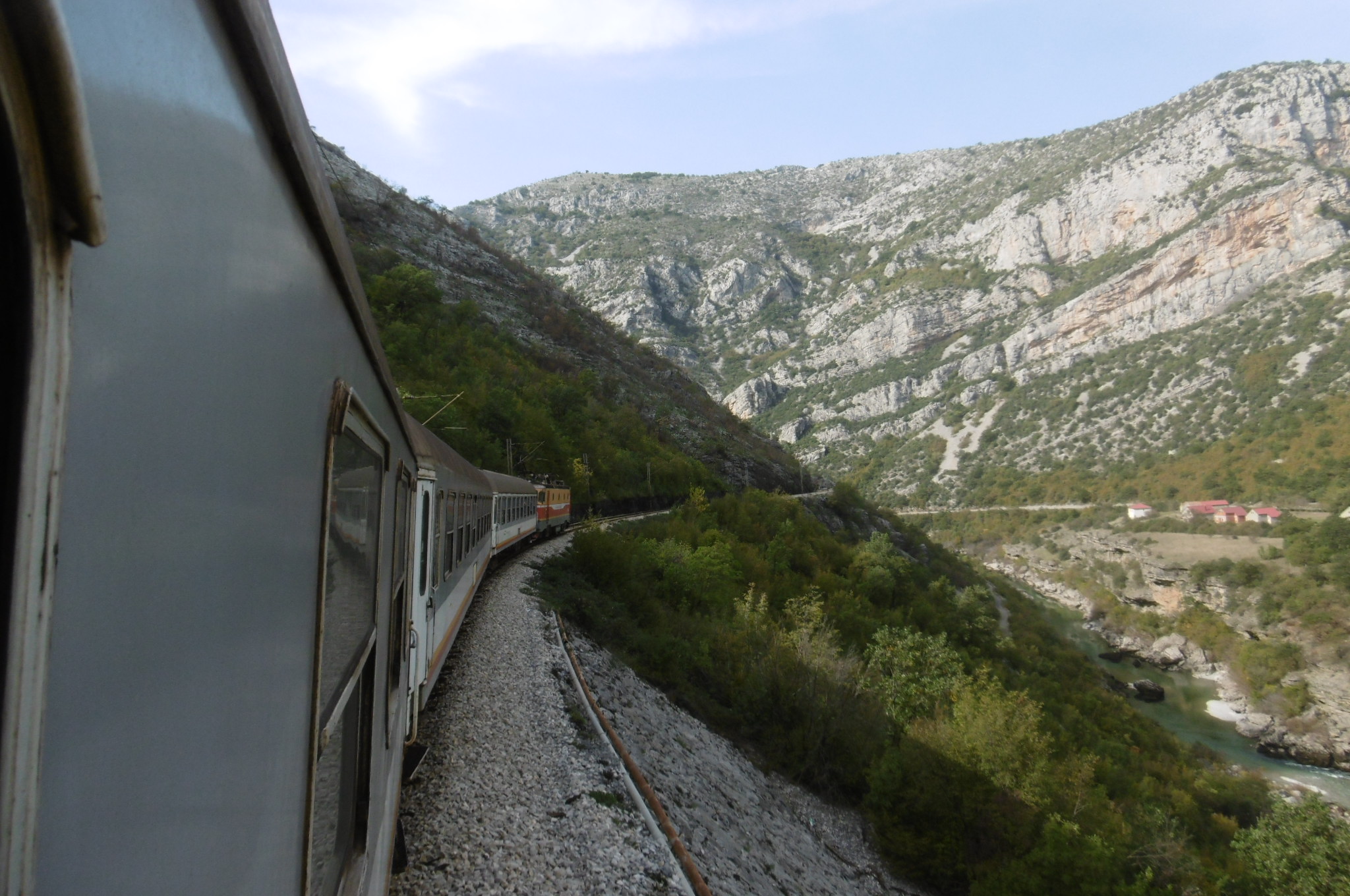
 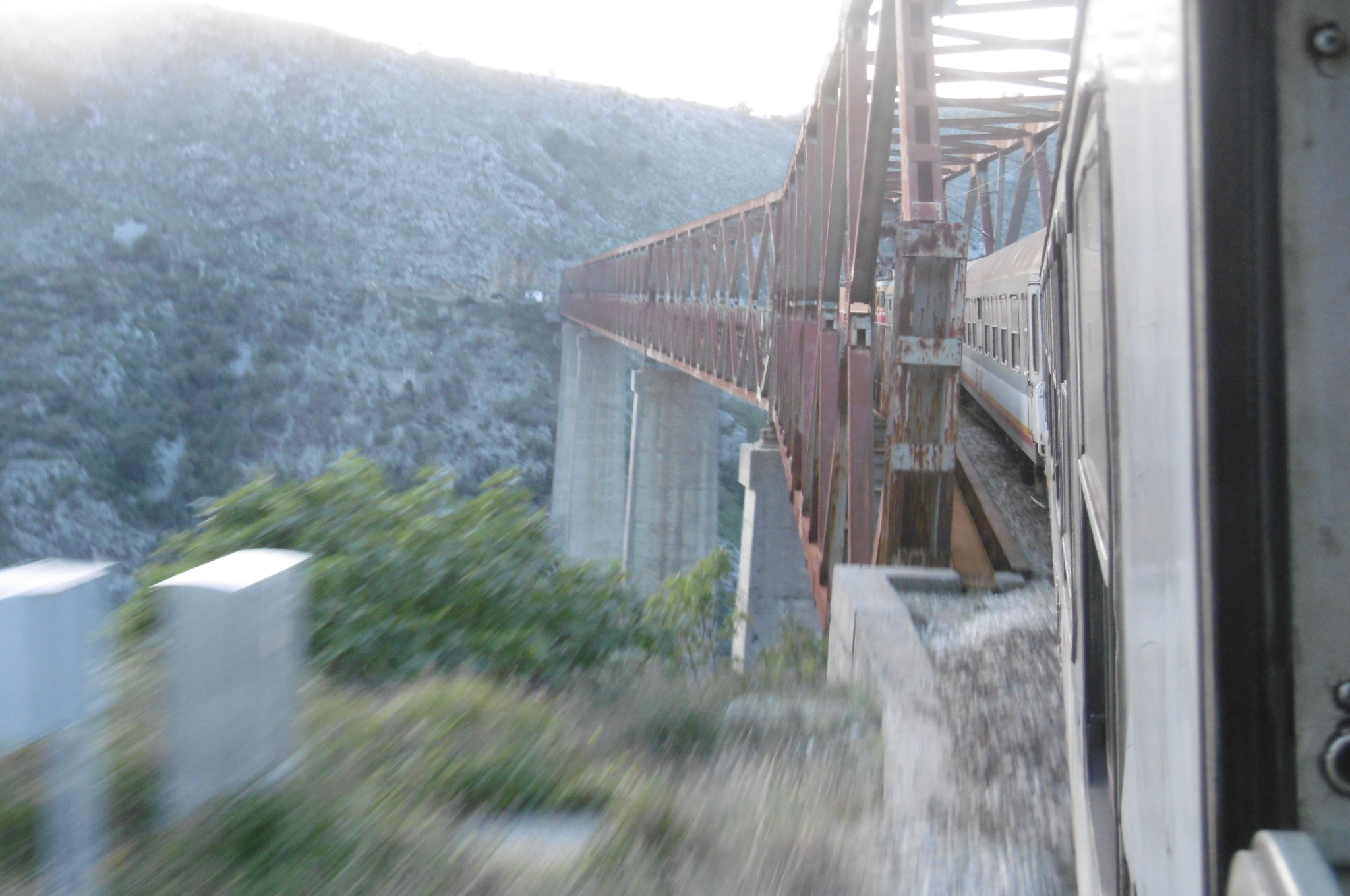 My train is rolling on the highest railway bridge in Europe. You can find Mala Rijeka bridge in Montenegro, near Podgorica.
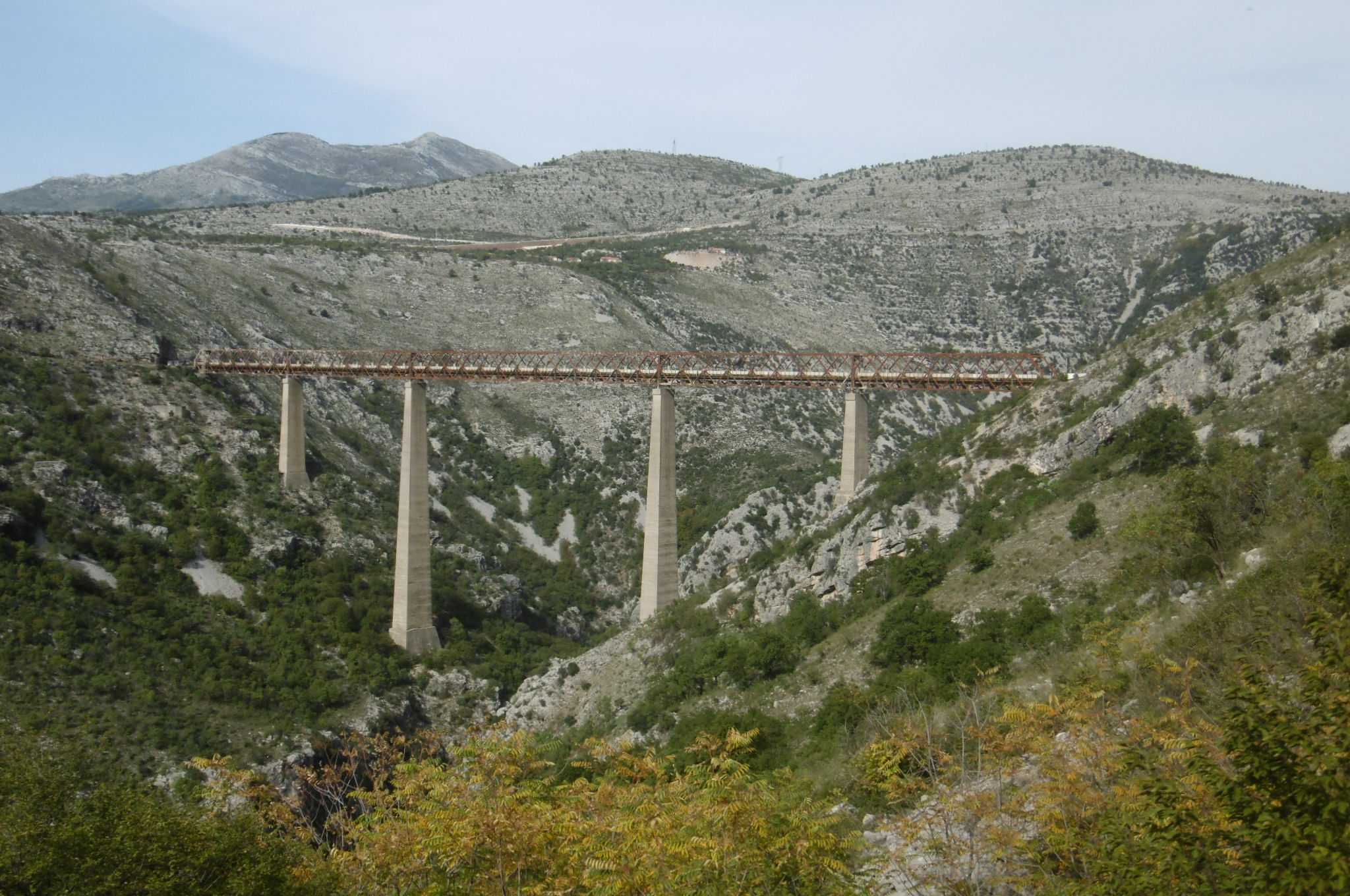 The level of the bridge is situated 198 metres higher than the level of the small river.
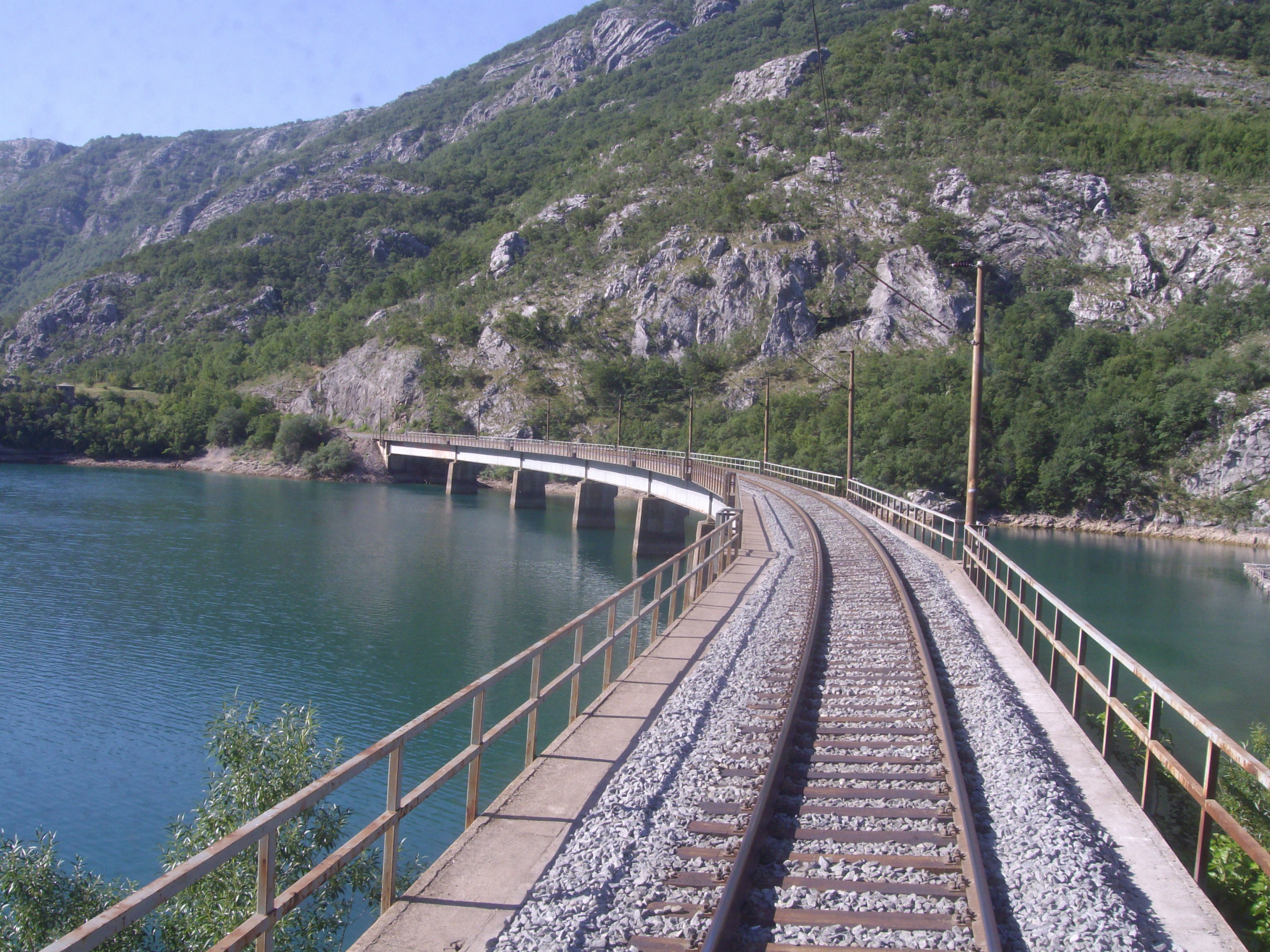 The stucture of the railway bridge in Donja Drežnica, Bosnia is not so special, but the landscape around it is fabolous.
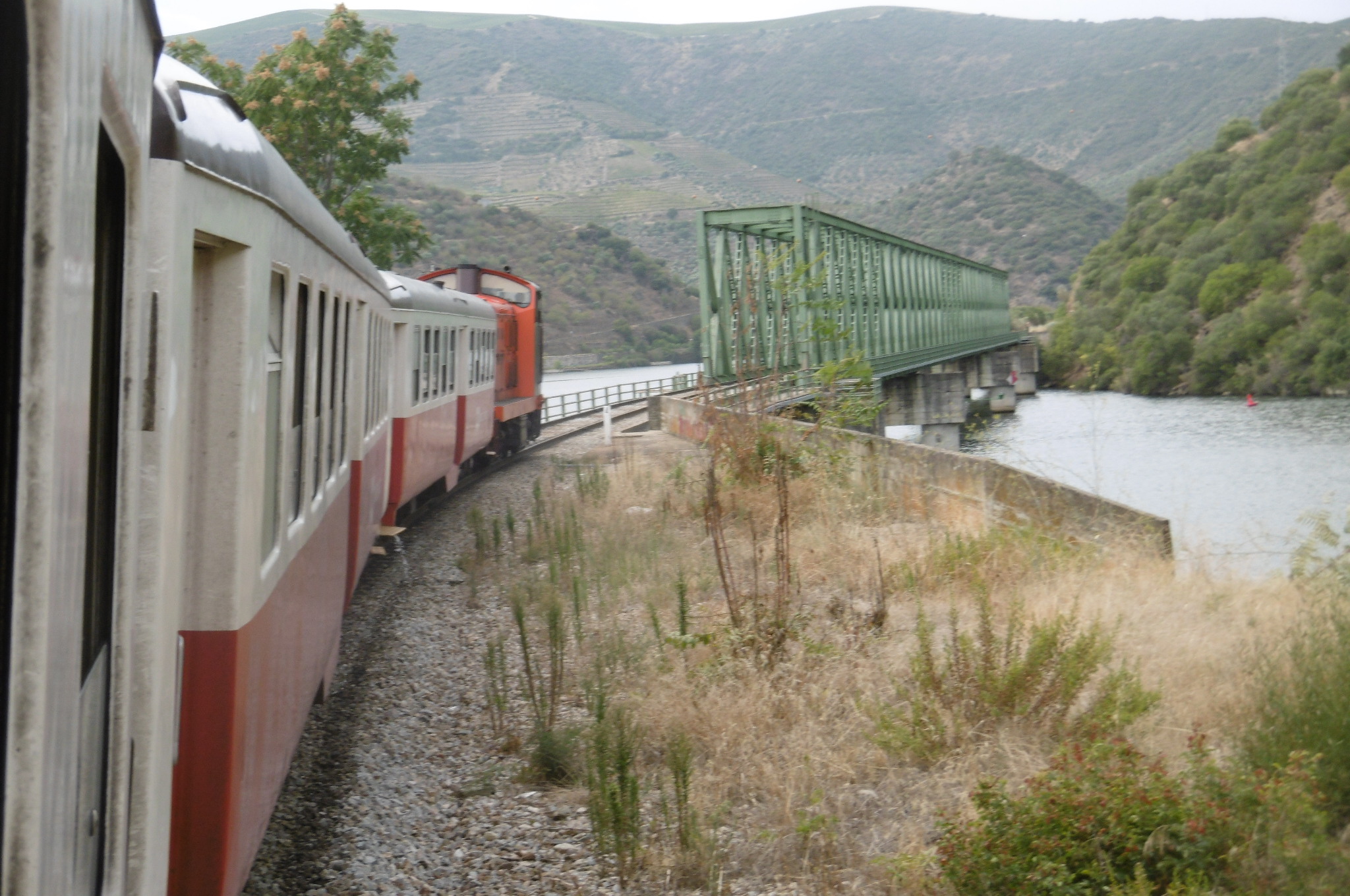 The Porto-Pocinho is a scenic route by train, by car or by boat in the valley of Duoro, but the railway crosses only once the river.
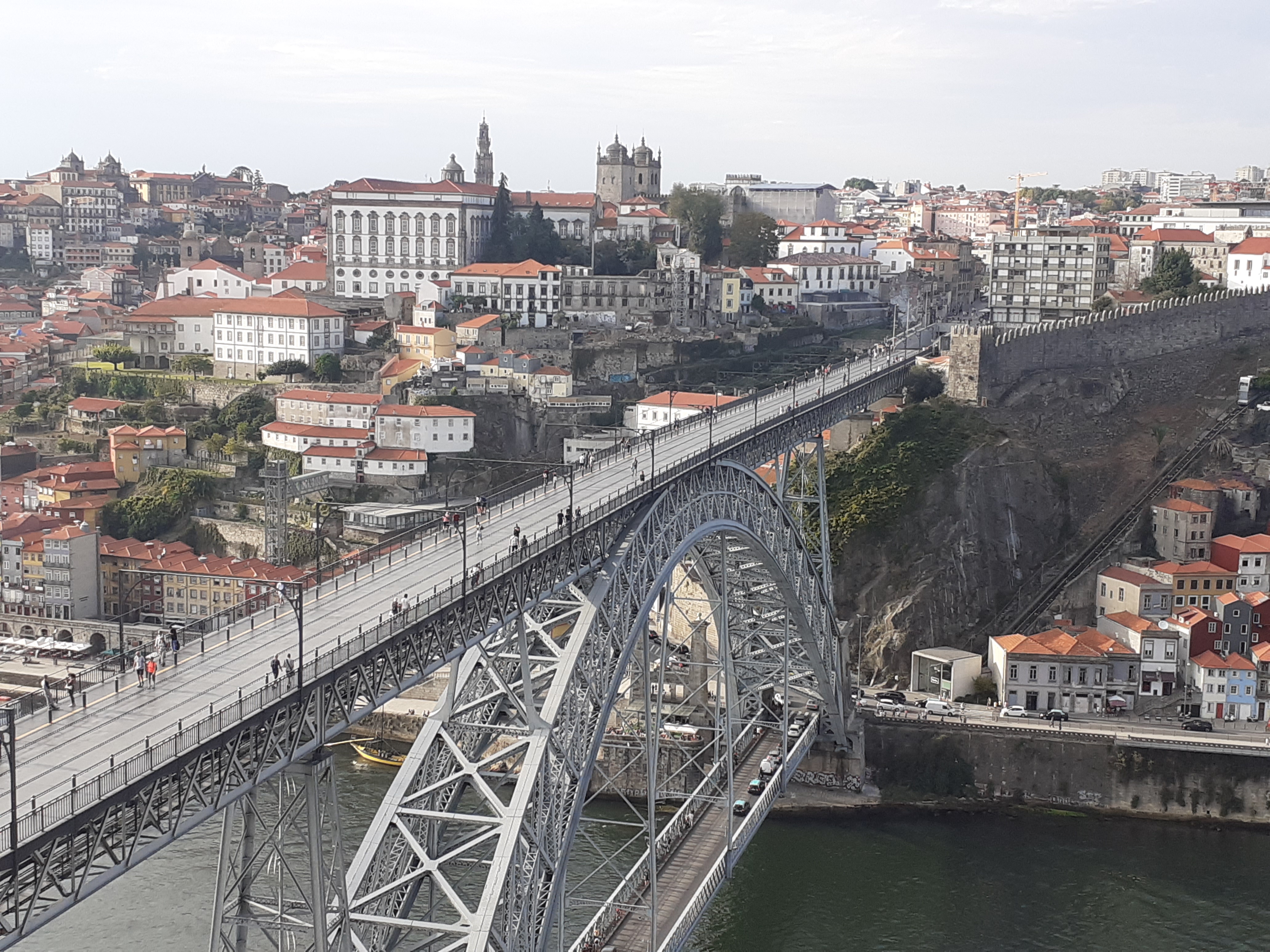 The Dom Luis I. bridge is a symbol of Porto. Its second level is used by light metro trains and pedestrians.
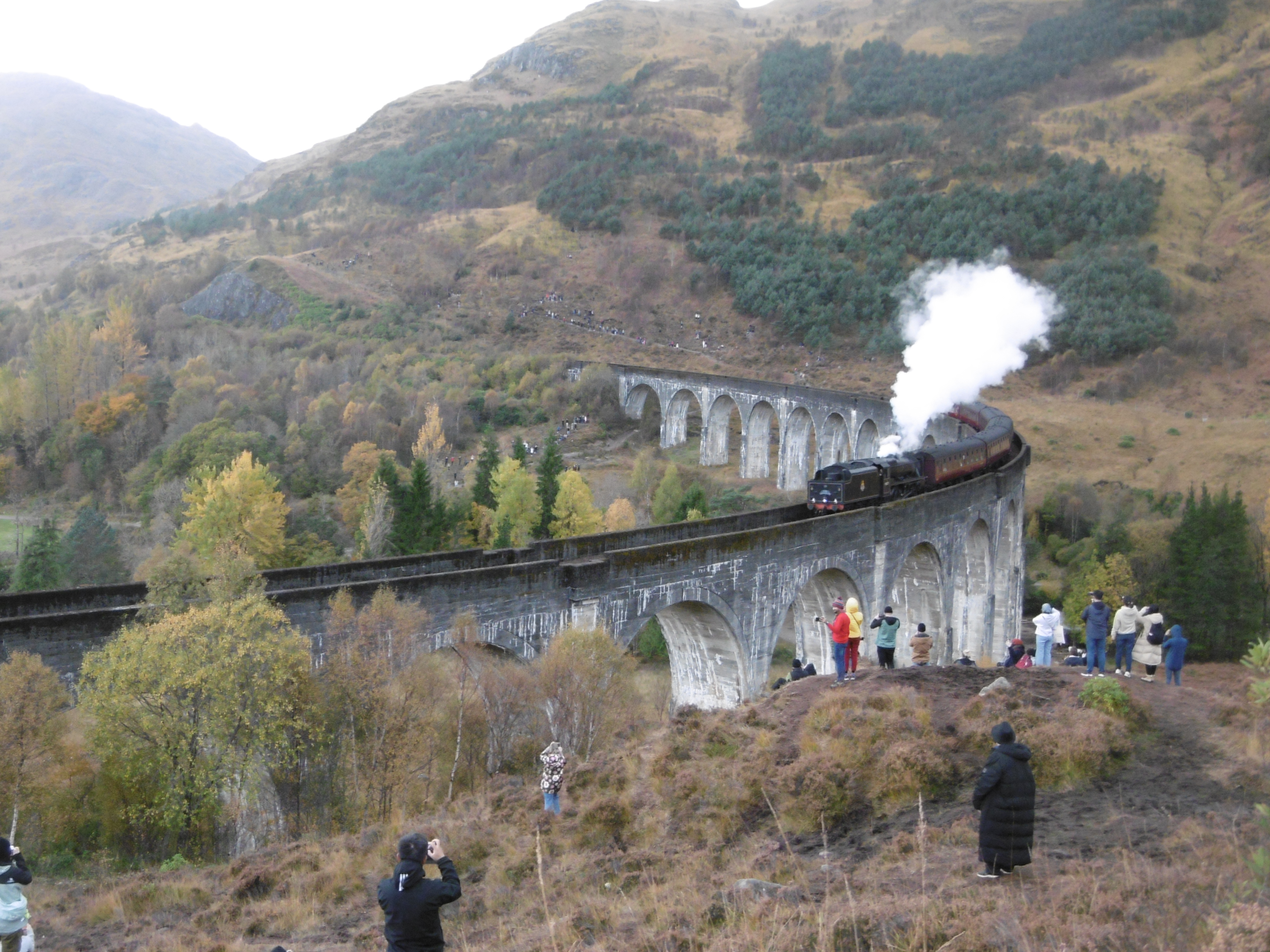 The viaduct of Glenfinnan in Scotland is well-known, especially from Harry Potter movies. About 200 tourists were waiting with me for taking photos and videos of the Jacobite Steam Train.
 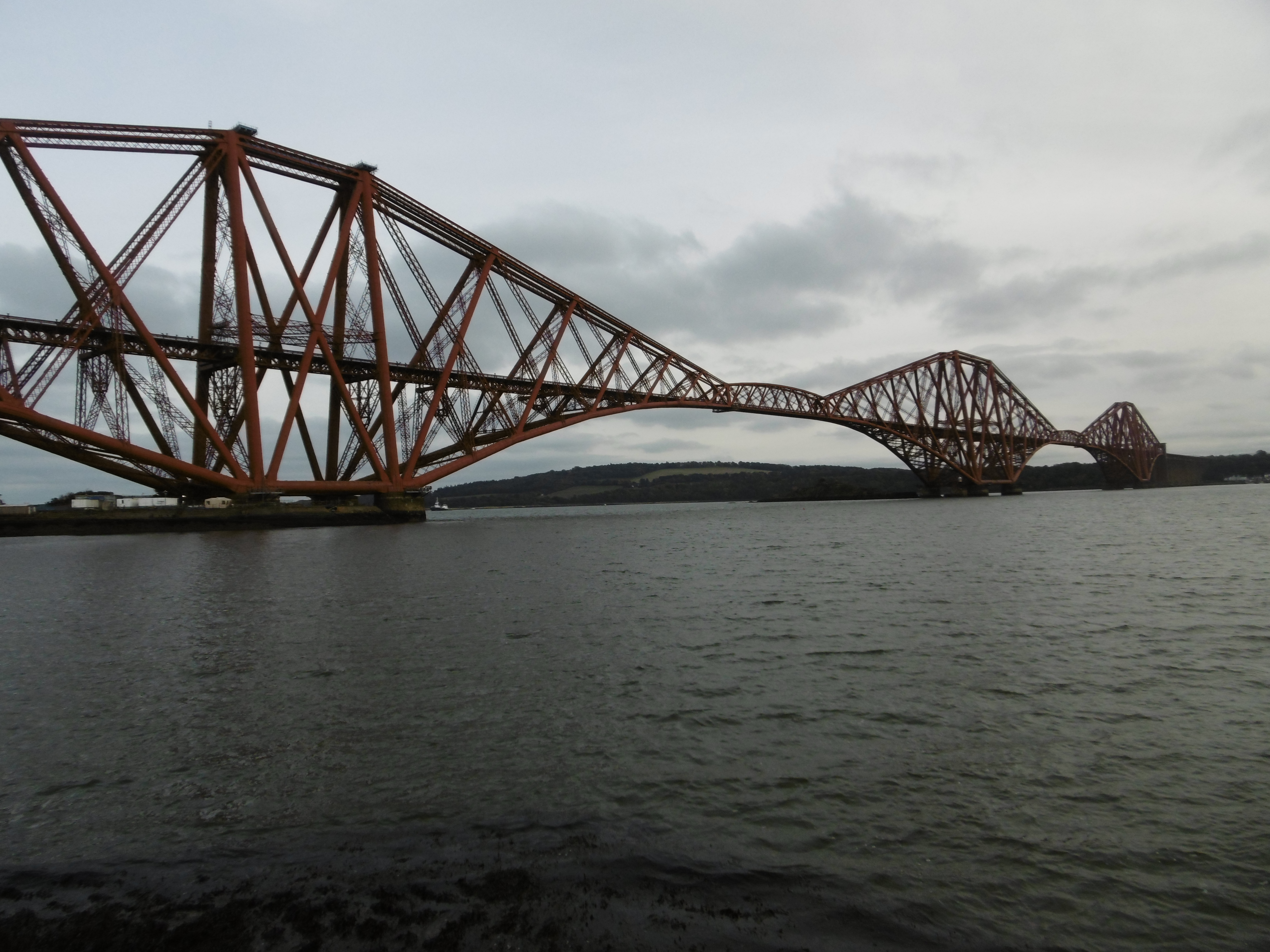 I finish my collection with an other iconic bridge, situated in Scotland. Forth Bridge was finished in 1890 and it is a masterpiece of engineering achievement.
 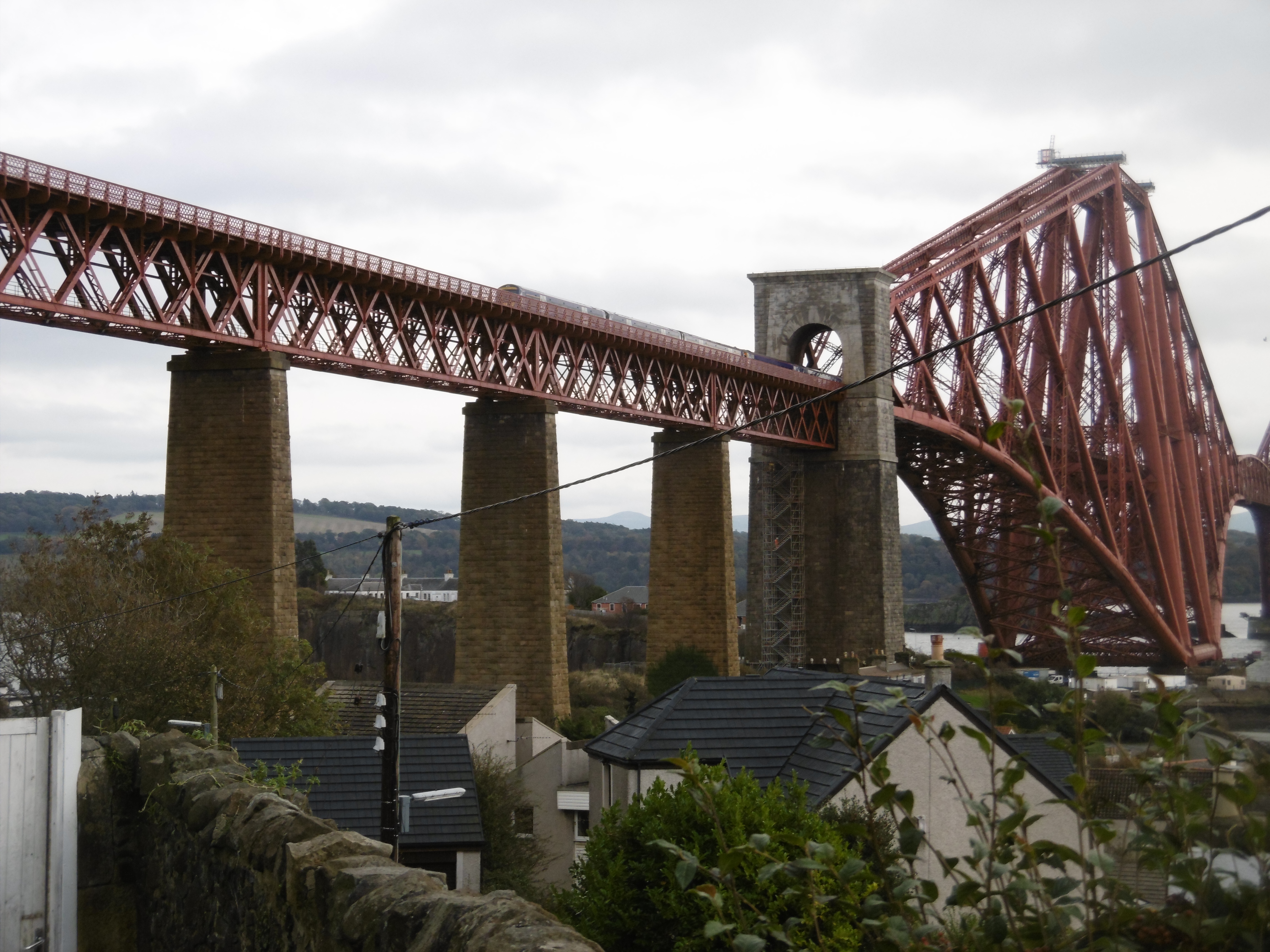 I have chosen an other photo to show the enormous size of Forth Bridge.